Roof Rat Removal in Phoenix, AZ
Roof rats are the animal behind almost every Valley attic call, and they arrived here within living memory. Licensed Arizona contractors trap them off the runs they are using and close the tile eave they came in through.
What roof rat removal in Phoenix covers
Roof rat removal means taking the animals out of the attic by trapping and closing the openings they used to get there, run as one program rather than two visits months apart. On a Valley house that is attic work plus eave work, because the blown-in insulation over a drywall ceiling is where they nest and the first course of barrel tile is usually how they arrived.
The scope on an ordinary single-family house runs top down. Whoever attends works the eave from a ladder, reads the attic with a light, sets traps on the runs that show traffic, and closes the openings in a sequence that never shuts an animal inside. Each visit produces a record of what was found and what was done, which is what a second opinion or a future buyer can be shown.
- A free roofline, attic and perimeter walk first, described on the rodent inspection page
- Identification from droppings, rub marks and flattened runs in the insulation, separating roof rat from pack rat from mouse
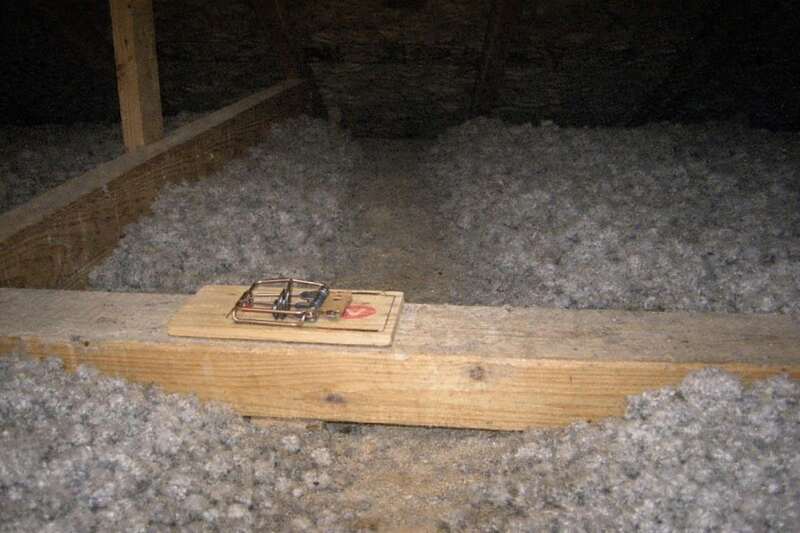
- Snap traps positioned on the active runs and along the top plates, checked and reset rather than left
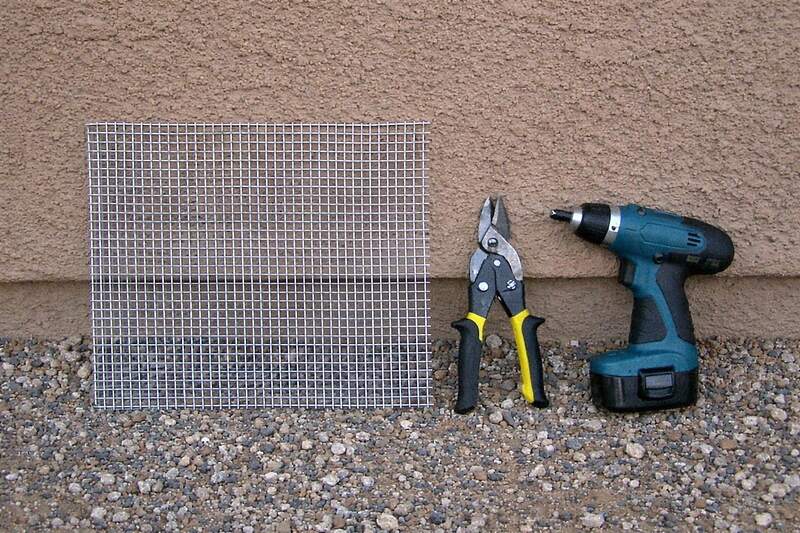
- Galvanized steel mesh, sheet metal and manufactured bird stops closing the openings, starting with the ones carrying no traffic
- A return visit to read the traps and the droppings before the last runs are closed
- Limb and palm skirt clearance recommended where growth reaches the roof
- A written list of every closure with the material named beside it
Most people calling about this have already lost two weeks of sleep to it, and the part that gives the house back is the closure rather than the trap count. The rodent exclusion page covers the sealing half in detail.
Work out roughly what this job runs in Phoenix
Six questions, scored against the published Phoenix and national bands further down. The range stays wide on purpose: the eave detail is the largest variable and no form can see a roof.
Phoenix visit figures come from Angi's Phoenix cost page and the wider bands from HomeGuide's 2026 national guides. Each figure is settled at the free inspection.
What a Phoenix roof rat is
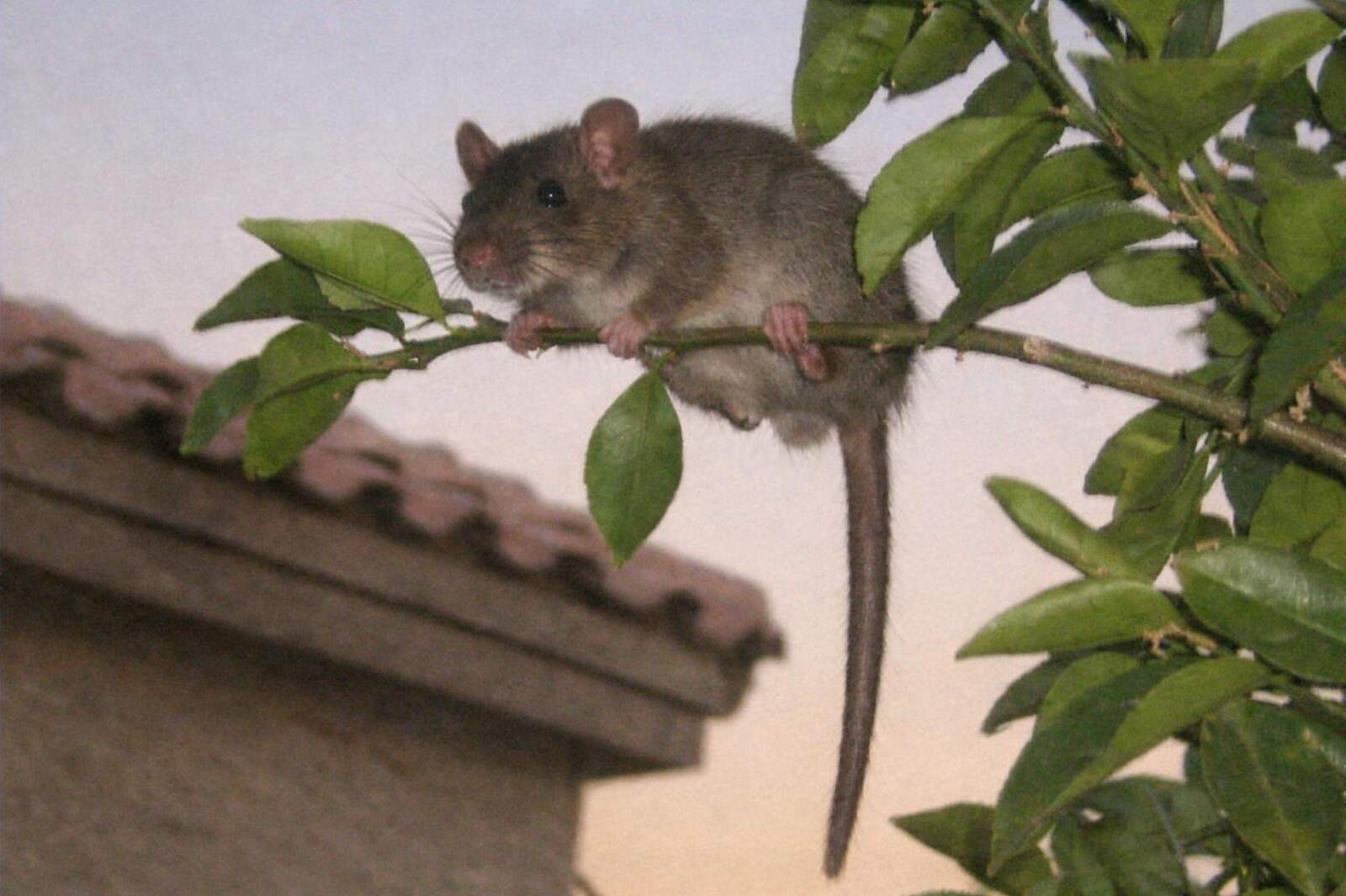
The roof rat is a climber that arrived in the Valley around the turn of this century and is now established across it. The first Phoenix population was identified in Arcadia in 2002, most probably introduced from another state, and it spread outward from the older citrus neighborhoods until it reached the whole Valley. The Arcadia Camelback Mountain Neighborhood Association and local news coverage both document that sequence.
Maricopa County Vector Control describes the habits that matter for a removal job. The animal spends roughly ninety percent of its life four feet or more above the ground, travels along power lines and tree limbs rather than across open gravel, forages within about two to three hundred feet of the nest, and is at its most active from November through May. The county also notes that it runs no abatement program: control on private property is the owner's responsibility.
UF/IFAS Extension supplies the identification detail. An adult runs twelve to fourteen inches including the tail, and the tail is longer than the head and body together. Droppings are a quarter to half an inch long, banana shaped with pointed ends. Sexual maturity arrives at three to four months, gestation runs twenty-one to twenty-three days, and a female produces four or five litters a year of five to eight young. Those last three figures are why a problem left alone through one cool season is a different problem by the next.
The signs that say roof rat rather than something else
Running overhead after dark, pointed droppings a quarter to half an inch long, and greasy rub marks along a top plate are the combination that identifies a roof rat. Anything scratching in a garage at ground level, or a mound of sticks against a block wall, is a different animal and a different job.
- Running across a ceiling once the house goes quiet. Roof rats are nocturnal and the ninety-percent-above-four-feet figure from Maricopa County Vector Control is why the noise is over your head rather than beside you.
- Droppings along a top plate or in the insulation. A quarter to half an inch, banana shaped with pointed ends, per UF/IFAS. Smaller than that points to mice.
- Runs pressed flat through blown-in insulation. A trail worn between the hatch and a corner of the attic shows where the traps belong.
- Citrus with the inside eaten out. On the older irrigated lots, hollowed grapefruit and oranges under the tree in the winter months is the classic Valley tell.
- Gnawing on the eave timber or a vent screen. UF/IFAS notes rats chew wires and can potentially start fires, which is reason enough to have chewed material looked at.
- Smear marks on a conduit or a line set. The grease trail along a vertical route is how the climbing gets confirmed.
Where the signs point elsewhere the right page is pack rat removal for anything outdoors, or mouse removal for a garage or pantry.
How the trapping is done, and why not poison
Snap traps on the runs that show traffic are the method a licensed contractor reaches for, and they stay in position at least a week because UF/IFAS notes roof rats are wary of objects newly placed in their path. Moving traps every day or baiting them heavily both work against that.
| Method | Where it fits | What to know about it |
|---|---|---|
| Snap traps on the runs | Attic top plates, the worn trails in the insulation, along the eave line inside | The animal is recovered rather than left somewhere unreachable. UF/IFAS notes trapping cuts the risk of a poisoned animal dying inside the building. |
| Tamper-resistant trap boxes | Garages, equipment rooms and anywhere pets or children reach | The trap is secured inside a housing, which is what makes a snap trap usable in an occupied space. |
| Exterior bait stations | Perimeter use, where a licensed contractor judges them appropriate | The EPA describes most rodenticides as anticoagulants that kill four days to two weeks after feeding begins, and second-generation anticoagulants have been withdrawn from consumer products. Ask what is being used and where. |
| One-way doors | A single confirmed active opening on a building otherwise closed | Useful only with the rest of the shell already sealed, and removed and closed once the traffic stops. |
| Glue boards | Rarely, for monitoring a run rather than for removal | They catch dust and non-target animals and do not hold an adult rat. |
| Repellent granules and ultrasonic plugs | Nowhere in a job that is meant to end | Nothing in them addresses the opening, and the opening is what keeps refilling the attic. |
On the poison question the honest answer is the one that costs a sale now and again. An animal nesting in a Phoenix attic dies in that attic, which is how a bait-only treatment becomes a dead rodent removal call two weeks later. A licensed contractor decides what is appropriate on site; what a homeowner can reasonably ask is what product goes where, and whether anything at all goes indoors.
Where they get in on a Valley house
The gap under the first course of barrel tile is the most common way into a Phoenix attic, and the original mortar bird stops that closed it crack out after roughly fifteen to twenty years of sun. Post-1970 Valley stock is overwhelmingly concrete or clay barrel tile over block and stucco, and that void runs the full length of the eave rather than sitting at one corner.
The replacement is a manufactured part rather than a patch. A bird stop, also called an eave closure, is a code-approved metal profile, usually 26 gauge galvanized steel or aluminum, and ventilated versions carry weep holes so the eave keeps breathing. It also appears in Department of Energy guidance, which recommends bird stopping as a measure on clay and concrete tile roofs. Set that against a bead of expanding foam, which is what a low sealing number tends to buy, and the difference is visible a year later.
The rest of the list is ordinary. Gable and soffit vents with no screen or with the screen rusted through. The sleeve where an air conditioning line set or an electrical conduit passes through block. Weep screed at the base of a stucco wall. The bottom corner and side edge of a garage door. Weep openings along a block wall. UF/IFAS gives a quarter inch as the rat-proofing standard, which means anything that admits a pencil belongs on the list. Houses with flat or low-slope foam roofs move the search to the parapet and the scuppers instead.
Citrus, irrigation and the November to May window
Roof rat pressure in Phoenix peaks in the cool half of the year, and the reason is food and water rather than temperature. Maricopa County Vector Control puts peak activity from November through May. Citrus harvest falls inside that window, and the flood irrigation schedules that still run on the older large lots in Arcadia and the central districts put standing water on the ground through it.
The route is vegetation and wire. The county notes the animal travels power lines and tree limbs, and forages within roughly two to three hundred feet of the nest, which is wide enough to take in several neighboring yards. Citrus canopies touching a roof, palms carrying a skirt of dead fronds against the fascia, oleander hedges grown up to the eave and a cable drop resting on a tile edge are each a bridge onto the roof. Trimming growth back about three feet from the roofline is the standard advice, and the inspection report says which limbs are carrying traffic.
Cutting the tree down is almost never the answer, and it does nothing about the eave. Summer does not end the problem either; it redirects it, with warm-season calls tilting toward pack rats around condenser units and vehicles and toward mice in garages.
What roof rat removal costs in Phoenix
A Phoenix rat extermination visit commonly runs $144 to $443, averaging around $286, in Angi's Phoenix cost data, and the sealing that makes it hold is a separate line. Published bands are typical-job figures; the free inspection is what turns them into a quote for your house.
| Line item | Band | Source |
|---|---|---|
| Inspection | Free here | $0 to $175 standalone, HomeGuide 2026 national |
| Rat extermination visit | $144 to $443, averaging about $286 | Angi cost data, Phoenix |
| Follow-up visits | $50 to $150 each | Angi cost data, Phoenix |
| Exclusion work, named openings | $200 to $600 | Angi cost data, Phoenix |
| Whole-shell exclusion | $500 to $2,500 | HomeGuide 2026 national |
| Trapping and removal, wider band | $250 to $1,200 | HomeGuide 2026 national |
| Attic cleanup and decontamination | $600 to $2,500 | HomeGuide 2026 national |
What moves a quote inside those bands is the eave. A single-story shingle-roofed house with two open vents and one conduit sleeve sits at the bottom of the sealing band. A two-story house with barrel tile on a long run of eave, gable vents at both ends and a garage that was never closed climbs toward the top of the national figure, because a bird stop gets fitted along the whole eave rather than at a handful of points. Ask for trapping, sealing and any attic work on separate lines, and ask what the terms are if the animals return after the sealing.
How the housing stock changes the job across the Valley
Which part of the Valley a house sits in decides what the roofline walk finds. The older central districts and the desert-edge subdivisions produce different inspections out of the same service.
Arcadia is the epicenter: 1950s ranches on large flood-irrigated lots plus 1920s and 1930s revival houses, citrus everywhere, mature trees, oleander and palm skirts. Willo, Encanto, F.Q. Story, Coronado and Pierson Place are 1920s to 1950s historic districts in Spanish and Mission Revival, Tudor and early ranch, carrying original attics and vents under tile or composition roofs. The Biltmore belt, North Central and the Paradise Valley border are 1960s to 1990s block and stucco under concrete tile, which is where the bird stop question is most often decisive.
Desert Ridge, Ahwatukee and north Scottsdale are 1990s to 2010s master-planned block, stucco and tile, and there the pressure tips toward pack rats rather than roof rats. Across all of it the construction is the same in one respect: slab-on-grade with blown-in insulation over a drywall ceiling, no basement and almost no crawl space, so the attic is where the job happens. Area pages under locations go into what each one looks like.
What to check before a contractor starts
Ask for the Arizona Department of Agriculture Pest Management Division license number and verify it with the PMD before work begins. Structural pest control in Arizona, roof rat work included, requires that license, and the trigger is broad enough to cover making site-specific recommendations and offering to do the work at all.
A PMD licensee may also remove nuisance rodent species without holding a separate wildlife service license from Arizona Game and Fish, so one contractor can cover a rat in an attic and a woodrat in a shed on the same visit. Every contractor routed from here carries the PMD license the work requires.
Four questions worth asking whoever quotes: what exactly is included and what is charged separately; whether the sealing is done by the same company or referred on to somebody else; how many follow-up visits sit inside the price; and what happens if the animals come back after the closure. Proof of insurance belongs in the same conversation. Nothing on this page is a recommendation for your particular house, because that judgment belongs to the licensed contractor standing in front of the eave.
The services that usually sit beside this one
A roof rat job in the Valley almost never stands alone, and these are the pages describing the work on either side of the trapping.
- Rodent Exclusion: Closing the shell: tile eaves, vents, conduit sleeves, weep screed and garage edges.
- Rodent Inspection: A free walk of the roofline, attic and perimeter that fixes the order of the job.
- Attic Cleanup: Droppings, nests and fouled insulation taken out and the attic sanitized.
- Dead Rodent Removal: Tracing the smell to the carcass, removing it, then closing the way it came in.
Which of those a given house needs comes out of the free inspection rather than off this page, and the about page sets out who attends.
Rat or mouse
Size, droppings and behavior tell them apart.
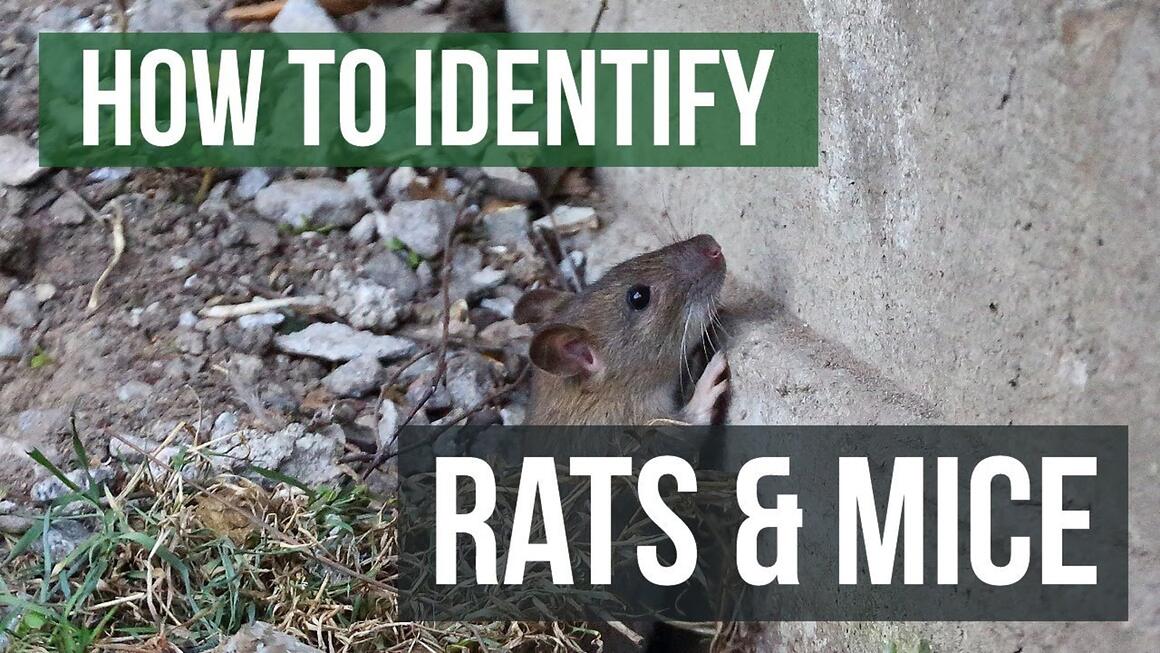
Video: The Differences Between Rats and Mice, from Solutions Pest & Lawn.
How a roof rat job runs in Phoenix
Five steps, with the closure sitting in the middle, because trapping an open house and closing a full one fail for the same reason.
-
Describe it on the phone
Which room the running is over, the hour it happens, how many nights it has run, and anything found in the yard. That separates roof rat from pack rat from mouse before anybody drives out.
-
The roofline and attic walk
The eave, vents and penetrations are worked from a ladder, then the attic is read with a light for droppings, rub marks and flattened runs. Every opening goes on a written list.
-
Close what carries no traffic
Galvanized steel, sheet metal and bird stops go on the quiet openings first, which narrows the building down to the runs in use.
-
Trap the active runs
Snap traps go where the traffic is and stay at least a week, since UF/IFAS notes roof rats avoid newly placed objects. They are checked and reset rather than abandoned.
-
Close the last runs and read the attic
Once nothing fresh is showing, the remaining openings are closed and a call is made on whether the insulation needs clearing or replacing.
What to expect
The visits follow the same order on every roof rat job, so the sequence is known before the truck arrives.
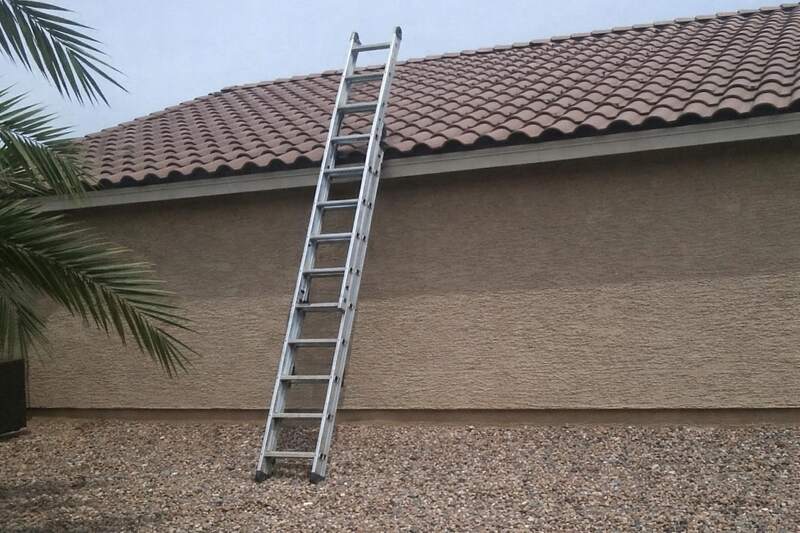
- A ladder at the eave before the attic hatch is opened
- Every opening measured against a quarter inch and written down
- Metal closures fastened to framing rather than glued over
- Traps left in position a week and reset on each visit
- A closure list naming the material used at each point
Why Valley homeowners route roof rat work through us
Three things decide whether a roof rat job finishes or comes back next November.
-
The trapping is sequenced with the closure
Traps go on the runs the same week the quiet openings close, which is the order that gives the trapping an end date. Closing a building with animals still inside pushes them into a wall or a garage ceiling looking for a way out, and trapping a building with an open tile eave harvests whatever arrives next. Maricopa County Vector Control puts a roof rat's foraging range at roughly two to three hundred feet from the nest, which is why the supply outlasts any trap line on its own.
Roof rats forage roughly 200 to 300 feet from the nest, Maricopa County Vector Control
-
Traps stay put for a week rather than a day
Roof rats are wary of anything newly placed in a run, which UF/IFAS states plainly, so a trap line that gets moved every visit catches less than one left alone. A job routed from here sets traps where the rub marks and droppings are, leaves them a week at minimum, and resets rather than relocating. The patience is the technique, and it is the reason the first few nights are usually quiet before anything is caught.
Leave traps in place at least a week, UF/IFAS Extension
-
Phoenix figures, on separate lines
Angi puts a Phoenix rat extermination visit at $144 to $443 with follow-ups at $50 to $150, and the quote that comes out of the free inspection keeps trapping, sealing and attic work apart so each can be held against those bands. Homeowners comparing notes online describe quotes for similar work spanning an order of magnitude with nothing to explain the spread, and an itemized quote is the answer to that problem.
Angi, Phoenix: extermination visit $144 to $443, follow-ups $50 to $150
What Reddit Says About Roof Rat Removal in Phoenix
Homeowner threads on rodent work are blunter than any sales page, and the advice in them is consistent. People tell each other to get several bids written for identical scope, because a single quote cannot be interpreted against anything. They push for itemized numbers that keep trapping, sealing and cleanup apart, and they ask outright whether the company does its own repair work or subcontracts the sealing to somebody else. A stated preference for local operators over national brands comes up again and again.
The warnings are specific. Bait-only plans that never touch the roofline draw the harshest criticism in the whole corpus, and the claim that poison sends a rat outdoors looking for water is treated as a marker of dishonesty. Trapping with nothing sealed gets described as harvesting rather than solving. Sealing a house with animals still inside is flagged as the mirror-image mistake. Quotes that fold a monthly monitoring contract into the removal price, and companies that keep returning for months with nothing changing, get the same treatment.
The questions people pass around are worth asking verbatim. What exactly is included and what is a separate line item? Is the sealing warrantied, and is the warranty renewable or a single term? Will you clean and decontaminate or only trap? How many follow-up visits are in the price? What happens if they come back? On the calendar, the corpus is full of timelines longer than anybody was warned about, two months being common, and the emotional register is heavier than a plumbing thread: lost sleep, a sense that the house has been intruded on, and friends treating the whole thing as an overreaction.
That is roughly the brief these pages were written against: published bands, separated lines, the sealing explained before it is sold, and a straight answer on the poison question.
A typical roof rat job on an older Phoenix street
The situation: A 1960s block and stucco house in the North Central corridor with a concrete tile roof and two grapefruit trees along the side wall. Running above the hallway ceiling every night since the second week of November, grapefruit on the ground with the flesh eaten out of one side, and a homeowner who has moved into the spare room to get any sleep at all.
What gets done: The roofline walk finds the mortar bird stops broken out along about thirty feet of the rear eave and the screen gone from one gable vent, with a cable drop resting on the tile where a grapefruit limb touches the roof. Droppings a quarter to half an inch long with pointed ends run along the top plate over the hallway. The gable vent is closed in quarter-inch galvanized mesh that afternoon, snap traps go on the marked run, and the rear eave is fitted with metal bird stops on the second visit once the traps have gone quiet. The limb gets cut back about three feet off the roof by the homeowner's landscaper.
How it turns out: Nothing is caught for two nights, then three animals inside a week, then nothing. The third visit finds no fresh droppings, the eave is closed along its length, and the closure list names the bird stop run, the vent and the mesh gauge. The insulation over the hallway is scuffed but dry, so it is cleaned rather than replaced, and the hallway is quiet.
Roof rat questions from Phoenix callers
The questions below come off the phone line and out of homeowner threads about attic rats.
How long does it usually take to get rid of roof rats?
Two to four weeks is the usual span on a Valley house, measured from the first visit to the last closure. HomeGuide puts trapping a small number of animals at two to three days and a severe infestation at one to two months, and UF/IFAS advises leaving traps in position at least a week because roof rats avoid anything newly placed. A house that has carried rats through several winters, with runs worn into the insulation, sits at the longer end. What stops the clock restarting next November is the closure rather than the trap count.
Are roof rats native to Arizona?
No, and the arrival is recent enough to be documented. The first Phoenix roof rats were identified in Arcadia in 2002, most likely introduced from another state, and the population spread out of the older citrus neighborhoods until it was established across the Valley. The Arcadia Camelback Mountain Neighborhood Association and local news coverage both record that history. Norway rats are also present in the Valley and are secondary to roof rats rather than absent from it.
Why do I only hear them at night?
Because they are nocturnal and they travel above you. Maricopa County Vector Control reports that a roof rat spends around ninety percent of its life four feet or more off the ground and moves along power lines and tree limbs, which puts the running in the ceiling cavity rather than at floor level, and puts it in the hours after the house has gone quiet. Daytime noise at ground level in a garage or pantry usually means a mouse instead.
Can I just put bait in the attic myself?
It is the route that produces a smell in a wall. The EPA describes most rodenticides as anticoagulants that kill four days to two weeks after an animal starts feeding, and an animal nesting in your attic dies in your attic; UF/IFAS notes that trapping reduces the risk of a poisoned rat dying inside a building. Arizona also licenses this work through the Department of Agriculture Pest Management Division, and that license covers applying product. A homeowner can reasonably set traps and close ground-level openings; the attic and the eave want a ladder, the right metal parts and somebody who knows where a roof rat tests a roofline.
What does roof rat removal cost in Phoenix?
Angi's Phoenix figures put an extermination visit at $144 to $443, averaging about $286, with follow-up visits at $50 to $150 and exclusion work such as screening vents, repairing holes and pruning trees at $200 to $600. Closing a whole shell, which on a long barrel tile eave means fitting bird stops along its length, runs into HomeGuide's $500 to $2,500 national band. Every one of those is a typical-job band, and the free inspection is what produces the actual number.
Do I have to cut down my citrus trees?
No. Trimming growth back about three feet from the roofline removes the bridge without removing the tree, and clearing the dead frond skirt off a palm does the same job. Maricopa County Vector Control puts a roof rat's foraging range at roughly two to three hundred feet from the nest, so a neighbor's citrus two lots over stays inside range whatever you do to your own yard. That is precisely why the closure at the eave is the part that settles it.
Who is licensed to do rat work in Maricopa County?
A contractor holding a license from the Arizona Department of Agriculture, Pest Management Division. Structural pest control in Arizona requires it, and the license trigger reaches as far as making site-specific recommendations and offering to perform the work. A PMD licensee may also take nuisance rodents without a separate wildlife service license from Arizona Game and Fish. Ask for the business license number, verify it with the PMD before anything starts, and ask for proof of insurance in the same conversation.