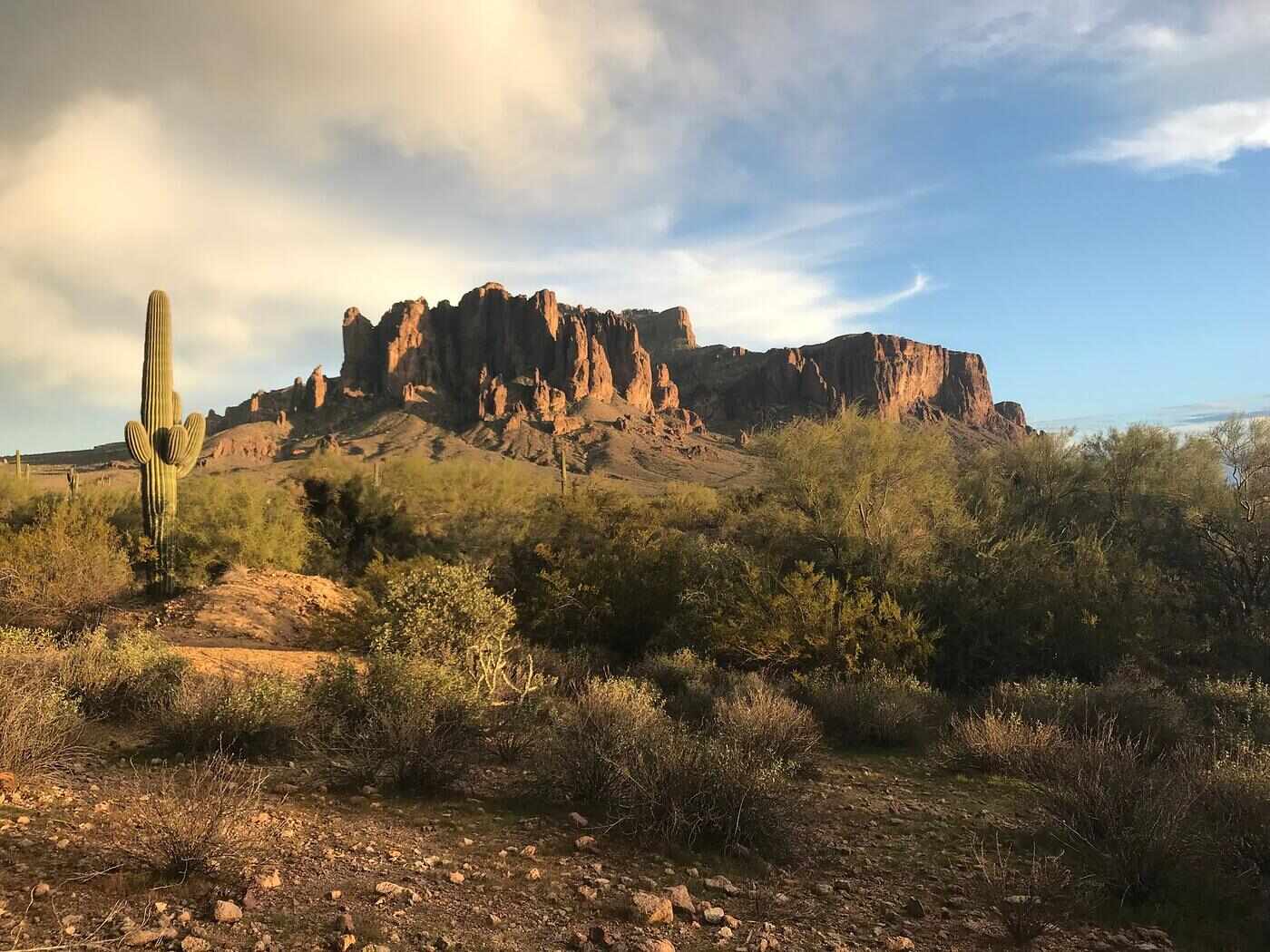
Rodent Removal in Mesa, AZ
Mesa spans a century of building, from the wide original grid with its citrus to the newer subdivisions out past Power Road. The inspection that sorts out which kind of job you have is free.
Free Inspection in Mesa
A free inspection in Mesa covers the roofline, the attic, the perimeter and the garage, and because the city is so large the findings vary considerably from one side of it to the other. Whoever attends works each eave run from a ladder, checks the first course of tile where there is tile, inspects the gable and soffit vents and the penetrations, then reads the attic with a light before covering the wall line and any outbuilding. The written findings price trapping, sealing and attic work separately.
Mesa is in Maricopa County directly east of Tempe, which puts it inside the ordinary working area for an east Valley contractor. Somebody answers this line at any hour. Book a free inspection and say roughly where in the city the property is, since a central Mesa house and a far east subdivision produce quite different inspections.
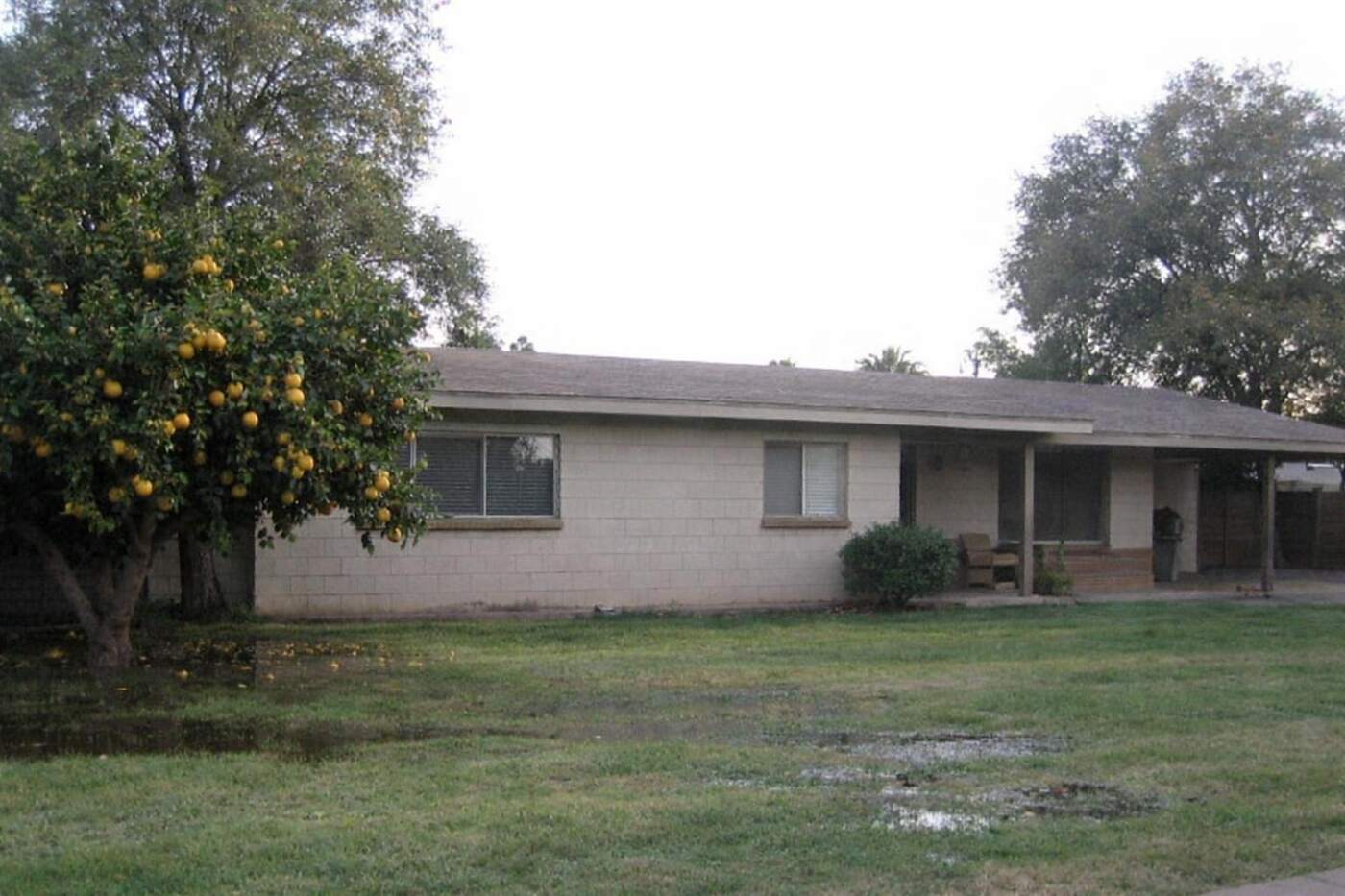
Citrus and the old grid make central Mesa roof rat country
Mesa was laid out in 1878 on an unusually wide street grid, and agriculture, citrus in particular, shaped the land around it for most of the following century. A great deal of that citrus survives in yards across the central and western parts of the city, on lots that were part of groves before they were subdivisions.
Citrus in a yard is a roof rat food supply through exactly the months the animal is most active. Maricopa County Vector Control puts peak roof rat activity from November through May, which coincides with harvest, and the clearest tell most Mesa homeowners recognize after the fact is fruit lying under the tree with the inside eaten out of one side. Clearing fallen fruit promptly removes the easiest meal on the property without touching the tree.
Mature street and yard trees do the rest. The county reports roof rats travel power lines and tree limbs and spend around ninety percent of their lives four feet or more above the ground, and on a central Mesa lot with a grapefruit tree and a canopy reaching the eave that is a straightforward route. Trimming growth back about three feet from the roofline removes the bridge; the closure at the eave and the vents is what settles whether anything gets in.
East Mesa brings tile roofs and some desert edge
The eastern half of the city, out toward Power Road, Signal Butte and the Superstition foothills, is mostly 1980s to 2010s block and stucco under concrete or clay tile on gravel-landscaped lots, which is a different inspection from the old grid.
On that stock the dominant opening is the gap under the first course of tile. Those tile ends were closed with mortar at the time of building, and it breaks up and falls out after about fifteen to twenty years in this climate, which puts a house from the 1990s or early 2000s exactly at the age where the eave has opened end to end. The replacement is a manufactured metal bird stop, usually 26 gauge galvanized steel or aluminum, and Department of Energy guidance names bird stopping among the measures it recommends for tile roofing.
Further east, where subdivisions meet open desert and washes, woodrats enter the picture alongside roof rats. The University of Arizona Cooperative Extension describes the woodrat nest as a mound of vegetation and sticks at the base of a prickly pear or a palo verde with several entrances and shallow tunnels, which on those lots means against a block wall corner, under a shrub or beneath an equipment pad. Pack rat removal covers that work.
Acre lots, horse properties and outbuildings
Parts of Mesa, particularly in the north toward the river corridor and in pockets across the east, keep larger lots with barns, workshops, detached garages and horse facilities on them, and those structures frequently matter more than the house does.
An outbuilding is an attractive proposition for a rodent: a roof space nobody inspects, a door that rarely meets the ground cleanly, stored feed, bedding, timber and cardboard, and no occupants to notice anything. Feed in particular is worth naming. Grain, pellets, birdseed and bagged supplement are a food supply on a scale a kitchen pantry never reaches, and moving them into hard sealed containers removes more of the problem than any product does.
So an inspection on a property like that reads the outbuildings properly rather than glancing at them, and the answer is often a closure and a clear-out in a barn or workshop rather than a trapping program in the house. Where vehicles, trailers and equipment stand on gravel for long periods, the wiring gets checked too: the extension notes woodrats are notorious for chewing the wiring of cars and appliances.
What We Handle in Mesa
Mesa calls run the full range, which is what a city spanning a century of building produces.
- Roof rat removal: attic trapping on the active runs, left at least a week because UF/IFAS notes roof rats avoid newly placed objects.
- Rodent exclusion: metal bird stops along the tile eave on the east side, galvanized cloth at vents and soffit returns on the older grid, collars at the line set sleeves.
- Pack rat removal: middens cleared on the desert-edge lots, with equipment pads skirted and wiring on vehicles and condensers checked.
- Rodent inspection: free, covering roof, attic, perimeter, garage and any outbuilding, each finding written down.
- Mouse removal: garage, pantry and feed-room trapping plus the quarter-inch gaps that let them in.
- Attic cleanup: droppings, nests and citrus caches cleared from attics that carried animals through several harvests.
- Attic insulation replacement: flattened or soiled blown-in fill measured, removed and blown back to depth.
- Dead rodent removal: locating a carcass behind a smell after a bait-only treatment and closing the route in.
- Commercial rodent control: restaurants along Main Street and the Superstition corridor, retail strips, warehousing and multifamily.
A Typical Mesa Job
The situation: A 1958 single-story house on a deep lot in central Mesa with two grapefruit trees and an orange along the side fence, a reroof in concrete tile about twelve years ago, and a detached workshop at the back. The owners heard running above the hallway from the first week of December and had been finding hollowed grapefruit under the trees since early November without connecting the two.
What gets done: The ladder walk finds the first-course tile closures absent along about thirty-eight feet of the rear and side eaves, consistent with the reroof rather than with the age of the house, plus one gable vent with the screen gone. The attic shows droppings a quarter to half an inch long with pointed ends along the top plate above the hallway and a worn run toward the hatch. The workshop is checked and turns out to hold a separate mouse problem around stored birdseed. The gable vent is screened in galvanized cloth on the first visit and traps go into both the house attic and the workshop. The eave takes the second visit with a ventilated metal bird stop. The owners clear the fallen fruit and have the orange limb over the eave trimmed back.
How it turns out: Four rats from the attic across ten days and six mice from the workshop over the same period, then nothing from either. The birdseed goes into a sealed bin, which is recorded as the reason rather than as an afterthought. The closure sheet lists thirty-nine feet of bird stop, the screened gable vent with the mesh gauge, the workshop door seal and the insulation depth, and the following winter the fruit still falls and the hallway stays quiet.
What This Costs in Mesa
What a Mesa job costs depends mostly on which half of the city it is in and whether there is tile on the roof. The bands below are typical-job figures, confirmed at the free inspection.
| Work | Phoenix area (Angi) | National (HomeGuide 2026) |
|---|---|---|
| Inspection | Free here | $0 to $175 standalone |
| Trapping visit | $144 to $443, averaging about $286 | $250 to $1,200 |
| Follow-up visit | $50 to $150 | Included above |
| Sealing named openings | $200 to $600 | Part of the whole-home band |
| Whole-shell exclusion on a tile roof | Above the Phoenix figure on a long eave | $500 to $2,500 |
| Outbuilding closure and clear-out | Quoted per structure | No published band applies |
| Attic cleanup | Quoted from the measured area | $600 to $2,500 |
| Insulation removal and replacement | Quoted per square foot | $2.50 to $5.50 per sq ft |
| Dead rodent removal | Quoted at the visit | $150 to $500 |
A central Mesa house with a shingle roof, one bad vent and an open soffit return is a low figure inside the Phoenix sealing band. An east Mesa house with a long barrel tile eave, a shed to seal and two equipment pads to skirt is a longer list and moves toward the national band. A property with a barn or workshop should see that structure quoted on its own line rather than folded into the house.
The order an attic job runs in
Five stages, from inspection through to cleanup.
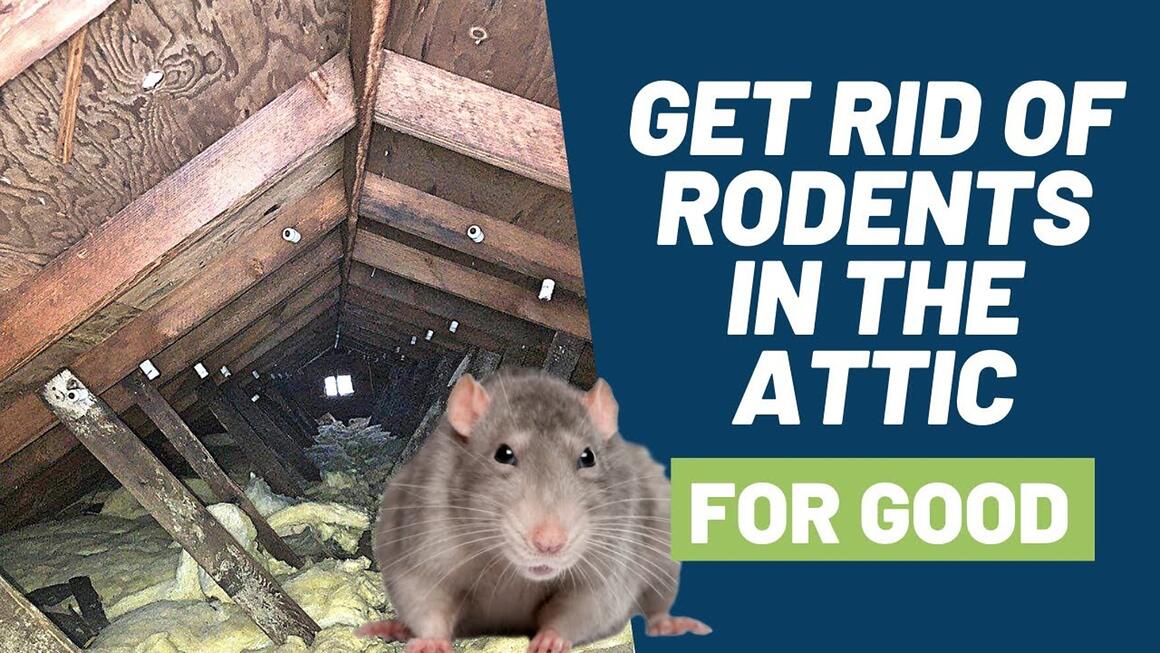
Video: 5 Step Solution to Get Rid of Rodents in Your Attic, from Atticare Construction.
Common Questions in Mesa
What Mesa callers ask before booking.
Is the citrus the reason I have rats?
It is the food supply, and the tree itself is fine to keep. Maricopa County Vector Control puts peak roof rat activity from November through May, which lines up with harvest, and fruit lying under the tree with the inside eaten out of one side is the most recognizable tell in this part of the Valley. Clearing fallen fruit promptly removes the easy meal. What decides whether the animal gets indoors is the eave and the vents, which is a separate list and the one the quote is built on.
Do I have to cut the trees back?
Trimming growth to about three feet off the roofline is the standard advice and it removes the route without removing the shade. The county reports roof rats travel power lines as well as tree limbs and forage within roughly two to three hundred feet of the nest, so a neighbor's citrus stays well inside range whatever you do to your own yard. That range is precisely why the closure is the part that holds rather than the pruning.
We reroofed in tile years ago. Could that be the opening?
Frequently, and it is worth mentioning on the first call. Laying tile on a house that previously had shingle, or lifting and relaying existing tile, opens the first course, and a roofer not thinking about rodents will bed it back with no closure fitted. The result is a continuous void along the length of the eave on a house that otherwise looks immaculate. The original mortar closures crack out after roughly fifteen to twenty years anyway, so either route gets to the same place.
Can the barn and the house be quoted separately?
They should be. An outbuilding has its own roof space, its own door line and its own stored material, and on a larger Mesa lot it is often where the actual problem is while the house needs nothing. Feed, bedding, timber and cardboard inside one supply food, nesting material and cover together, and getting feed into hard sealed containers does more than any product. Insist on per-structure pricing so you can see which building the money is for.
Nearby Areas We Serve
The same contractors cover the east Valley towns next to Mesa, and the service area is the whole of Maricopa County.