Rodent Removal in Cave Creek, AZ
Cave Creek is desert lots, saguaros and boulders below Black Mountain, which makes the woodrat the resident animal rather than an intruder. The inspection that finds the middens is free.
Free Inspection in Cave Creek
A free inspection in Cave Creek starts in the yard rather than the attic, because on a large desert lot the nest is almost always at ground level. Whoever attends walks the wall and fence lines, the cactus and shrub beds, the boulder groupings, the equipment pads, the shed or barn and anything parked, then works the eave from a ladder and reads the attic. Every nest site and opening goes on a written list with its own price.
Cave Creek is in northern Maricopa County beyond the edge of the Phoenix grid, and a contractor routed there covers the north Valley. The line is answered at any hour. Book a free inspection and say where on the property the material or the damage is, because on an acre of desert that narrows the walk considerably.
Out here the woodrat lives on the lot already
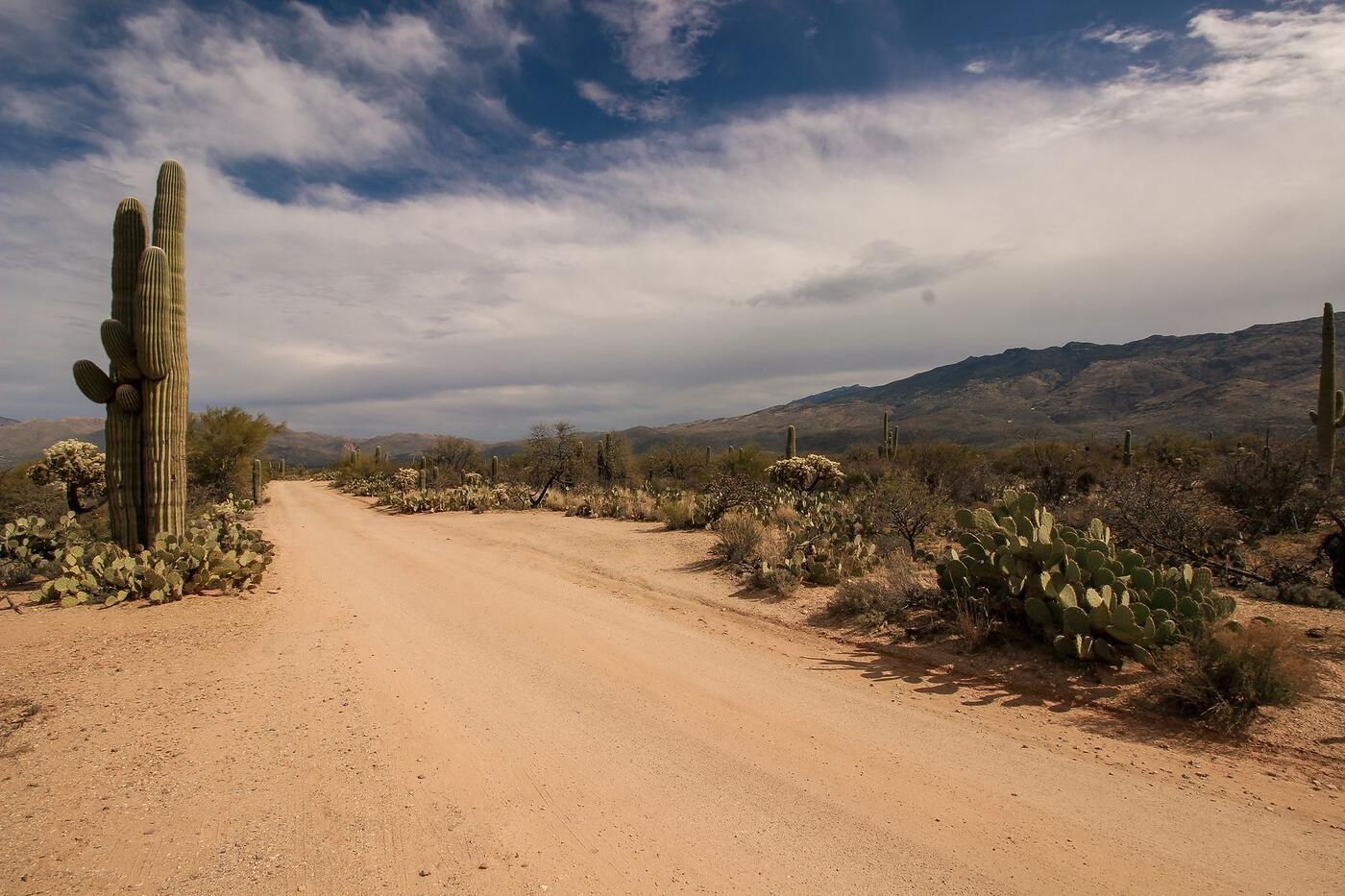
Cave Creek developed as a mining and ranching settlement and has kept a low-density desert character, with large lots, natural desert landscaping and a great deal of undisturbed ground between and around properties. The consequence for rodent work is that the woodrat is not something arriving from elsewhere; it is a native resident of exactly the habitat the lot consists of.
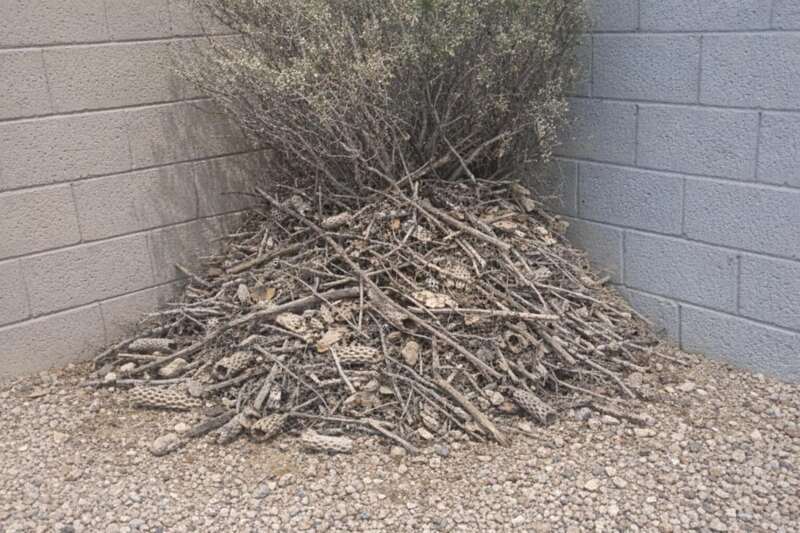
The University of Arizona Cooperative Extension names three woodrat species found in central Arizona, the white-throated woodrat, the Mexican woodrat and Stephens woodrat, and describes the nest, called a midden, as a mound of vegetation and sticks built at the base of a prickly pear or a palo verde, with several entrances and exits, tunnels running a few inches below ground, rooms used for storage and grass-lined nests for sleeping. On a Cave Creek lot that is precisely what is there, with the addition of the building.
So the goal here is never eradication from the property, which is neither achievable nor the point. It is making the house, the outbuildings and the equipment unavailable while the animals go on living in the desert they belong in. The extension identifies exclusion and barriers as the most effective management where woodrats are entering structures, which is the whole strategy stated in one line. Pack rat removal covers the work.
Boulders, washes and the places a midden hides
A Cave Creek lot gives a woodrat better building sites than a flat subdivision ever could. Natural boulder groupings have voids running between and under them. Washes cut through properties with brush along the banks. Retaining walls, stepped pads and raised patios leave enclosed space at ground level. Dense cholla, prickly pear, mesquite and palo verde supply both cover and building material within a few feet of each other.
That means an inspection here looks under and behind rather than along. The void beneath a boulder cluster, the gap at the back of a lower pad, the space under a raised deck or patio, the underside of an equipment platform and the bank of a wash crossing the property are each worth checking, and they are the sites most likely to be invisible from the house. A mound in the open is the easy find; the one under two tons of granite is the one that keeps coming back.
Closing a natural void is not always possible or desirable, and an honest report says which sites can be closed and which can only be monitored. Where a void is close to a building or an equipment pad, mesh fitted behind and beneath the stone and pinned at the ground line is effective and invisible once the gravel goes back.
Vehicles, equipment and well or pump controls
The expensive damage in Cave Creek is electrical and it is frequently on something that was not being used. The University of Arizona Cooperative Extension notes woodrats gnaw the vinyl and plastic shielding on electrical wire and are notorious for chewing the wiring of cars and appliances, and on an acre of desert the candidates multiply: a second vehicle, a trailer, a utility vehicle, a horse trailer, a tractor, a generator, a well or pump control panel, an irrigation valve box, a gate operator, landscape lighting transformers and the air conditioning condenser.
All of them are enclosed, warm at least some of the time, wired, and opened perhaps twice a year. A gate operator at the end of a long drive is a particularly common find, because nobody inspects it until it stops working and the gate is the only way in or out. Well and pump controls are the other one worth naming, since a failure there is not a cosmetic problem.
So a walk here opens cabinets and looks into engine bays as a matter of routine, with dates recorded against anything found chewed. The repairs belong to an electrician, a mechanic or the relevant specialist; the rodent contractor's part is to find it, clear the nest, trap the run and close the access.
What We Handle in Cave Creek
Cave Creek work is mostly ground-level: middens, barriers and equipment, with the roofline checked as part of every visit.
- Pack rat removal: middens cleared from boulder voids, shrub and cactus beds, wall corners, sheds, equipment pads and under parked machinery.
- Rodent exclusion: mesh skirts at pads, screens behind boulder voids near structures, shed and gate closures, plus metal bird stops along any tile eave.
- Rodent inspection: free, and on a lot this size it covers the full perimeter, every structure and all the equipment.
- Roof rat removal: attic trapping where the animal has gone up, left at least a week because UF/IFAS notes roof rats avoid newly placed objects.
- Mouse removal: garage, pantry, feed and storage trapping plus the quarter-inch openings they use.
- Attic cleanup: droppings, nests and caches removed and the space sanitized, with insulation depth recorded.
- Attic insulation replacement: measured and priced per square foot where the fill has been flattened or soiled.
- Dead rodent removal: tracing a smell to the carcass, including inside equipment cabinets, and closing the access.
- Commercial rodent control: restaurants and retail along Cave Creek Road, equipment yards, stables and storage businesses.
A Typical Cave Creek Job
The situation: A house on a little over two acres below Black Mountain, natural desert landscaping, a boulder grouping twenty feet from the rear patio, a detached garage and workshop, a gate at the end of a long drive, and a second vehicle that is driven perhaps once a month. The gate stopped responding in June. When the gate company opened the operator cabinet they found nesting material and a chewed low-voltage loop.
What gets done: The walk finds four sites. The gate operator, a midden in the void under the boulder grouping, a second mound against the workshop wall under a cholla, and a nest under the parked vehicle with the engine bay showing the beginnings of chewing on a harness wrap. Droppings are also on the condenser pad. Everything is cleared and traps go on the two runs between the boulder void, the workshop and the drive. On the second visit the condenser pad and the gate operator base are skirted in hardware cloth pinned at the ground line, mesh is fitted into the boulder void behind the stone facing the patio and concealed with gravel, the workshop door gets a bottom seal and threshold, and the cholla bed is thinned so the ground beneath is visible. The house eave is walked and the tile closures are intact.
How it turns out: Six animals over sixteen days and nothing at any of the sites afterward. The gate and the vehicle harness are repaired by their own trades. The report names all four sites, records which void can be closed and which can only be monitored, lists the two pad skirts, the workshop door and the boulder mesh, and carries dated photographs of both pieces of chewed wiring. The vehicle is moved onto a concrete pad and started more often.
What This Costs in Cave Creek
A Cave Creek job is priced by the number of nest sites and structures rather than by the size of the house, and on an acre or more there are usually several. Every band below is a typical-job figure settled at the free inspection.
| Work | Phoenix area (Angi) | National (HomeGuide 2026) |
|---|---|---|
| Inspection of the whole property | Free here | $0 to $175 standalone |
| Trapping visit | $144 to $443, averaging about $286 | $250 to $1,200 |
| Follow-up visits | $50 to $150 each | Included above |
| Midden clearance and site closure | Quoted per site | Cleanup band $600 to $2,500 where it extends into a structure |
| Sealing named openings on a structure | $200 to $600 | Part of the whole-home band |
| Whole-shell exclusion, house | Above the Phoenix figure on a tile eave | $500 to $2,500 |
| Outbuilding closure | Quoted per structure | No published band applies |
| Attic cleanup and insulation | Quoted from the measured area | $600 to $2,500; $2.50 to $5.50 per sq ft |
One midden and a pad to skirt is a small job. Four sites across two acres, a workshop to seal, a gate operator and two vehicles is several visits and should be quoted site by site rather than as a single figure. Ask for the sites counted and each structure on its own line, and ask which voids the contractor judges closable and which will need watching instead.
Mice, squirrels, or something else
How the signs differ between the two.

Video: Signs of Mice vs. Squirrels In Your Attic, from Skedaddle Humane Wildlife Control.
Common Questions in Cave Creek
What Cave Creek callers ask before booking.
Can we get rid of pack rats on the property altogether?
Realistically no, and that is the honest answer rather than a caveat. A woodrat is a native animal of exactly the desert your lot consists of, and clearing the property would mean clearing the habitat. What is achievable, and what the work here aims at, is making the house, the outbuildings and the equipment unavailable while the animals carry on living in the desert. The University of Arizona Cooperative Extension names exclusion and barriers as the most effective management where woodrats are entering structures.
The nest is under a boulder group we do not want disturbed.
Then it gets monitored rather than removed, and the barrier work happens between it and the building. Mesh fitted behind and beneath the stone on the side facing a structure, pinned at the ground line and concealed with gravel, closes the route without touching the feature. An honest report says which sites can be closed and which can only be watched, and having that written down is more useful than a promise to eliminate something that cannot be eliminated.
What should I be checking myself between visits?
The cabinets nobody opens. The gate operator, the air conditioning condenser, the well or pump controls, the irrigation valve boxes, the landscape lighting transformers, and the engine bay of anything parked for more than a couple of weeks. The University of Arizona Cooperative Extension notes woodrats gnaw the vinyl and plastic shielding on electrical wires and are notorious for chewing the wiring of cars and appliances, and finding nesting material in one of those in March costs a great deal less than a failure in July.
Is this a seasonal problem?
It runs year round out here, with a shift in where it shows up. Valley winters are mild enough that rodent pressure never stops, and while attic calls about roof rats peak roughly October through March, woodrat discoveries skew toward the warm months because that is when equipment gets used and a failure gets noticed. A midden built in March is commonly found in June when something stops working, which is the argument for a walk before the hot season rather than during it.
Nearby Areas We Serve
The same contractors cover the north Valley towns near Cave Creek, and the wider service area is Maricopa County.