Mouse Removal in Phoenix, AZ
House mice turn up in Valley garages, pantries and storage rooms as the nights cool, and there is very little about them that is specific to Phoenix. Licensed Arizona contractors trap them out and close the small openings they used.
What mouse removal in Phoenix covers
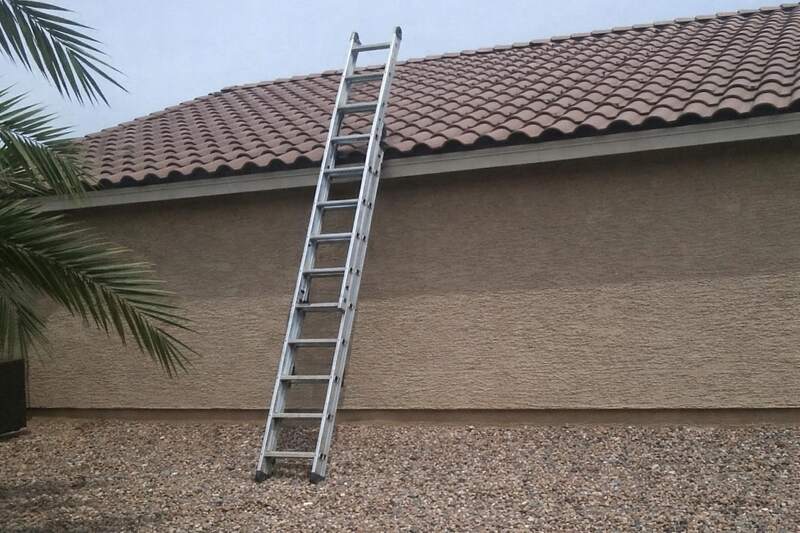
Mouse removal is trapping in the rooms where the activity is, plus closing the quarter-inch openings that let them in, and it is usually the shortest job in the whole list. UF/IFAS gives a quarter inch as the gap a mouse needs and a quarter inch as the rat-proofing standard as well, so the sealing materials are the same; there is less of it to do and it is generally within reach of a step stool rather than a ladder.
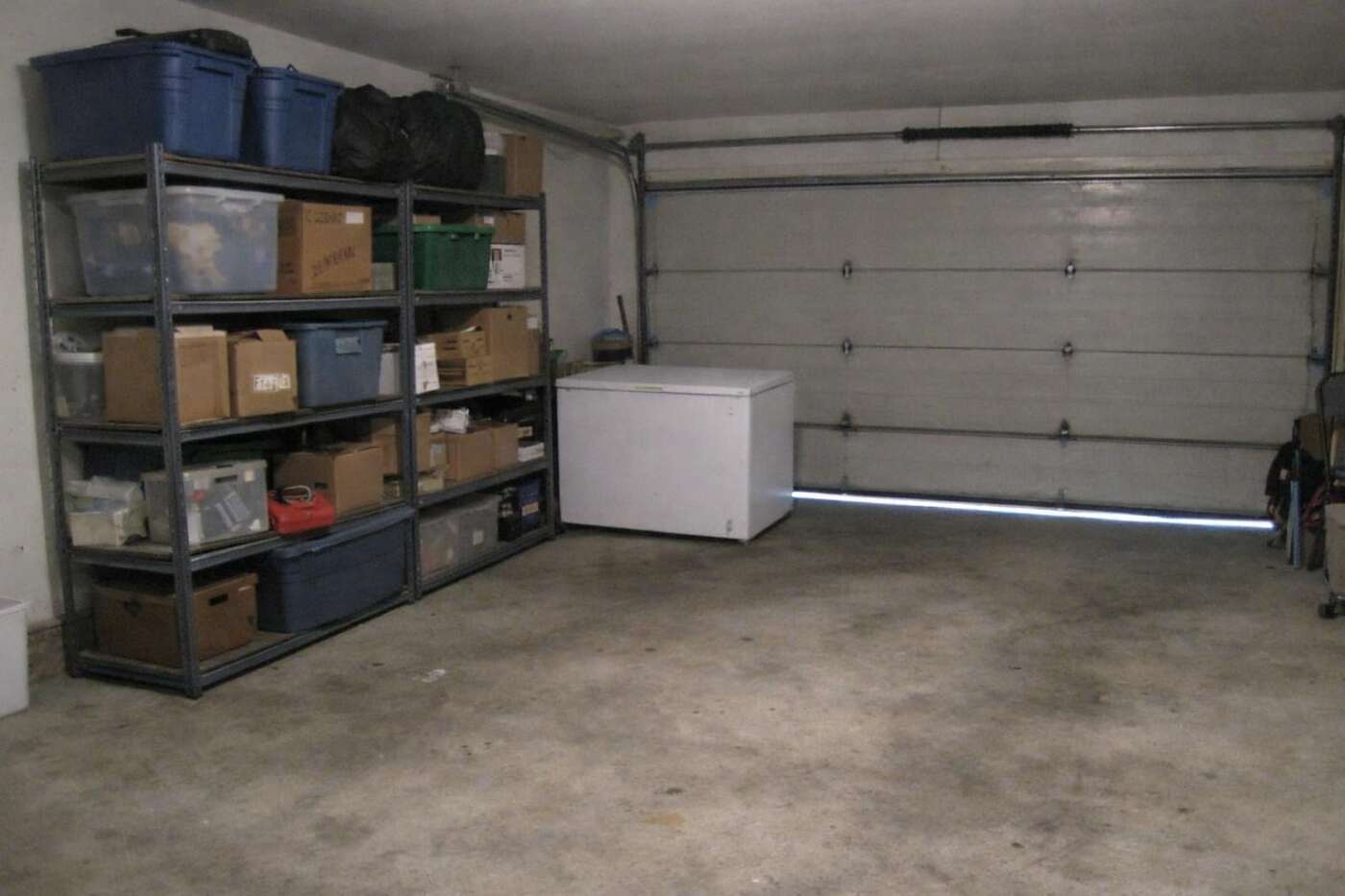
The scope on an ordinary Valley house is the garage, the pantry and storage cabinets, the laundry, the space behind and under appliances, and the penetrations through the walls of those rooms. Attic work comes into it only where the evidence puts it there, which with mice is unusual.
- A free walk of the affected rooms plus the garage and the exterior wall line
- Identification from droppings and gnaw marks, separating a mouse from a young roof rat
- Snap traps in tamper-resistant boxes set along the walls and behind appliances
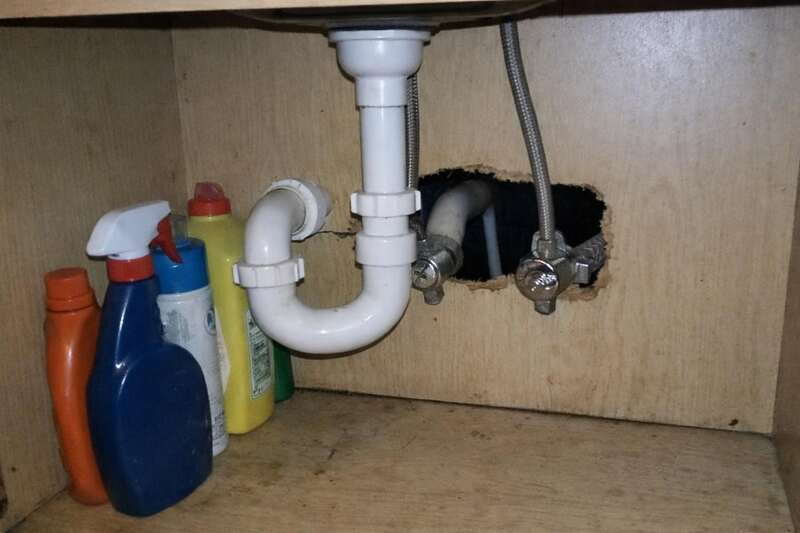
- Pipe and cable sleeves under sinks, behind the water heater and at the laundry closed in mesh and sealant
- Garage door bottom seal, side seals and threshold replaced where daylight shows
- Droppings in cabinets and on shelving cleaned out and the surfaces sanitized
- Advice on stored food and pet food containers, which is usually what held them in place
- A short written record of what was closed
If the noise is overhead after dark rather than at floor level, the page you want is roof rat removal. If the problem is a mound of sticks outdoors, it is pack rat removal.
There is no Phoenix-specific mouse story, and that is worth saying
House mice behave the same way in Phoenix as anywhere else in the country, and a page that claimed otherwise would be padding. The roof rat has a genuine local history here, starting with the 2002 Arcadia identification, and the pack rat is a desert animal through and through. The house mouse is neither. It lives in garages, pantries and storage rooms, it gets in through small gaps, and it is trapped and excluded the same way in Mesa as in Minneapolis.
The one local note that holds up is timing, and it is modest: activity picks up from roughly October through March as Valley nights cool and the garage becomes the warmest sheltered space on the lot. That is the same seasonal shape as the roof rat calls, for a different reason, and it is the whole of the Phoenix angle.
What this means in practice is that a mouse job should be quick and cheap relative to the rest of the list, and a quote that treats it like a full roof rat program deserves a question. It also means the useful part of the visit is usually the sealing and the housekeeping advice rather than the trap line.
The signs that point to mice rather than rats
Small droppings in a cabinet, gnawed packaging, and scratching at floor level during the day are the mouse pattern. Size is the most reliable separator: UF/IFAS gives the roof rat dropping as a quarter to half an inch long, banana shaped with pointed ends, and anything clearly smaller than that points to a mouse instead.
- Droppings in a drawer, a cabinet or along a baseboard. Concentrated in one area rather than strung along a ceiling top plate.
- Chewed packaging in a pantry or a garage. Cereal boxes, dog food bags, birdseed and stored grass seed are the usual targets.
- Scratching behind a kickboard or an appliance. At floor level, and often during the day as well as at night.
- Shredded paper, insulation or fabric gathered into a corner. Nesting material in a cupboard or a stored box.
- Greasy smudge marks along a wall at floor level. The equivalent of a rat rub mark, much lower down.
- Daylight under the garage door. Not a sign in itself, but it is the opening that explains most Valley garage mice.
Where the droppings are a quarter inch or larger with pointed ends, treat it as a rat and read roof rat removal instead. A young roof rat can be mistaken for a mouse, which is a well documented source of confusion, and the inspection settles it.
The openings a mouse uses
A quarter inch is enough, per UF/IFAS, which puts almost every mouse opening at ground level or inside a cabinet rather than up on the roof. That same quarter inch is the rat-proofing standard, so hardware cloth chosen against it closes a gap for either animal. Coin comparisons circulate widely in this trade and each of them overstates the opening by something like a factor of three, which matters in the one sentence whose whole purpose is to be precise about a measurement.
| Opening | Why it is open | How it gets closed |
|---|---|---|
| Garage door bottom and side seals | Rubber shrinks and tears, and the concrete is rarely flat at the corners | New bottom seal, side seals and a threshold strip bedded to the slab |
| Pipe sleeves under a sink or behind a toilet | Oversized holes cut for the supply and drain lines and never closed | Mesh packed into the gap with sealant over it, or a proper escutcheon plate |
| Dryer vent and laundry penetrations | Louvers jam open or the duct collar leaves a gap in the stucco | A working louvered vent cover and the collar gap closed with mesh and mortar |
| Gap behind or beneath a water heater closet | Combustion air openings and an unfinished floor-to-wall joint | Mesh at the opening so the combustion air path still works |
| Weep screed at the base of a stucco wall | A drainage detail at the bottom of the wall with a continuous gap behind it | Fine mesh fitted so drainage continues, which on a Valley house is normal work |
| Expanding foam on its own | Not an opening, but the most common wrong answer | Use it only as a backing behind mesh; alone it gets chewed and it hides the hole from the next inspection |
On a Valley house the weep screed and the garage edge are the two that come up most, because both run continuously along the base of the building. Full-shell work is covered on the rodent exclusion page.
What mouse removal costs in Phoenix
A mouse job sits at the bottom of every band quoted here, because the trapping is short and the sealing is limited to a few named openings. Angi's Phoenix figures put a rat extermination visit at $144 to $443 with follow-ups at $50 to $150 and exclusion work such as screening and repairing holes at $200 to $600, and a mouse job normally lands under the middle of both.
| Line item | Band | Source |
|---|---|---|
| Inspection | Free here | $0 to $175 standalone, HomeGuide 2026 national |
| Trapping visit | $144 to $443, typically the lower half for mice | Angi cost data, Phoenix |
| Follow-up visit | $50 to $150 | Angi cost data, Phoenix |
| Sealing named openings | $200 to $600 | Angi cost data, Phoenix |
| Cabinet and shelving cleanup | Quoted from the site, usually minor | Cleanup and decontamination $600 to $2,500 nationally, HomeGuide 2026 |
A quote that prices a garage mouse problem like a whole-shell roof rat program is worth querying line by line. Ask what is trapping, what is sealing, how many return visits are included, and whether anything in the attic forms part of it.
Cleanup, health and the license to check
Wear a respirator and gloves for dropping cleanup because of general contamination rather than because of a specific local disease risk. The CDC states that rodents carry many diseases, spread directly through contact with urine, droppings, saliva or a bite and indirectly through fleas, ticks and mites that have fed on an infected animal. Maricopa County has tested Valley roof rats and the results have come back negative for tularemia, hantavirus and plague, which is a reassuring local fact and one worth stating rather than leaving out.
Practically, that means clearing droppings out of a pantry is a job for gloves, a dust mask or respirator, damp cleaning rather than dry sweeping, and sealed disposal. Food in chewed packaging goes out. Dry goods and pet food move into sealed containers, which is usually the single change that stops a repeat.
The licensing position is the same for mice as for anything else here. Structural pest control in Arizona requires a license from the Arizona Department of Agriculture, Pest Management Division, and that license covers applying product and making site-specific recommendations. Ask whoever attends for the business license number, verify it with the PMD, and ask for proof of insurance. Nothing on this page is a treatment recommendation for your own house.
The services that usually sit beside this one
Mice are usually the smallest job of the lot, and these are the pages covering what sits around it.
- Rodent Exclusion: Closing the shell: tile eaves, vents, conduit sleeves, weep screed and garage edges.
- Rodent Inspection: A free walk of the roofline, attic and perimeter that fixes the order of the job.
- Roof Rat Removal: Trapping out the climber that dominates Valley attic calls, run alongside the sealing.
Most mouse calls need nothing else on this list. Where the droppings turn out to be larger, the inspection says so and the job changes; the about page explains how that call gets made.
How a house mouse problem is worked
The four stages, in order.
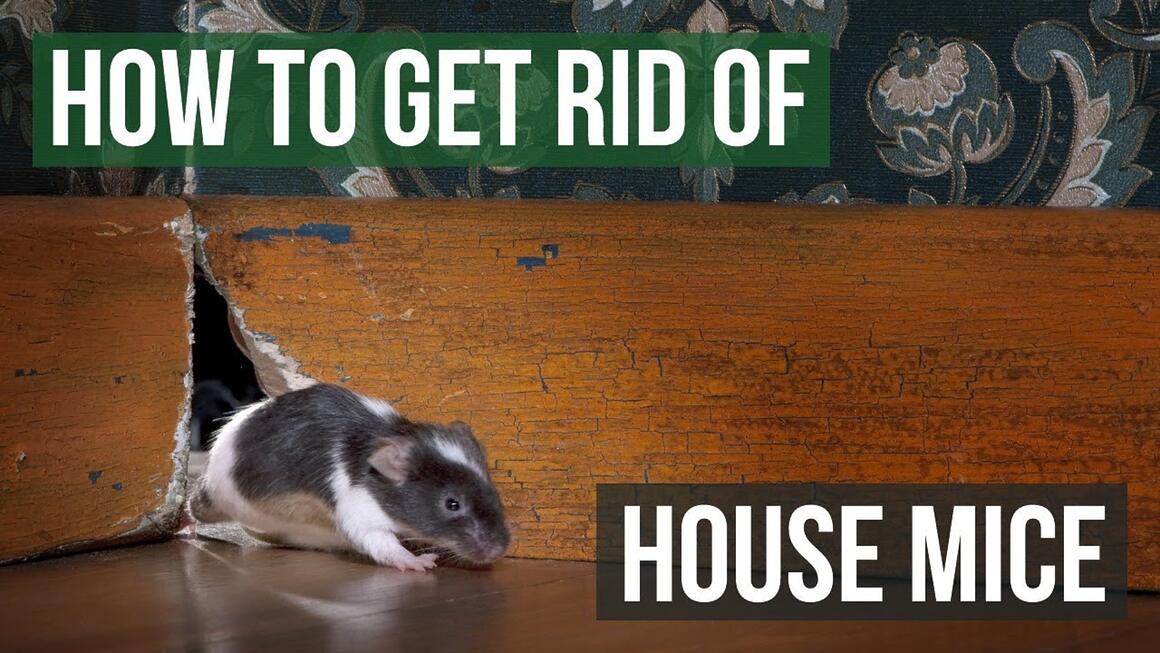
Video: How to Get Rid of House Mice, from Solutions Pest & Lawn.
How a mouse job runs in Phoenix
Four steps rather than five, because a mouse job rarely involves the roof.
-
Describe where it is
Which room, whether droppings have turned up, what has been chewed and how long it has been going on. Size of dropping is usually enough to separate a mouse from a young rat.
-
Walk the rooms and the wall line
The garage, pantry, laundry and the space behind appliances get checked, then the exterior base of the wall, the garage door edges and the vent penetrations.
-
Trap and clean
Snap traps in tamper-resistant boxes go along the walls and behind appliances, and the droppings in cabinets and on shelving get cleared and the surfaces sanitized.
-
Close the gaps
Pipe sleeves, vent collars, the weep screed line and the garage door seals get closed in mesh and sealant, and stored food goes into sealed containers.
What to expect
A mouse visit is short, and this is the order it runs in.
- A look behind the appliances as well as along the baseboards
- Droppings measured against the quarter-inch figure before anything is assumed
- Traps housed in boxes wherever pets or children reach
- Cabinet surfaces damp cleaned rather than dry swept
- A short list of the openings closed

Why Phoenix households route mouse work through us
Three things keep a small job small.
-
The animal gets identified before anything is quoted
A young roof rat and a house mouse get confused routinely, and the two jobs are not the same size or the same price. UF/IFAS gives the roof rat dropping as a quarter to half an inch, banana shaped with pointed ends, and that measurement taken at the inspection decides whether this is a garage job or an attic job. Quoting a full roofline program for a mouse in a pantry is the mistake this step prevents.
Roof rat droppings measure a quarter to half an inch with pointed ends, UF/IFAS Extension
-
One measurement, and it has a source behind it
UF/IFAS puts the gap a mouse needs at a quarter inch, and a quarter inch is the rat-proofing standard as well, so one number governs the mesh on both kinds of job. Coin comparisons get repeated right across this trade and every one of them is roughly three times too generous. The reason that matters is practical rather than pedantic: hardware cloth chosen against an overstated figure leaves behind an opening the animal can still use.
A quarter inch is the opening a mouse needs, UF/IFAS Extension
-
A small quote, itemized anyway
Angi puts a Phoenix extermination visit at $144 to $443 and sealing named openings at $200 to $600, and a mouse job usually sits below the middle of both. The quote still separates trapping, sealing and cleanup, because that is what lets a homeowner see that no attic work has been added to a garage problem without comment. Stored food moving into sealed containers is free and is often the part that stops the repeat.
Angi, Phoenix: extermination visit $144 to $443, sealing $200 to $600
What Reddit Says About Mouse Removal in Phoenix
On mice the homeowner threads are calmer than on attic rats, and the practical advice is consistent. Snap traps are preferred to anything else, glue boards get criticized as both ineffective and unpleasant, and the repeated instruction is to find and close the opening rather than to keep resetting traps indefinitely. People push each other toward sealing the gap under the garage door and getting dry goods and pet food into hard containers as the first two moves.
The warnings carry over from the rat threads. Bait-only plans get the same treatment, and the reason given is the same: the animal dies somewhere inside. Quotes that attach a recurring monitoring contract to a small job come up often, and so does the complaint about a company returning for months with nothing changing. On the identification question there is a recurring thread type where two companies disagree about whether a homeowner has a mouse or a young rat, which is exactly why the droppings get measured at the inspection rather than guessed at.
The questions worth borrowing are short. What is included and what is extra? How many visits? Will the openings be closed as part of this, or is that a separate quote? Is anything going to be put down indoors? For a mouse problem those four are usually the whole conversation.
That is why this page stays short and why the sealing and the housekeeping sit ahead of the trap line.
A typical mouse job in a Valley garage
The situation: A two-car garage on a 1990s house in the west Valley, used for storage and a chest freezer as well as a car. Droppings appearing along the back shelf through October, a chewed corner on a bag of dog food, and a faint scratching behind the water heater closet at odd hours. No noise at all from the ceiling.
What gets done: The droppings measure well under a quarter inch, which rules out a roof rat. Daylight shows along about eighteen inches of the garage door bottom seal where the concrete dips, and the combustion air opening at the base of the water heater closet has no screen. Traps go in boxes along the back wall and behind the freezer, the dog food and the birdseed go into sealed bins, and the shelf is cleared and damp cleaned. On the second visit the door seal and threshold are replaced, the closet opening is screened so the air path still works, and the dryer vent collar gap gets mesh and mortar.
How it turns out: Four animals in the first week, one in the second, none after that. The attic is checked during the first visit and found clean, so no attic work is quoted. The whole job is two visits and a short closure list, and the shelf stays clear through the following winter.
Mouse questions from Phoenix callers
The handful of things people ask once they have found droppings in a cabinet.
How do I tell a mouse from a young rat?
Measure the droppings. UF/IFAS gives the roof rat dropping as a quarter to half an inch long, banana shaped with pointed ends, and a mouse dropping is clearly smaller. Location helps too: droppings concentrated in a drawer, a cabinet or along a garage baseboard point to a mouse, while a trail along an attic top plate with running overhead after dark is a roof rat. Two companies disagreeing on this is common enough that it is worth having the droppings looked at rather than described over the phone.
Is there anything specific about mice in Phoenix?
Very little, and that is the useful answer. They live in garages, pantries and storage rooms, they use quarter-inch gaps, and they are trapped and excluded the same way here as anywhere in the country. The only local note that holds up is timing: activity picks up from roughly October through March as Valley nights cool and the garage becomes the warmest sheltered space on the lot. The roof rat and the pack rat both have real Phoenix stories. The house mouse does not.
Can I handle a garage mouse myself?
A lot of it, yes. Snap traps along the walls, dry goods and pet food into sealed containers, a new garage door bottom seal and mesh packed into the pipe sleeves under a sink are all within reach of a homeowner with a step stool. Where it is worth a licensed contractor is when the droppings measure up to a rat, when the activity is in the attic, or when the openings are in the stucco weep screed or a vent collar where the closure has to keep drainage and combustion air working.
Do I need to throw out the food in the pantry?
Anything in chewed or open packaging, yes. The CDC states that rodents carry many diseases spread directly through urine, droppings, saliva or a bite and indirectly through fleas, ticks and mites, so contaminated packaging goes out and the shelf gets damp cleaned rather than dry swept, with gloves and a dust mask on. Sealed cans and jars are fine after the outside is wiped down. Moving dry goods into hard containers afterward is the single change that most often prevents a repeat.
Should I put poison down in the garage?
It is the route that produces a smell you cannot find. The EPA describes most rodenticides as anticoagulants that kill four days to two weeks after feeding begins, and second-generation anticoagulants have been withdrawn from consumer products; UF/IFAS notes that trapping reduces the risk of a poisoned animal dying inside a building. In a garage with a chest freezer and stored boxes, a carcass in an inaccessible corner is a realistic outcome. Traps recover the animal, which is the practical argument rather than a philosophical one.