Commercial Rodent Control in Phoenix, AZ
A restaurant, a warehouse, a retail strip or an apartment building needs the rodent question answered with paperwork behind it. Licensed Arizona contractors handle the work and keep the records an inspector expects.
What commercial rodent control in Phoenix covers
Commercial work is the same physical job as residential with two differences: the schedule is ongoing rather than a single program, and the documentation is part of the deliverable rather than a courtesy. A restaurant with a health inspection coming, a warehouse facing a customer audit and an apartment building with a complaint trail all need records as much as they need the rodents gone.
Valley commercial stock adds its own conditions. Retail strips and restaurant rows share roof decks and dumpster enclosures between tenants, so an animal dealt with in one unit walks back from next door. Industrial buildings in the west Valley and along the freight corridors have dock doors, trailer bays and long runs of panel joint. Multifamily has shared walls, shared attics in some garden-style stock, and a different tenant each year.
- A full survey of the building shell, the roof, the dock and service areas, and the interior back of house
- Exclusion-led work: roof and parapet details, dock door seals, panel joints, conduit penetrations, floor drains and wall weep openings
- Trapping in back of house, storage, mechanical rooms and roof voids, in housings appropriate to an occupied commercial space
- A monitoring schedule with device locations mapped and each visit recorded
- Sanitation and harborage review covering dumpster enclosures, pallet storage, grease areas and landscaping against the wall line
- Exterior perimeter work, including woodrat middens where a building backs onto desert or a wash
- A service file kept current for a health inspection, a third-party audit, a lease obligation or a claim
- Multi-tenant coordination where a shared roof deck or enclosure is the actual problem
- The contractor Arizona license number on every document
The underlying services are the ones described on the rodent exclusion and roof rat removal pages, plus pack rat removal on desert-edge sites. The documentation side overlaps with rodent clearance letters.
What changes by property type
The opening is different in each building class, and so is the consequence of missing it. A survey that treats a restaurant like a warehouse finds the wrong things.
| Property | Where the pressure comes from | What the work concentrates on |
|---|---|---|
| Restaurants and food service | Grease, waste, deliveries and a shared dumpster enclosure; back-of-house penetrations | Dock and rear door seals, floor drains, pipe chases, enclosure condition, nightly housekeeping review |
| Retail strip centers | A shared roof deck and parapet, shared enclosures, and vacant units nobody monitors | Roof and parapet closure, demising wall gaps, coordination across tenants and with the landlord |
| Warehouses and distribution | Dock doors standing open, trailer bays, panel joints, pallet storage against walls | Dock seals and levelers, panel joint closure, racking standoff from walls, perimeter monitoring |
| Multifamily and apartments | Shared walls and attic runs, unit turnover, trash rooms and chutes, resident housekeeping | Unit-by-unit sealing, trash room condition, roof and eave closure, documented unit access |
| Offices and medical | Break rooms, mechanical rooms, roof equipment curbs and cable penetrations | Roof curb and penetration closure, mechanical room sealing, discreet monitoring |
| Schools, churches and community buildings | Large roof areas, kitchens used intermittently, landscaping against long wall runs | Roof and eave closure, kitchen sealing, scheduling around occupancy |
| Desert-edge industrial and storage | Woodrat middens in yards, around equipment and inside stored vehicles and trailers | Midden clearance, equipment pad barriers, yard housekeeping, vehicle and wiring checks |
On the last row the animal is usually a pack rat rather than a roof rat, and the University of Arizona Cooperative Extension notes woodrats are notorious for chewing the wiring of cars and appliances, which on a yard full of equipment is a maintenance budget rather than a nuisance.
The paperwork a commercial file needs
A commercial service file exists so that somebody who was not present can tell what has been done, when, by whom and with what result. That is what a health inspector, a third-party auditor, a landlord and an insurer each want, and it is a different standard from a residential invoice.
What belongs in it: a site map with every monitoring device numbered and located; a service record per visit, dated, with findings and actions; a record of every closure with the material used and where; any product used, where and in what quantity; corrective recommendations issued to the client with dates; and the contractor business name with the Arizona Department of Agriculture Pest Management Division license number on every page of it.
What also belongs in it, and is most often missing: the sanitation and structural items the contractor cannot fix. A dumpster enclosure with a broken gate, a dock door that will not seal because the leveler is bent, racking pushed flat against a wall, landscaping grown into the wall line and a vacant unit nobody opens are all conditions that defeat the best pest program in the building. A file that records them, dated, protects everybody, and it is the thing that makes the difference when an inspector asks why a problem recurred.
Why a shared building is one problem rather than several
In a retail strip or a multifamily building the rodents do not respect the lease lines, and treating one unit in isolation is the most common way money gets wasted in commercial pest work. A shared roof deck, a common parapet, a continuous attic run, a demising wall with service penetrations through it and one dumpster enclosure for eight tenants are all a single system.
Phoenix retail has a particular version of this. Strip centers with barrel or flat tile on a continuous roof line, shared enclosures at the rear, and a vacant unit or two at any given moment give an animal a protected route from one end of the building to the other. A tenant who pays for trapping inside their own four walls is thinning a population that lives in the roof over all of them.
The practical consequence for a tenant is that some findings need to go to the landlord, and the service file is the instrument for doing that. For a landlord or a property manager, the cheaper arrangement is usually a building-wide program with a single contractor and a single file rather than eight separate contracts producing eight partial pictures. For an owner-occupier of a freestanding building, none of this applies and the program is closer to a large residential job.
What commercial rodent work costs in Phoenix
Commercial work is quoted from the building rather than from a table, because the variables are square footage, the number of openings, the service frequency and the reporting requirement. The published residential bands still anchor the individual pieces, and they are worth reading as a floor rather than a ceiling.
| Line item | Reference band | Source |
|---|---|---|
| Survey and proposal | Free here | $0 to $175 standalone inspection, HomeGuide 2026 national |
| Trapping visit, residential reference | $144 to $443, averaging about $286 | Angi cost data, Phoenix |
| Follow-up or monitoring visit, residential reference | $50 to $150 | Angi cost data, Phoenix |
| Exclusion, named openings | $200 to $600 | Angi cost data, Phoenix |
| Exclusion, whole shell on a small building | $500 to $2,500 | HomeGuide 2026 national |
| Cleanup and decontamination | $600 to $2,500 | HomeGuide 2026 national |
| Larger-scale remediation and restoration | $3,000 to $10,000 and up | HomeGuide 2026 national |
| Ongoing monitoring program | Quoted by frequency, device count and reporting level | No published band applies |
Two things to insist on in a commercial proposal. First, the exclusion work priced separately from the recurring service, so a building-improvement cost is not hidden inside a monthly fee that never ends. Second, a stated service frequency and a stated reporting deliverable, because a program with neither is a subscription rather than a service. A recurring fee with no physical work and no records behind it is the arrangement commercial tenants regret most.
Licensing, records and the regulatory picture
Structural pest control in Arizona, including commercial rodent work, requires a license from the Arizona Department of Agriculture, Pest Management Division, and the license number belongs on every document in the service file. The license trigger covers applying product, making site-specific recommendations and offering to perform the work, which is why the survey and the service are performed by the same licensed party.
A PMD licensee may also take nuisance rodent species without holding a separate wildlife service license from Arizona Game and Fish, which matters on a site where a woodrat in a yard and a roof rat in a ceiling void are both in scope. Maricopa County Environmental Services Vector Control publishes roof rat information and notes that control is the property owner's responsibility rather than a county service, so there is no public abatement route for a commercial property either.
Ask any contractor quoting commercial work for the business license number, verify it with the PMD, and ask for certificates of insurance naming the property where a lease requires it. Ask also what the reporting looks like in practice and request a sample service record, because the difference between a usable file and an unusable one is visible in about thirty seconds. Nothing written here is a recommendation for your own property or advice about a specific regulatory obligation.
The services that usually sit beside this one
Commercial work draws on the same services as residential, run to a different schedule.
- Rodent Exclusion: Closing the shell: tile eaves, vents, conduit sleeves, weep screed and garage edges.
- Rodent Clearance Letters: The dated written report an escrow file, a lease, an HOA notice or a claim needs.
- Pack Rat Removal: Middens cleared and the wiring protected on desert-edge lots, vehicles and AC equipment.
- Rodent Inspection: A free walk of the roofline, attic and perimeter that fixes the order of the job.
On a commercial site several of those run on a schedule rather than once, and the about page covers who attends and under which license.
Pest control in a food premises
The standard a commercial kitchen is held to.
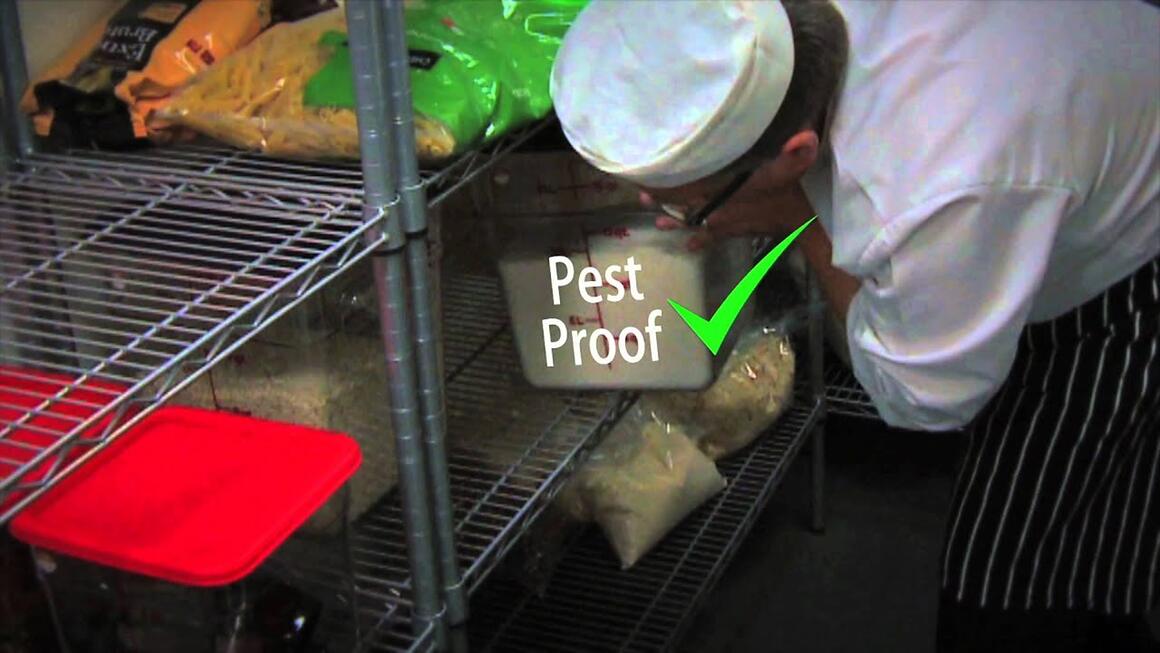
Video: Food safety coaching: pest control, from Food Standards Agency.
How a commercial program gets set up
Five steps, and the survey covers the whole building rather than the affected unit.
-
Scope the building rather than the complaint
Property type, square footage, whether the roof and enclosures are shared, what is driving the timeline, and whether an inspection, an audit or a lease obligation is involved.
-
Survey the shell and the service areas
Roof, parapet and eave details, dock doors and levelers, panel joints, penetrations, floor drains, enclosures, yard and landscaping, then back of house and storage.
-
Close the openings
Exclusion first, priced as its own line: seals, metal closures, screened openings and drain covers, so the recurring service is not paying forever for a building defect.
-
Trap and monitor
Devices placed in housings suited to an occupied commercial space, mapped and numbered, with each visit recorded against the map rather than summarized.
-
Keep the file current
Dated service records, closures with materials, products used, and the sanitation and structural items outside the contractor's control written down as they are found.
What to expect
Commercial setup runs in this order, from a single restaurant to a multi-tenant building.
- The whole building surveyed even when one unit reported the problem
- Exclusion quoted as a separate line from the recurring service
- Devices mapped and numbered rather than described
- Sanitation and structural items recorded with dates
- The Arizona license number on every page of the file
Why Valley operators and managers route commercial work through us
Three things separate a commercial program from a recurring invoice.
-
Exclusion priced apart from the monthly
A building defect folded into a recurring fee is paid for indefinitely and never fixed, which is the commercial version of trapping without sealing. Work routed from here quotes the dock seals, the parapet and roof closures, the screened drains and the panel joints as their own line against the $200 to $600 Phoenix band for named openings, so the capital item and the service item stay visible and separable.
Angi, Phoenix: exclusion work $200 to $600 for named openings
-
The building gets surveyed rather than the unit
In a retail strip or a garden-style apartment building the roof deck, the parapet, the attic run and the dumpster enclosure are shared, so an animal removed from one unit returns from the next one along. A survey that covers the whole shell and says which findings belong to the landlord is what stops a tenant paying to thin a population living above all of them. Maricopa County Vector Control notes roof rats travel power lines and tree limbs and forage two to three hundred feet from the nest, which comfortably covers a whole center.
Roof rats forage roughly 200 to 300 feet from the nest, Maricopa County Vector Control
-
A file somebody else can read
A health inspector, a third-party auditor, a landlord and an adjuster all need to tell what was done, when, by whom and with what result, from paperwork alone. That means a numbered device map, dated service records, closures with the material named, and the Arizona Department of Agriculture Pest Management Division license number on every page. It also means the sanitation and structural items nobody fixed, recorded with dates, because those are what explain a recurrence.
Licensing by the Arizona Department of Agriculture, Pest Management Division
What Reddit Says About Commercial Rodent Control in Phoenix
Commercial threads are shorter than residential ones and far more focused on contracts. The dominant complaint is a recurring monthly fee with no physical work behind it: a technician who places and checks devices, leaves a slip, and never touches the dock door that is letting the animals in. People advise asking what the monthly buys and insisting that structural work be quoted separately.
The second theme is shared buildings. Tenants in strip centers describe paying for service inside their own unit while the roof, the parapet and the enclosure belong to the landlord and go untouched, and the advice is always to get the findings in writing so they can be escalated rather than argued about verbally.
Documentation comes up from the operator side. People who have been through a health inspection or a customer audit say the file is what saves them, and that the valuable part is the record of conditions the contractor flagged and somebody else failed to fix. The same threads warn about contractors who will not supply a sample service record before signing.
Questions worth borrowing: what does the recurring fee include, is the exclusion work separate, what is the service frequency in writing, what reporting is provided, and can I see a sample record before signing anything.
A typical commercial job in the Valley
The situation: A restaurant in a six-unit retail strip in the east Valley with a health inspection due inside a month. Droppings have been turning up behind the dry storage racking and on one shelf in the back of house, and the operator has been paying a monthly pest fee for two years with bait stations in the rear corridor and nothing else. The previous technician had noted droppings twice on service slips with no further action recorded.
What gets done: The survey covers the whole unit and the shared areas the lease gives access to. The rear door has no bottom seal and daylight shows across most of its width. A floor drain in the dish area has a broken grate. The dry storage racking stands flat against the demising wall, and there is a service penetration through that wall with a six-inch gap around a conduit. On the roof, the parapet coping joints are open at two points and the shared enclosure gate at the rear will not close. Work is staged: the rear door seal, the drain grate and the conduit gap close in week one, racking is pulled four inches off the wall, and traps in housings go behind the racking and into the dry store. The parapet and the enclosure gate are landlord items, written up with photographs and dates and sent to the property manager and the landlord the same week.
How it turns out: Four animals come out over the first eight days, nothing after that. The inspection passes with the file showing a dated survey, the three closures with materials named, the device map, the racking correction and the two escalated landlord items. The monthly service is rewritten with a stated frequency and a reporting deliverable, and the parapet coping is repaired by the landlord two months later with the written record as the reason.
Commercial questions from Phoenix operators
What restaurant operators, facility managers and landlords ask before signing anything.
What should a monthly commercial fee include?
A stated visit frequency, a mapped and numbered set of monitoring devices, a dated record per visit with findings and actions, and a named scope of what the technician does on each visit. What it should not absorb without comment is the building work: dock and door seals, parapet and roof closures, screened drains and panel joints belong on a separate line, priced against the $200 to $600 Phoenix band for named openings, because otherwise a one-time defect gets paid for indefinitely and never repaired.
How often should a commercial property be serviced?
It depends on the property class, the history and any audit requirement, and it should be written into the agreement rather than left to the technician's route. A food-service operation with an active issue is a different frequency from a quiet office building, and an audit standard may set the minimum for you. The useful test is whether the stated frequency matches the file: a program claiming monthly service with seven records in a year is a conversation worth having.
Can you work around our operating hours?
Usually, and for food service it is often necessary. Roof work, dock seal replacement and anything involving dust is easier outside service hours, and in a Valley summer roof work is an early-morning job in any case. Say at the survey what the access constraints are, including whether a unit is shared, whether roof access runs through another tenant and who holds the keys to the enclosure, because those details shape the schedule more than the work does.
The problem is coming from next door. What can I do?
Get it documented and escalate it in writing. In a strip center the roof deck, the parapet, the demising walls and the dumpster enclosure are usually landlord responsibilities, and a tenant treating inside their own walls is removing animals that live above the whole building. Maricopa County Vector Control puts roof rat foraging at roughly two to three hundred feet from the nest, which covers an entire center comfortably. A dated survey with photographs, sent to the property manager, is what turns a complaint into a repair.
What does an inspector or an auditor want to see?
A file they can read without you in the room: a numbered device map, dated service records with findings and actions, every closure with the material named, any product used and where, and the corrective items the contractor raised with the dates they were raised. The contractor's Arizona Department of Agriculture Pest Management Division license number belongs on every page. Ask for a sample service record before signing a contract, because the difference between a usable file and an unusable one is obvious immediately.
Our yard has woodrat nests in the equipment. Is that the same contract?
It can be, and on a desert-edge industrial or storage site it should be. A PMD licensee may remove nuisance rodent species without a separate wildlife service license from Arizona Game and Fish, so one contractor can cover a ceiling void and a midden under a trailer. The University of Arizona Cooperative Extension notes woodrats are notorious for chewing the wiring of cars and appliances, which on a yard full of equipment and parked vehicles is a real maintenance cost; pack rat removal describes that work.
Do you handle multifamily unit access?
Yes, and the access is usually the hard part rather than the pest work. Shared walls, continuous attic runs in garden-style stock, trash rooms and a changing set of residents mean a program needs documented notice, documented entry and a record per unit as well as a building total. Turnover is also the best opportunity in the calendar: an empty unit is the one time the penetrations behind appliances and under sinks can be closed without scheduling around anybody.