
Rodent Removal in Coronado
Coronado is a district of small early bungalows with rear alleys and detached garages, and on a lot like that the outbuilding is as likely to be the problem as the house. Looking costs nothing.
Small early bungalows, and what that means for the roofline
Coronado is a historic district of modest early twentieth century houses, mostly compact bungalows on small lots, and the useful consequence is that there is less roofline here than in almost any other neighborhood on this list. A short simple eave is quicker to inspect and cheaper to close than a rambling ranch or a two-story tract house.
The offsetting factor is age. Vent details, eave timber, fascia and soffit on a house of this era have had a century of Phoenix sun, and replacement roofs have gone on more than once. Where a composition roof has been laid over an older eave detail, the gap at the edge is a common finding; where clay tile is present, the first course is the place to look and the original closures will be long gone.
Construction is the usual Valley pattern with one wrinkle: a house of this age may have a shallow raised floor or a service void in part of the footprint rather than being wholly slab, which is worth mentioning at the first call because it adds a place to check. Otherwise the attic above the ceiling is the living space for an animal and the eave is the way in. Rodent exclusion describes the closure specification.
Alleys, detached garages and casitas carry a lot of the activity
Coronado lots commonly have a rear alley, a detached garage and in many cases a converted outbuilding or casita, and those structures frequently matter more than the house does. A detached garage of this age typically has a timber floor plate on a slab edge, a door that no longer meets the ground, an unlined roof space and whatever has been stored in it for thirty years.
An alley is a continuous travel route along the back of a whole block, with block walls, utility poles and service drops running the length of it. Maricopa County Vector Control reports roof rats travel power lines and tree limbs and forage within roughly two to three hundred feet of the nest, which means a nest in one neglected outbuilding supplies an entire run of properties.
The practical upshot is that a Coronado inspection covers the outbuildings properly rather than glancing at them. Quite often the right answer is a closure and a clear-out in a garage rather than a trapping program in the house, which is both cheaper and more durable. Where the animal is outdoors in gravel and shrubs rather than in a roof space, pack rat removal is the relevant page.
Stored material is the commonest finding here
On small lots with old outbuildings, the most frequent single contributor is accumulated storage, and it is the cheapest thing on any report to fix. Cardboard boxes on a garage floor, stacked timber against a wall, pots and pavers on the ground, bagged potting soil, birdseed and stored pet food together supply nesting material, cover and food in one place.
None of that makes anybody a bad housekeeper; it describes every garage of that age in the district. What changes the outcome is lifting stored material off the floor and away from the walls so the perimeter is visible, moving seed and pet food into hard sealed containers, and breaking down cardboard rather than keeping it. Those three steps cost nothing and remove more of the problem than most products do.
The reason it matters more here than in a newer subdivision is scale. A compact house with a detached garage has a high ratio of outbuilding to living space, and the outbuilding is where the storage is. An inspection that reads the house carefully and the garage quickly has looked in the wrong proportion.
Rentals, tenants and getting it documented
A district this old carries a mix of owner-occupied houses, long-term rentals and short-term lets, sometimes within the same block, and that mix makes documentation useful in a way it is not on a purely owner-occupied street. A tenant reporting droppings, a landlord arranging the work and an agent handling the turnover are three people who each need a record rather than a phone conversation.
What serves all three is a dated report naming the areas inspected, the evidence found or recorded as absent, the openings closed with the material used at each, anything that could not be accessed, and the contractor's Arizona license number. For a turnover it records the condition at handover; for a dispute it records what was done and when; for an owner living elsewhere it is the only way to know what happened on site.
Unit turnover is also the best opportunity in the calendar. An empty unit is the one time the penetrations behind appliances, under sinks and at the laundry can be closed without scheduling around anybody, and it is when a garage can be cleared out properly. The rodent clearance letters page covers the documentation side.
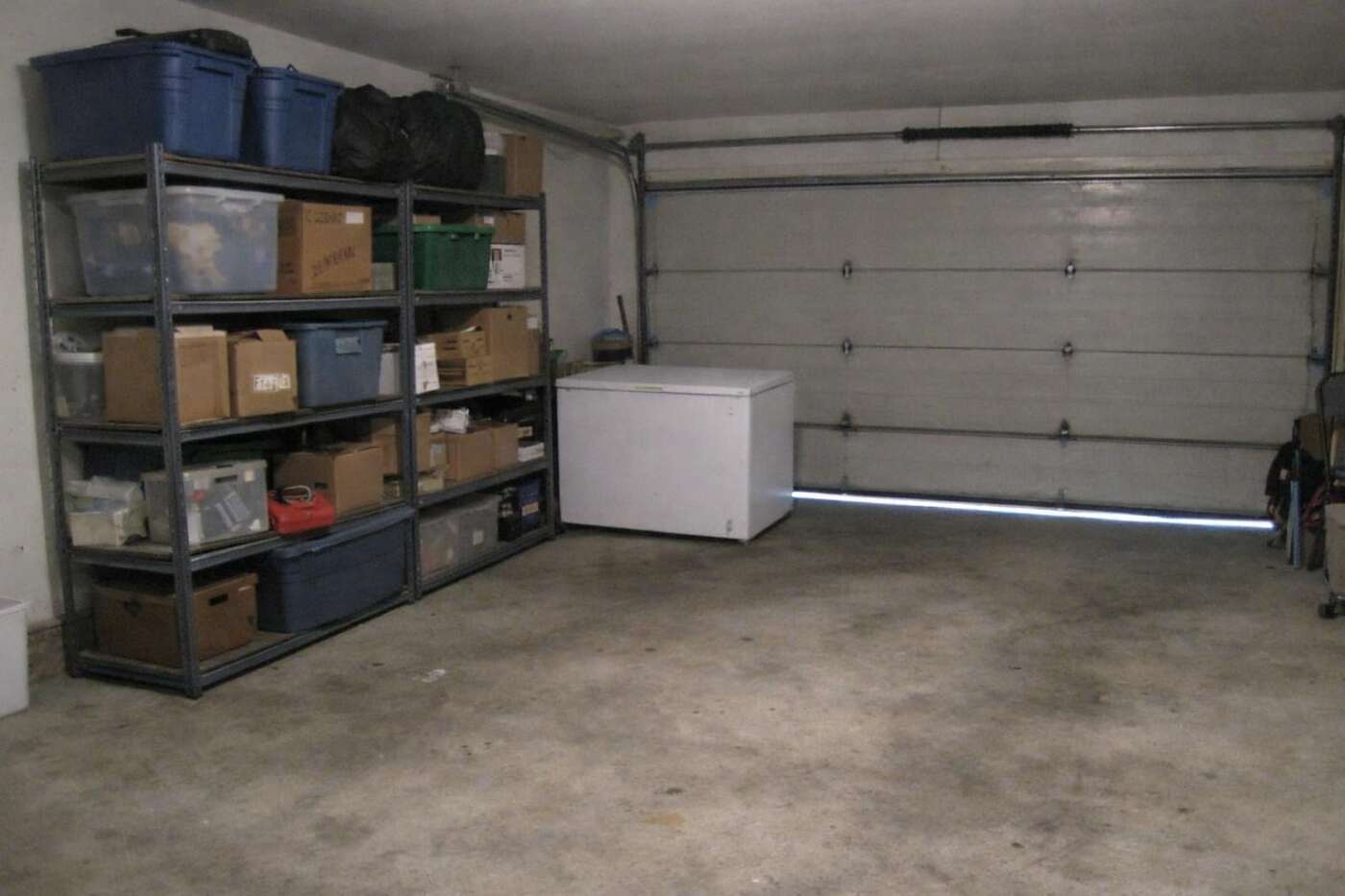
A representative Coronado garage closure
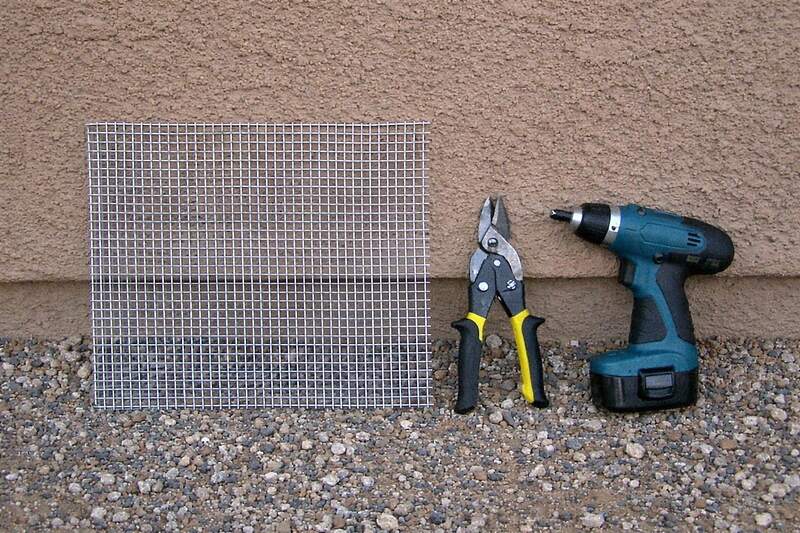
On a detached garage of this era the closures are ordinary and effective: a new bottom seal and threshold where the door no longer meets the slab, quarter-inch galvanized cloth fitted at the floor plate gaps and any open roof space, and sheet metal over chewed timber at the door jamb. None of it is specialist work and all of it holds, which is the opposite of the usual arrangement in this trade.
The house half is the short list a compact bungalow produces: the first course closed where there is tile, the eave edge and vents closed where there is composition, a collar and mortar at later penetrations, and mesh at the weep screed along the base of the stucco. Alley-side walls and gates get checked because the alley is a travel route.
The image is representative rather than a specific job. The useful output is the list of what was closed and what was cleared, which on a rental is also the handover record.
Keeping rodents out once they are gone
Three approaches, and why sealing is the one that lasts.
Video: 3 Ways To Get Rid Of Mice or Rats, And Keep Them Out!, from Everything Homestead.
Why Coronado homeowners and landlords book through us
Three things a small historic lot with outbuildings needs.
-
The outbuildings get a full inspection
A compact bungalow with a detached garage and a casita has a high ratio of outbuilding to house, and the nest is frequently in the structure nobody sleeps in. Work routed from here inspects the garage floor plate, the door line, the roof space and the stored material as carefully as the house attic, because closing a garage and clearing it out is often cheaper and more durable than a trapping program indoors.
A standalone inspection runs $0 to $175 nationally, HomeGuide 2026; free here
-
The alley is treated as a shared route
A rear alley is a continuous corridor along the back of a block, with walls, poles and service drops running its length, and Maricopa County Vector Control puts roof rat foraging at roughly two to three hundred feet from the nest. That reach takes in a whole run of properties, so a closed shell on your own lot is what holds rather than anything done to the alley. Findings that belong to a neighbor or the city get written down rather than assumed away.
Roof rats forage roughly 200 to 300 feet from the nest, Maricopa County Vector Control
-
The free corrections get named first
Stored material lifted off a garage floor and away from the walls, seed and pet food moved into hard containers, and cardboard broken down rather than stacked remove more of the problem on a lot like this than any product does, and they cost nothing. A report that lists those before it lists billable work is more useful to a landlord than one that does not, and it is also what makes a closure last past the first season.
A quarter inch is the rat-proofing standard, UF/IFAS Extension
A common Coronado call
The situation: A 1925 bungalow let to long-term tenants, composition roof, detached garage on the alley used entirely for storage. The tenants reported droppings on a kitchen counter and a noise at floor level in the back bedroom. The owner lives in Tucson and wanted to know what was going on before authorizing anything.
What gets done: The house attic is clean, with no droppings and no runs. The kitchen droppings are small, well under a quarter inch, which makes this a mouse rather than a roof rat. The garage is the source: cardboard stacked on the floor, a bag of birdseed opened on a shelf, a door that clears the slab by about an inch and a half along most of its width, and two gaps at the timber floor plate. Traps in housings go into the garage and along the kitchen kickboard. On the second visit the garage door gets a new bottom seal and threshold, the floor plate gaps are closed in galvanized cloth, the birdseed goes into a sealed bin, and the pipe sleeve under the kitchen sink is packed with mesh and sealant.
How it turns out: Six animals out of the garage and one from the kitchen across nine days, then nothing. No roofline work is quoted, because the roof had no part in it. The owner receives a short dated report naming the garage, the kitchen, the attic as checked and clean, the four closures with materials, and the cardboard and birdseed noted as tenant housekeeping items. The tenants clear the cardboard.
Coronado questions
What callers from the older central blocks ask first.
The noise is out in the garage rather than the house. Is that still your job?
Yes, and on a Coronado lot it is frequently where the job is. A detached garage of this age typically has a door that no longer meets the slab, gaps at the timber floor plate, an open roof space and decades of stored material inside, which between them supply cover, nesting material and food. Closing and clearing a garage is often cheaper and lasts longer than trapping indoors, and the house may turn out to need nothing at all.
Does the alley behind us matter?
It matters as a route. An alley runs the length of a block with walls, poles and service drops along it, and Maricopa County Vector Control puts roof rat foraging at roughly two to three hundred feet from the nest, which covers a whole run of properties. Nothing you do to the alley itself will change that, and nothing needs to: a closed shell on your own lot and a cleared outbuilding hold regardless of what is happening two doors down.
I rent the house out. What should I ask for?
A dated report rather than a phone call, especially if you are not local. It should name each area inspected including the outbuildings, record evidence as found or absent, list each closure with the material used, state anything that could not be accessed, separate the contractor's work from the housekeeping items that belong to whoever lives there, and carry the contractor's Arizona license number. That document serves a turnover, a dispute and your own records at once.
When is the best time to do the sealing in a rental?
At turnover, with the unit empty. That is the one point in the cycle when the penetrations behind appliances, under sinks and at the laundry can be closed without scheduling around anybody, and when a garage can be emptied and the floor plate reached. It is also the moment the condition gets recorded cleanly for the next tenancy. Outside turnover the work is still perfectly doable; it just takes more coordination.