Attic Insulation Replacement in Phoenix, AZ
Blown-in fill that has been pressed into runs or soaked is no longer insulating a house that needs every inch of it. Licensed Arizona contractors take the spent material out and blow fresh fill back to depth.
What attic insulation replacement covers
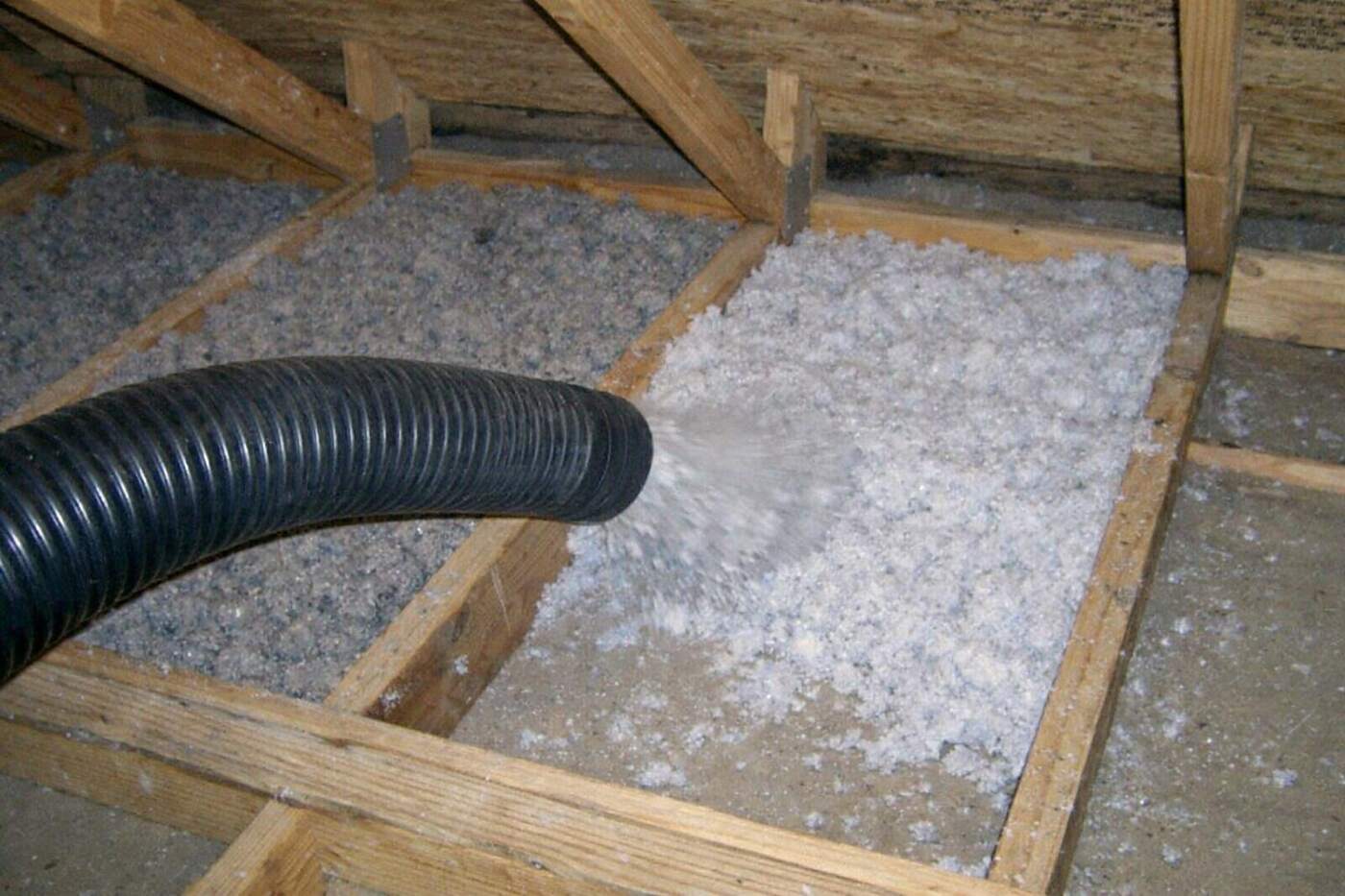
This is the removal of spent blown-in insulation and the blowing back of fresh material to a specified depth, carried out after the animals are gone and the openings are closed. The governing figure is a rate rather than a price: HomeGuide 2026 puts the combined removal and replacement at between $2.50 and $5.50 for every square foot treated.
Valley attics make this a common finishing step rather than a rare one. The standard construction is loose blown-in fill laid directly over a drywall ceiling with trusses above and no floor, which means rodent runs press straight into the insulation and urine goes into it rather than onto a surface that can be wiped. Once that has happened across any appreciable area, cleaning is not an option and removal is the only route.
- Affected area measured in square feet and existing depth recorded before anything is touched
- Spent fill vacuumed out to the drywall through a hose run from a truck-mounted machine
- Droppings, nests and caches removed with it, and the deck and trusses sanitized
- Ceiling penetrations, can-light covers and bath fan housings checked and reset before new material goes in
- Any chewed wiring or crushed ducting flagged for an electrician or HVAC contractor first
- Fresh loose fill blown back to an agreed depth, with depth markers left in place
- Attic access, walkboards and the hatch cover reinstated
- A written record of the area removed, the depth before and the depth after
Where only droppings are involved and the fill is intact, the smaller job on the attic cleanup page is the right one. Replacement before the shell is closed is money thrown away, which is why rodent exclusion precedes it.
Why rodent-damaged insulation stops working
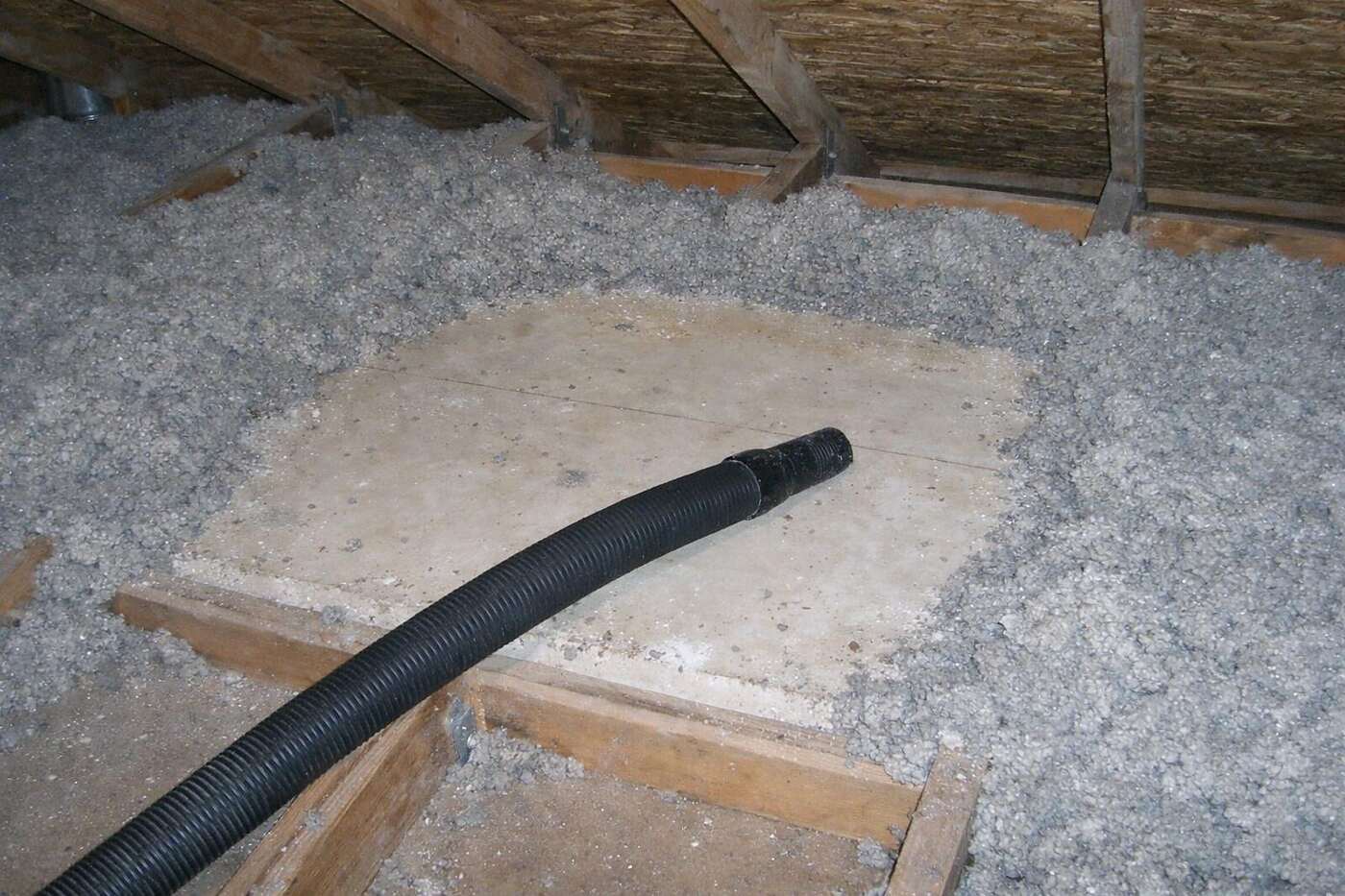
Two mechanisms, and the Department of Energy describes both of them. Material that has been compressed stops delivering the R-value it is rated for, and material that has been wetted performs poorly. Rodent activity produces both conditions at once: runs worn between the hatch and a nesting corner compress the fill along their length, and urine saturates it in the areas used most heavily.
No percentage is claimed here, because no reliable one exists. Plenty of pages in this trade publish a figure for how much insulating value is lost, and none of them can point to a source that supports it. The mechanism is what is documented, and the mechanism is enough: loose fill works by trapping still air in a given depth, and material that has been flattened or wetted no longer holds that depth or that air.
In Phoenix the consequence is a cooling load rather than a heating one, which is the opposite of how most national material on this subject is written. An attic that reaches extreme temperatures for months at a time is separated from the living space by exactly the depth of that loose fill, and a run pressed flat over a bedroom ceiling is a thin spot in that separation. Whether the difference is visible on a utility bill depends on how much area is affected, which is one reason the square footage gets measured rather than estimated.
How the removal and the refill are carried out
Removal is a vacuum operation rather than a shoveling operation, and the refill is a blower operation, both run through a hose from a machine outside. That is the only practical way to do it in an attic with no floor, and it is what keeps the material out of the living space.
| Stage | What happens | Why it matters here |
|---|---|---|
| Measure and record | Affected square footage and existing depth written down, with photographs | The whole quote is per square foot, so the measurement is the price |
| Protect the route | Sheeting from the hatch through the house, hatch sealed around the hose | Loose fill and droppings travel, and the hatch is often in a hallway or closet |
| Vacuum out | Spent fill drawn down the hose into bags at the machine, down to the drywall | Droppings and nests come out with it, which is why cleanup and removal overlap |
| Sanitize | Deck, trusses and duct exteriors treated once the surface is exposed | This is the only moment the surfaces are reachable |
| Check the penetrations | Can-light covers, bath fan housings, wiring and ducting inspected and reset | Covering a chewed wire or a displaced light cover with new fill hides it for years |
| Blow back to depth | Fresh loose fill installed to an agreed depth, with depth markers left visible | Markers are how the depth gets verified later by anybody, including a buyer |
| Reinstate access | Walkboards, hatch cover and insulation dam around the hatch put back | A hatch without a dam dumps fill into the closet the first time it is opened |
Partial replacement is normal and often the right answer. Removing the affected runs and the saturated areas and topping the rest back to a consistent depth costs a fraction of a whole-attic job and is frequently what the measurements support.
What goes back in
The replacement is normally loose-fill blown insulation, matching what was there, and the specification that matters is the depth installed rather than the brand. Fiberglass and cellulose loose fill are both common in Valley attics and both are installed the same way, through a hose from a machine outside.
The useful question to ask is the finished depth and the corresponding R-value, and to get it written down with depth markers left in the attic so it can be checked without trusting anybody's word. Loose fill settles somewhat after installation, which is why a contractor quotes an installed depth rather than a bag count, and why markers are worth more than a receipt.
Two things are outside the scope of a rodent contractor and should be named as such. Radiant barrier, attic ventilation upgrades and duct replacement are separate decisions with their own trades and their own payback arguments, and they do not belong bundled into a rodent remediation quote without being priced separately. Likewise an electrician repairs chewed wiring and an HVAC contractor repairs crushed ducting; a pest contractor's job is to find it, flag it, and not bury it under new fill.
What insulation replacement costs in Phoenix
Because HomeGuide 2026 prices this work per square foot, between $2.50 and $5.50 of it, the measured area is the entire conversation. A partial job over one or two rooms and a whole-attic job differ by an order of magnitude, and the measurement at the inspection is what separates them.
| Line item | Band | Source |
|---|---|---|
| Inspection and measurement | Free here | $0 to $175 standalone, HomeGuide 2026 national |
| Removal and replacement | $2.50 to $5.50 per square foot | HomeGuide 2026 national |
| Cleanup and decontamination where fill stays in place | $600 to $2,500 | HomeGuide 2026 national |
| Trapping that must precede it | $144 to $443 per visit | Angi cost data, Phoenix |
| Sealing that must precede it | $200 to $600 named openings, to $2,500 whole shell | Angi cost data, Phoenix; HomeGuide 2026 national |
| Full-scope restoration | $3,000 to $10,000 and up | HomeGuide 2026 national |
Worked through: about sixty square feet over one bedroom, removed and refilled, sits in the low hundreds and is usually folded in with the cleanup. A 1,900 square foot attic taken out entirely and blown back is the per-square-foot figure applied across the whole ceiling and lands in the thousands. Ask which square footage the quote covers, what finished depth is included, and whether depth markers will be left.
The record to keep afterward
Depth before, depth after, area in square feet, date, and photographs. That short list is what makes the work verifiable to a buyer's inspector, an appraiser, an insurer or to you in three years, and it costs nothing to ask for at the time.
It has a specific local value. Attic condition is something a Phoenix home inspector looks at closely, and an attic with fresh fill at a consistent depth, visible depth markers and a dated sheet explaining what happened reads very differently from the same attic with no paperwork. The rodent clearance letters page covers the formal document where a sale or a lease is involved.
On the licensing question, structural pest control in Arizona is licensed by the Arizona Department of Agriculture, Pest Management Division, and the remediation and sanitizing side of this work sits within it. Ask for the business license number, verify it with the PMD, and ask for proof of insurance, which on a job involving hoses run through a hallway and work above other people's ceilings is not a formality. Nothing on this page is a specification for your own attic; that belongs to the licensed contractor who has measured it.
The services that usually sit beside this one
Replacement is the last step of a sequence, and these pages cover what has to come before it.
- Attic Cleanup: Droppings, nests and fouled insulation taken out and the attic sanitized.
- Rodent Exclusion: Closing the shell: tile eaves, vents, conduit sleeves, weep screed and garage edges.
- Rodent Inspection: A free walk of the roofline, attic and perimeter that fixes the order of the job.
- Rodent Clearance Letters: The dated written report an escrow file, a lease, an HOA notice or a claim needs.
Replacement is the last thing that should happen, and the about page explains why the order matters more here than on any other job.
Taking out blown-in insulation
What the removal actually involves.
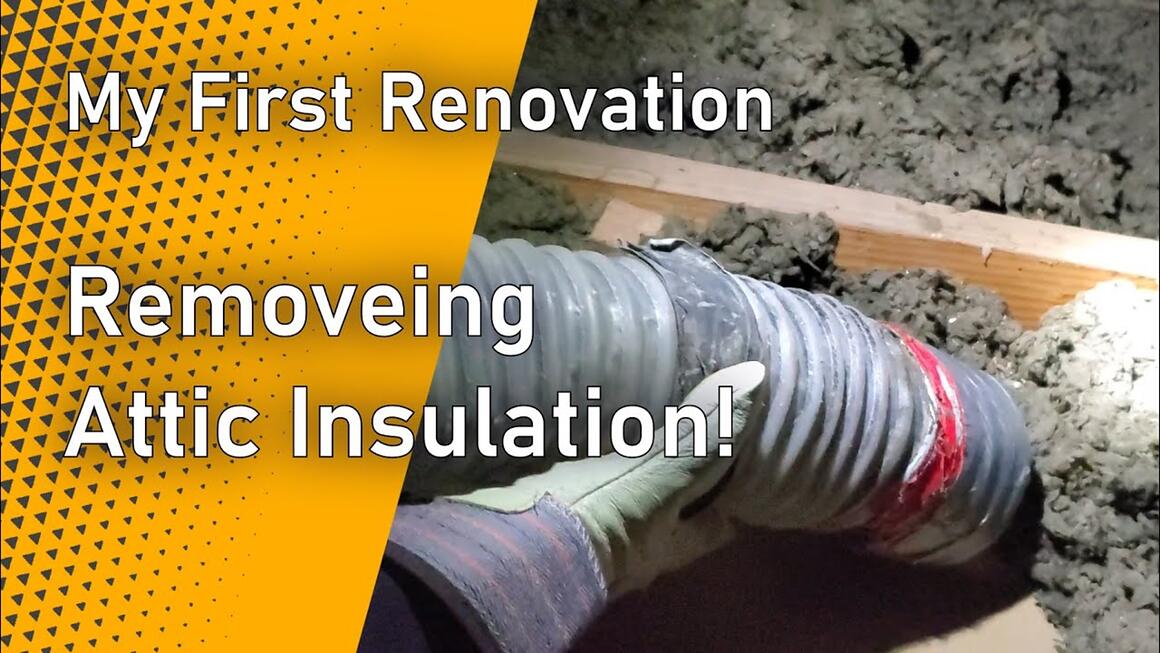
Video: How To Remove Blown-in Attic Insulation, from Jay Schmidt.
How an insulation replacement runs in Phoenix
Four steps, and the measurement at the front of them is what sets the price.
-
Confirm and measure
The attic is confirmed clear of activity and closed, then the affected square footage and the existing depth are recorded with photographs before anything is removed.
-
Protect and vacuum out
Sheeting goes in from the hatch through the house, and the spent fill is drawn out to the drywall down a hose into bags at the machine outside.
-
Sanitize and check
With the deck exposed, surfaces and duct exteriors are treated and every ceiling penetration, light cover, wire and duct run is inspected and flagged if damaged.
-
Blow back and record
Fresh loose fill is installed to the agreed depth with markers left visible, access is reinstated, and a sheet recording area and depth before and after is handed over.
What to expect
Replacement visits run in this order on every house.
- The affected area measured in square feet rather than estimated
- Sheeting from the hatch through the house before the hose goes up
- Every ceiling penetration checked while the deck is exposed
- Depth markers left in the attic for later verification
- A dated record of area, depth before and depth after
Why Valley homeowners route insulation work through us
Three things decide whether this job is worth what it costs.
-
Priced off a measurement rather than an impression
The published rate for this work is $2.50 to $5.50 for each square foot treated, per HomeGuide 2026, so the measured area is the quote. Work routed from here records the affected area and the existing depth before anything is taken out, which is what makes a partial replacement over two rooms possible instead of defaulting to the whole attic. A quote with no square footage on it cannot be checked against the band it came from.
HomeGuide 2026 national: removal and replacement $2.50 to $5.50 per square foot
-
The mechanism stated, no invented percentage
The Department of Energy states that compressed insulation does not deliver its rated R-value and that wet insulation performs poorly, and that is the whole of the claim made here. Pages in this trade routinely publish a percentage of insulating value lost and none of them can source it. In a valley where the load is cooling rather than heating, the honest version is that flattened and saturated fill over a bedroom ceiling is a thin spot, and the size of it is a measurement.
Compressed insulation underperforms its rating; wet insulation performs poorly, US Department of Energy
-
Nothing gets buried under the new fill
With the deck exposed, every ceiling penetration, can-light cover, wire run and duct gets inspected before fresh material goes in, because that is the only moment any of it is reachable. UF/IFAS notes rats chew wires and can potentially start fires, and a chewed wire under ten inches of new insulation is invisible for years. Electrical and duct repairs are flagged for the right trade rather than folded into a pest invoice.
Rats chew wires and can potentially start fires, UF/IFAS Extension
What Reddit Says About Attic Insulation Replacement in Phoenix
This is the line item that produces the sharpest sticker shock in homeowner threads, and the recurring theme is that it arrived as a surprise after the trapping was already done. People advise asking at the very start whether cleanup and insulation are in scope or quoted separately, and getting the square footage written into any quote that involves them.
Scope is the second theme. Threads include people who were quoted a whole-attic replacement where, on the description given, a partial removal over the affected rooms would have done, and people who were quoted a spot cleanup where the fill was clearly saturated across most of the space. The advice in both directions is the same: ask what area the quote covers, ask to see the photographs, and ask what finished depth is included.
The third theme is bundling. Radiant barrier, ventilation upgrades and duct work get attached to rodent remediation quotes, and the corpus is fairly unanimous that those are separate decisions with separate payback arguments and should be priced on their own lines if they are wanted at all.
The questions worth carrying into a conversation: how many square feet, what depth goes back, will markers be left, are cleanup and insulation separate lines, and is anything being added that is not rodent remediation.
A typical insulation job on a Phoenix house
The situation: A 2,100 square foot house on the edge of north Phoenix, rats in the attic over roughly eighteen months before anything was done, and a master bedroom that had become noticeably harder to cool than the rest of the house over two summers. Trapping and eave closure finished a month ago and the traps have produced nothing for two weeks.
What gets done: Depth is recorded at about eight inches across most of the attic and closer to two over an area of roughly two hundred and forty square feet above the master bedroom and the adjoining bathroom, where the fill has been pressed flat and used as a nesting area. That area is also where the staining is. The decision is a partial removal: the two hundred and forty square feet comes out to the drywall by vacuum, the deck and trusses are sanitized, and two can-light covers found pushed aside are reset. A chewed low-voltage thermostat wire is found at the edge of the cleared area and written down for an electrician. Fresh loose fill goes back to match the surrounding depth, with markers set at the hatch and over the bedroom, and the rest of the attic is topped up where it had thinned.
How it turns out: The quote is the per-square-foot figure applied to two hundred and forty square feet rather than to two thousand, which is the difference between a few hundred dollars and several thousand. The bedroom holds temperature comparably to the rest of the house the following summer. The owners keep a sheet recording the area, the depth before at two inches and after at nine, the reset light covers and the flagged thermostat wire.
Insulation questions from Phoenix callers
The questions that come up once somebody has been up and looked at the attic.
How do I know whether the insulation has to come out?
Two conditions, and both are visible. Fill pressed flat into runs, and fill that is stained and smells. The Department of Energy states compressed insulation does not deliver its rated R-value and wet insulation performs poorly, so those two conditions are the test rather than the simple presence of droppings. A scatter of droppings on material that is still at full depth and dry is a cleanup job instead, and the inspection measures depth across the attic to tell the two apart.
Does the whole attic have to be done?
Usually not, and asking the question is worth money. A partial removal of the affected area with the rest topped back to a consistent depth is frequently what the measurements support, and at $2.50 to $5.50 per square foot the difference between two hundred square feet and two thousand is substantial. What makes partial work sensible is a clear boundary between the affected and unaffected areas, which is exactly what the depth measurements establish.
Will this show up on my power bill?
It depends on how much area is affected, and no figure is claimed here. The mechanism is real: loose fill works by holding still air across a given depth, and in Phoenix that depth is what separates a living space from an attic that gets extremely hot for months. A flattened run over one bedroom ceiling is a thin spot in that separation and tends to show up as one room being harder to cool rather than as a dramatic bill change. Anybody quoting you a percentage of energy saving for this work is inventing it.
How messy is it inside the house?
Less than people expect, because nothing is carried through in buckets. Both the removal and the refill run through a hose to a machine outside, and sheeting goes in from the hatch through whatever room it opens into. The hatch gets sealed around the hose while work is in progress. The risk point is the hatch itself, and particularly a hatch in a closet or a hallway ceiling, which is why protecting that route is a stage of the job rather than an afterthought.
What depth should go back in?
Ask for the finished depth and the R-value it corresponds to, in writing, and ask for depth markers to be left in the attic. Loose fill settles after installation, so a contractor quoting an installed depth is telling you something more useful than a bag count. Matching or slightly exceeding the depth in the undisturbed parts of the attic is the normal specification on a remediation job, and the markers are how anybody verifies it later without taking a word for it.
Should I add a radiant barrier while the attic is open?
It is a separate decision and it belongs on a separate line. Radiant barrier, ventilation changes and duct replacement each have their own trades and their own payback arguments, and bundling them into a rodent remediation quote makes the remediation number impossible to compare with anybody else's. If you want them, get them priced as their own items. A rodent contractor's job here is the removal, the sanitizing and the refill.
Who repairs the chewed wiring found up there?
An electrician, and an HVAC contractor for damaged ducting. A pest contractor should find it, photograph it, point it out and keep new insulation off it until it is dealt with. UF/IFAS notes rats chew wires and can potentially start fires, and the practical risk is that fresh fill blown over a damaged run hides it for years. Ask to be shown any electrical or duct damage before the refill stage rather than reading about it on an invoice.