Rodent Inspection in Phoenix, AZ
The inspection is where a Valley rodent job starts, and it is free. One visit identifies the animal, lists every opening and produces a quote with each piece of work priced on its own line.
What the free rodent inspection covers
The inspection is a structured walk of the outside, the attic and the inside of the property that ends in two documents: a list of findings and a quote. It costs nothing here, while HomeGuide puts a standalone rodent inspection at $0 to $175 nationally and homeowners online describe being charged around seventy-five dollars purely to get a bid written.
On a Valley property it runs outside first, because almost every way in is on the shell rather than under the floor. There are no basements and very nearly no crawl spaces in Phoenix housing, so the search is the roof edge, the vents, the penetrations, the base of the walls, then the attic above the drywall ceiling.
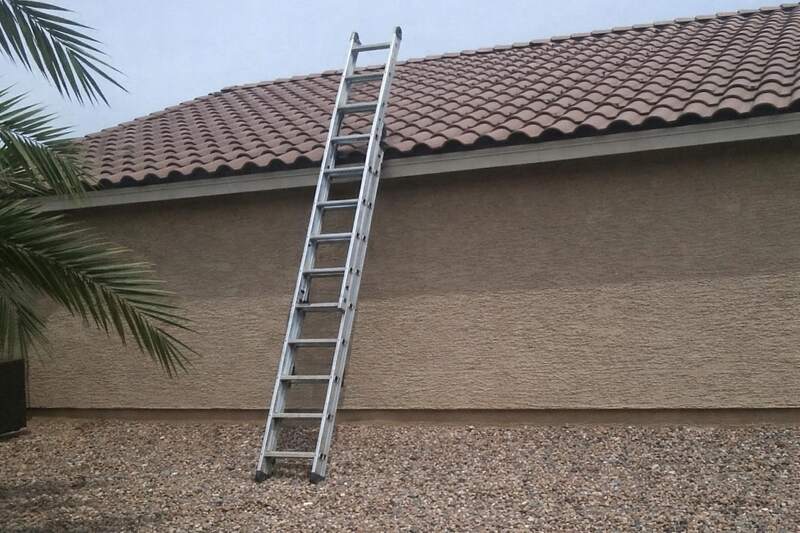
- A ladder walk of each eave run, checking the first course of tile, the fascia and the drip edge
- Gable, soffit, off-ridge and turbine vents checked for missing, chewed or rusted screens
- Air conditioning line set, conduit, plumbing vent and cable penetrations checked for open sleeves
- Weep screed at the base of the stucco, block wall weep openings and wall caps checked along the perimeter
- Garage door seals, threshold and the attic access panel gap checked
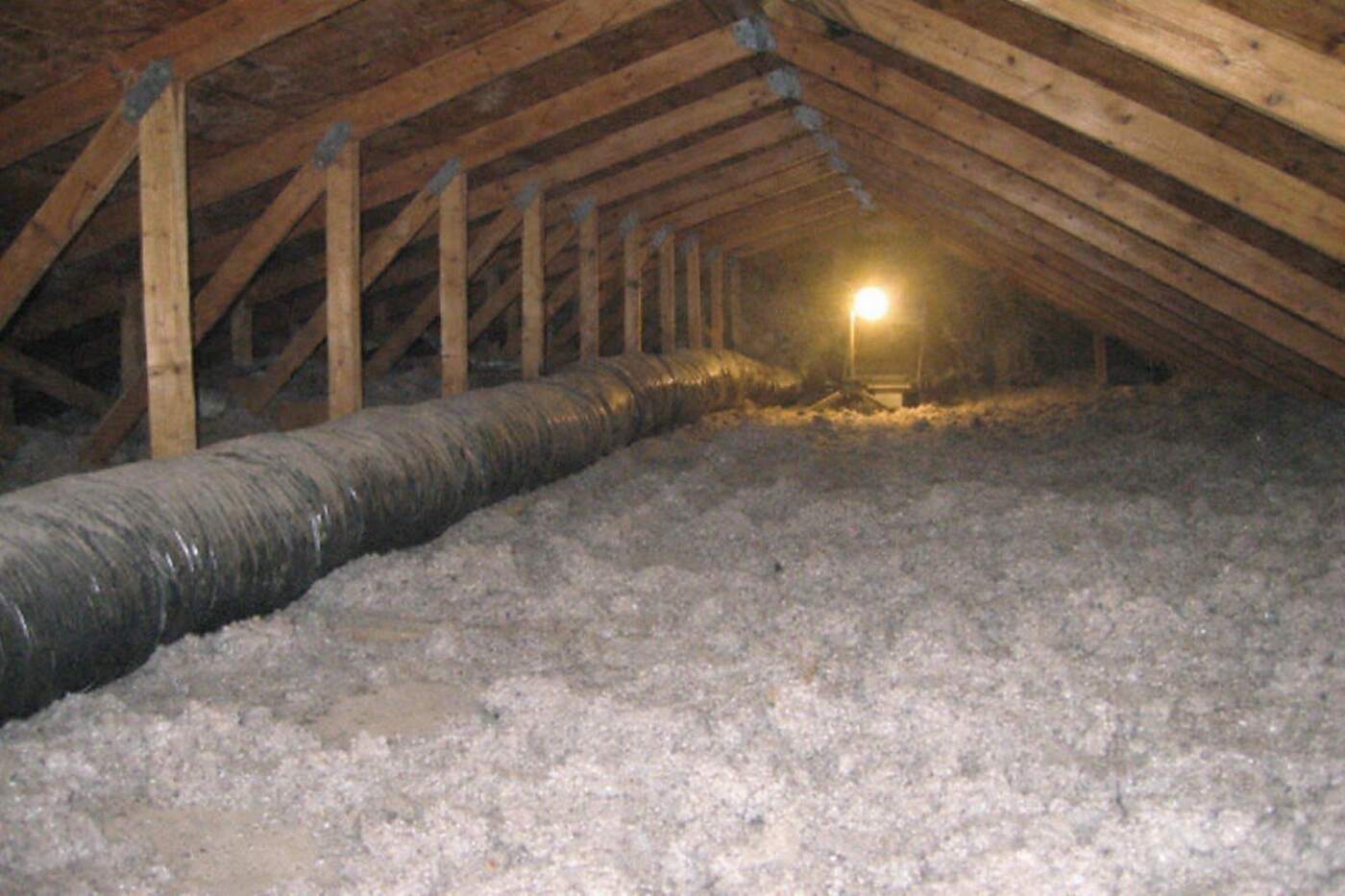
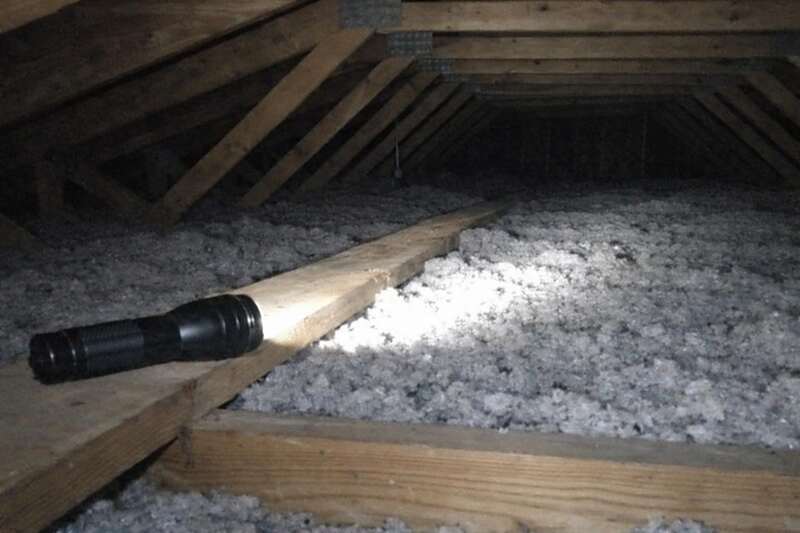
- Attic entered and read for droppings, rub marks, runs flattened into the insulation, nests and chewed wiring
- Interior signs followed up where reported: cabinet droppings, gnawed packaging, smells, stains
- Vegetation and wires mapped where they reach the roof, since those are the route rather than the opening
- Equipment pads, sheds and parked vehicles checked where the evidence points outdoors
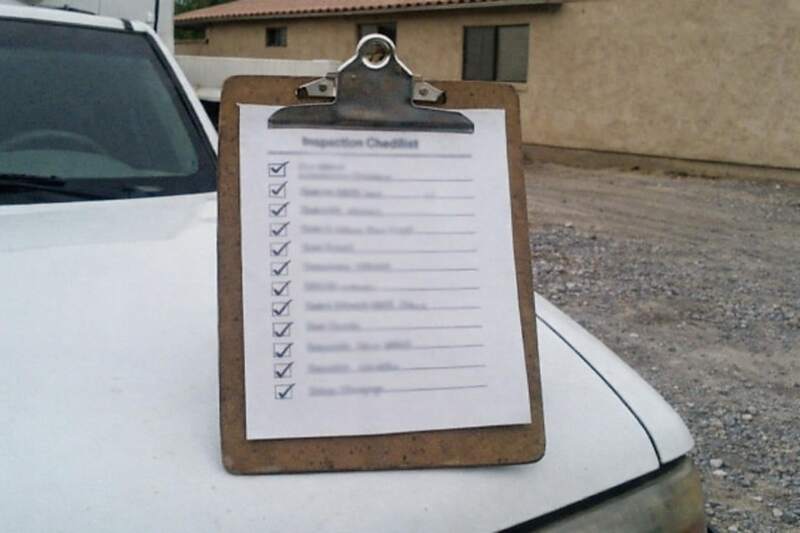
- Findings written up with photographs, then a quote separating trapping, sealing and any attic work
Nothing on the visit is sold from the driveway. The quote is written from what the walk found, and the homeowner keeps the findings whether or not the work goes ahead.
Identifying the animal before anything is priced
Getting the species right changes both the scope and the cost, so it happens before the quote rather than after it. The three animals behind almost every Valley call need three different jobs, and confusing a young roof rat with a house mouse is a documented way to end up with the wrong one.
| Evidence | Points to | What changes in the job |
|---|---|---|
| Running overhead after dark, droppings a quarter to half an inch with pointed ends | Roof rat | Attic trapping plus eave and vent closure; the largest of the three jobs |
| Mound of sticks and cholla against a wall, shrub, shed or vehicle; chewed wiring | Pack rat, a woodrat | Outdoor clearance, ground-level barriers, equipment and vehicle checks |
| Small droppings in a cabinet or along a garage baseboard, chewed packaging | House mouse | Short trapping run plus a handful of low-level closures; usually the cheapest job |
| Burrowing at ground level, activity around a dumpster enclosure or alley line | Norway rat | Ground-level work and harborage removal rather than roofline closure |
| Heavy sweet smell building over a week or two | A carcass rather than a live animal | Locating and removing it, then closing the route it used |
The measurements come from UF/IFAS: the roof rat dropping runs a quarter to half an inch, banana shaped with pointed ends, and the adult animal is twelve to fourteen inches including a tail longer than its head and body. The University of Arizona Cooperative Extension gives the woodrat separator, a fur-covered tail with a whitish underbelly and feet. Those two descriptions settle most arguments in the attic hatch.
The two documents the visit produces
A findings list and a quote, kept separate on purpose. The findings record what is on the building; the quote prices what to do about it. Keeping them apart is what lets a homeowner take the findings to a second contractor and get a comparable bid, which is the single most repeated piece of advice in homeowner discussions of this trade.
The findings list names each opening, where it is, how wide it is against the quarter-inch rat-proofing standard UF/IFAS gives, and whether it is showing traffic. It records the species evidence, the attic condition, the insulation depth and state, any chewed wiring, and the vegetation or wires reaching the roof. Photographs sit against the entries that need them.
The quote then prices trapping, sealing, cleanup and insulation as separate lines, with the published band printed beside each so the figure can be read against something. A bundled single number, with a monitoring contract folded into it, is the pattern homeowners warn each other about hardest, and separated lines are the direct answer to it.
Why the inspection is free here
Because an inspection fee stops people calling until the problem is bad, and a bad problem is a worse job. HomeGuide puts a standalone rodent inspection at $0 to $175 nationally, and the discussions where homeowners compare notes are full of people who paid around seventy-five dollars just to receive a bid and then paid again elsewhere for a second opinion.
In the Valley the timing argument is sharper than average. Maricopa County Vector Control puts peak roof rat activity from November through May, and UF/IFAS records a female producing four or five litters a year of five to eight young, with sexual maturity at three to four months. A problem noticed in November and left until February is arithmetically a different problem, and the cost difference between trapping a few animals and clearing an established attic is the gap between HomeGuide's two to three days and its one to two months.
Practically, a free visit also means the homeowner owes nothing if the answer is that there is no rodent problem at all. Birds under a tile, a loose vent cap rattling, a roof cooling and ticking in the evening and a neighbor's cat on the roof all get called in as rats, and being told that without a bill is a legitimate outcome of the visit.
How to get the most out of the visit
Three things make the inspection faster and more accurate: clear access to the attic hatch, a note of when and where the noise happens, and anything you have already found left where it was found. None of it is complicated, and all of it shortens the visit.
- Clear the attic hatch. If it is in a closet, move what is under it. A hatch in a garage ceiling needs the car out.
- Write down the times. Which room, what hour, how many nights. The hour separates a nocturnal rat from something else.
- Leave the droppings. They are the identification, and size is the separator. Photograph them if they have to be cleared.
- Say what has already been tried. Bait put down, traps set, a previous company, foam sprayed into a gap. Each changes what the findings mean.
- Mention the outside. A pile of sticks by a wall, chewed wiring on a car, a shed with a gap under the door.
- Unlock the side gate. The perimeter walk needs the full way around the building.
- Have the roof history to hand. When it was last reroofed, whether the tile has been lifted, whether a new air conditioner was installed recently.
That last one matters more in Phoenix than people expect, because a reroof can reopen the tile eave course and a new mechanical install can cut a fresh sleeve through the block.
What an inspection costs, and what it sets up
Nothing here, and the bands it feeds into are published so the quote that follows can be judged. The inspection is the cheapest part of every job on this list and the one that decides the size of all the others.
| Line item | Band | Source |
|---|---|---|
| Inspection, standalone | Free here | $0 to $175 nationally, HomeGuide 2026 |
| Trapping visit in Phoenix | $144 to $443, averaging about $286 | Angi cost data, Phoenix |
| Follow-up visit | $50 to $150 | Angi cost data, Phoenix |
| Exclusion, named openings | $200 to $600 | Angi cost data, Phoenix |
| Exclusion, whole shell | $500 to $2,500 | HomeGuide 2026 national |
| Attic cleanup and decontamination | $600 to $2,500 | HomeGuide 2026 national |
| Insulation removal and replacement | $2.50 to $5.50 per square foot | HomeGuide 2026 national |
| Dead rodent removal | $150 to $500 | HomeGuide 2026 national |
A written inspection report for an escrow file or a lease is a different product with its own page: see rodent clearance letters, which is the inspection plus a formal document and any sealing the visit shows is needed.
The license behind the inspection
An inspection that ends in a recommendation is itself licensed activity in Arizona. Structural pest control here is licensed by the Arizona Department of Agriculture, Pest Management Division, and the license trigger explicitly reaches making site-specific recommendations and offering to perform pest control work as well as applying product.
That is why the inspector and the contractor are the same person on jobs routed from here, and why every one of them carries the PMD license. It is also why nothing written on these pages prescribes a treatment for your own house: a general description of what licensed contractors do is fine, and a specific instruction for your roof is the licensed contractor's to give on site.
Ask for the business license number when the inspector arrives, verify it with the PMD, and ask for proof of insurance, since the visit involves a ladder on a tile roof. A PMD licensee may also remove nuisance rodent species without holding a separate wildlife service license from Arizona Game and Fish, which is why one visit can cover a rat in the attic and a woodrat in the shed.
The services that usually sit beside this one
The inspection decides which of the following is needed, and in what order.
- Roof Rat Removal: Trapping out the climber that dominates Valley attic calls, run alongside the sealing.
- Rodent Exclusion: Closing the shell: tile eaves, vents, conduit sleeves, weep screed and garage edges.
- Rodent Clearance Letters: The dated written report an escrow file, a lease, an HOA notice or a claim needs.
- Attic Cleanup: Droppings, nests and fouled insulation taken out and the attic sanitized.
The inspection is what decides which of those a property needs, and nothing above it is quoted before that visit has happened.
A full rodent inspection
Every part of a house, walked in order.
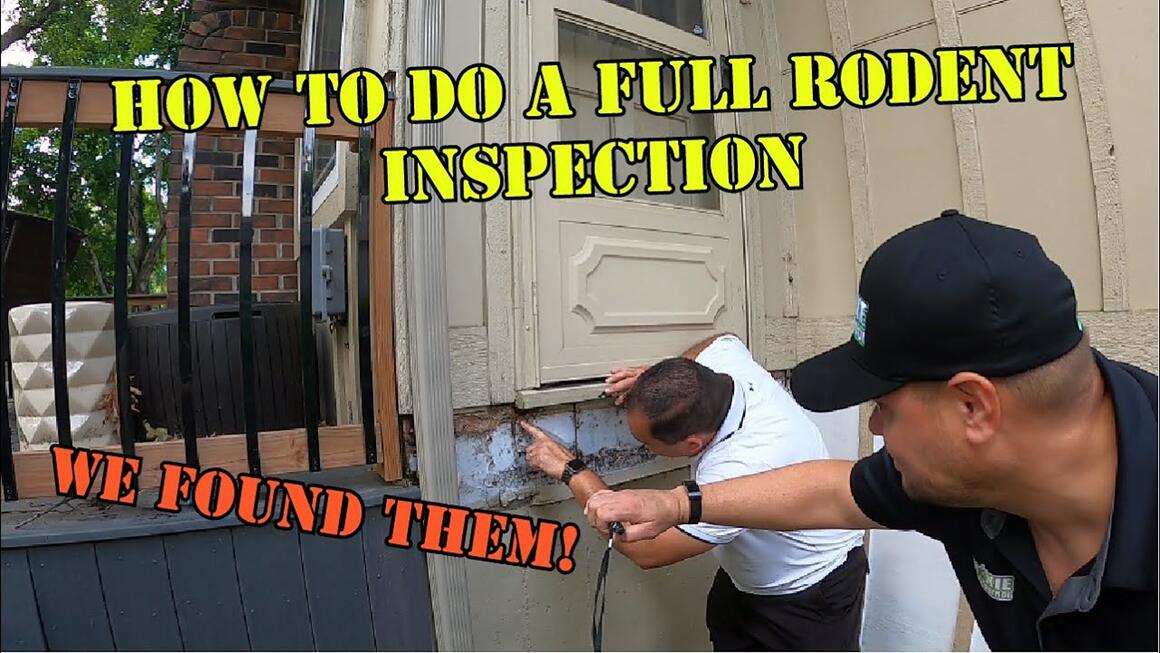
Video: How to do a mouse or rat inspection on a home, from Pest Control Guys.
How the inspection visit runs
Five steps in a fixed order, outside before inside, so nothing gets skipped on a property where the obvious evidence is indoors.
-
The phone call
Address, what is being heard or found, where, at what hour, for how long, and what has already been tried. That shapes what the visit looks for.
-
The perimeter and the roof
A walk around the building at ground level, then a ladder at each eave run. Openings are measured against a quarter inch and photographed.
-
The attic
Entered and read with a light for droppings, rub marks, flattened runs, nests, chewed wiring and the depth and condition of the insulation.
-
Inside and outbuildings
Rooms with reported signs, plus the garage, shed, equipment pads and anything parked where the evidence points outdoors.
-
Findings, then a quote
A written findings list with photographs, then a separate quote with trapping, sealing and attic work priced line by line against the published bands.
What to expect
Every inspection follows this order, whatever the eventual quote turns out to be.
- A ladder at the eave before the attic hatch is opened
- Openings measured rather than described
- Droppings identified by size before a species is assumed
- Insulation depth and condition recorded alongside the droppings
- Findings handed over whether or not the work is booked
Why Valley property owners start with this visit
Three things the inspection settles that nothing else can.
-
Species first, scope second
A roof rat job, a woodrat job and a mouse job are different sizes and different prices, and the evidence separating them is physical. UF/IFAS gives the roof rat dropping as a quarter to half an inch with pointed ends and the adult as twelve to fourteen inches including the tail; the University of Arizona Cooperative Extension gives the woodrat its fur-covered tail and whitish underbelly. Measuring before quoting is what stops a pantry mouse being priced like a roofline program.
Roof rat adults run 12 to 14 inches including the tail, UF/IFAS Extension
-
Findings and quote as separate documents
The findings record what is on the building and the quote prices the response, and keeping the two apart is what makes a second opinion possible. Homeowners comparing notes say repeatedly that a single bundled figure was the thing they could never evaluate, and that the useful move was taking one contractor's findings to another for a like-for-like bid. The findings stay with the homeowner whatever happens next.
A standalone inspection runs $0 to $175 nationally, HomeGuide 2026; free here
-
Free, because waiting makes it worse
An inspection fee delays the call, and in the Valley delay is expensive. Maricopa County Vector Control puts peak roof rat activity from November through May, and UF/IFAS records four or five litters a year of five to eight young with maturity at three to four months. The distance between HomeGuide's two to three days for a handful of animals and its one to two months for a heavy infestation is mostly the distance between calling in November and calling in February.
4 or 5 litters a year of 5 to 8 young, UF/IFAS Extension
What Reddit Says About Rodent Inspections in Phoenix
Inspection fees come up constantly in homeowner threads, and the complaint is specific: paying to be given a number, then needing a second number to know whether the first one was reasonable. The standing advice is to collect several bids for identical scope, and the practical obstacle people describe is that a paid inspection makes comparison shopping cost real money.
The other recurring instruction is to get the inspection findings in a form you can hand to somebody else. People who have been through it push each other to ask for photographs, for each opening to be named and located, and for the trapping, the sealing and the cleanup to be priced separately rather than rolled together. A quote that cannot be broken apart cannot be compared, and a monitoring contract folded into a removal price is the arrangement that generates the most regret in those threads.
The questions people circulate map straight onto this visit. What exactly is included, and what is a separate line item? Does the company do its own repair work or refer the sealing elsewhere? How many follow-up visits are inside the price? Will anything be cleaned up, or only trapped? What happens if they come back? Species confusion shows up too, including threads where two companies disagree about whether a homeowner has a mouse or a juvenile rat.
All of which is roughly why the visit here is free, why it produces a findings list as well as a quote, and why the droppings get measured rather than eyeballed.
A typical inspection on a Valley house
The situation: A single-story house in the west Valley, early 2000s, concrete tile, gravel yard, one mature mesquite near the back wall. The owner has heard something twice in a month, has found no droppings anywhere indoors, and has been quoted over the phone by another company for a treatment plan with a monthly fee attached. She wants to know whether there is a problem at all before agreeing to anything.
What gets done: The perimeter walk turns up two block wall weep openings with no screens and a garage door side seal torn at the bottom corner. The ladder walk finds the tile eave closures intact on three elevations and missing from roughly eight feet at one corner where a downspout was replaced. The attic shows no droppings, no rub marks and insulation at full depth with no runs worn through it, but there is old nesting material, dry and flattened, in one corner near the missing eave section. The mesquite has two limbs within a foot of the roof.
How it turns out: The findings say there has been activity, that it is not current, and that one corner of the eave plus two wall openings are the way in. The quote covers eight feet of bird stop, two weep screens and the garage seal, sits at the low end of the Phoenix exclusion band, and includes no trapping and no monthly anything. She is told to get the mesquite limbs trimmed back by her landscaper and to keep the findings sheet. Total cost of finding all of this out: nothing.
Inspection questions from Phoenix callers
What people want to know before letting somebody on the roof.
Is the inspection really free, with no catch?
Yes, and you keep the findings either way. HomeGuide puts a standalone rodent inspection at $0 to $175 nationally, so a free visit is at the bottom of a real range rather than a trick. The commercial logic is straightforward: a fee delays the call, and a delayed Valley rodent problem is a bigger job. If the visit concludes there is no rodent problem at all, which happens, you are told that and charged nothing.
How long does the visit take?
Usually somewhere between forty minutes and an hour and a half on an ordinary single-family house, longer where there are outbuildings, several eave runs or a second story. The ladder work and the attic each take a while, and writing the findings up with photographs takes a little more. A property with an inaccessible attic hatch or a car parked under it takes longer, which is why clearing access ahead of the visit is worth doing.
Do you have to go into the attic?
For an accurate answer, yes. The attic is where the droppings, the rub marks, the worn runs and the insulation condition are, and those are what separate current activity from old activity and a rat from a mouse. Where a hatch cannot be reached, an inspector can work from the roof and the perimeter and say what is unverified, but a report that has not seen the attic cannot state what is happening above the ceiling.
Can I take the findings to another company?
Yes, and it is sensible. The findings list names and locates each opening with photographs, which is exactly the document a second contractor needs in order to bid on identical scope. Collecting several bids for the same scope is the most repeated advice in homeowner discussions of this trade, and it only works when the scope is written down rather than summarized over the phone.
What if the inspection finds nothing?
You get told so, and it costs nothing. Birds nesting under a tile, a loose vent cap in the wind, a roof deck ticking as it cools in the evening and a neighbor's cat walking the parapet are all called in as rats in this valley, and they are all legitimate findings. Old inactive evidence is a third outcome: nesting material with no fresh droppings means it happened and has stopped, and the useful action is usually closing the opening rather than trapping.
Does an inspection count as a clearance letter?
No, those are different products. A clearance letter is a formal written report on the condition of a property at a date, built for an escrow file, a lease, an HOA dispute or an insurance claim, and it includes the contractor's Arizona license number and the specific areas checked. The free inspection is the diagnostic visit that precedes work. The rodent clearance letters page covers the documented version.