Rodent Clearance Letters in Phoenix, AZ
A sale, a lease or an HOA file sometimes needs the rodent question answered on paper. Licensed Arizona contractors inspect, document what is there and what was closed, and sign a dated report.
What a rodent clearance letter is
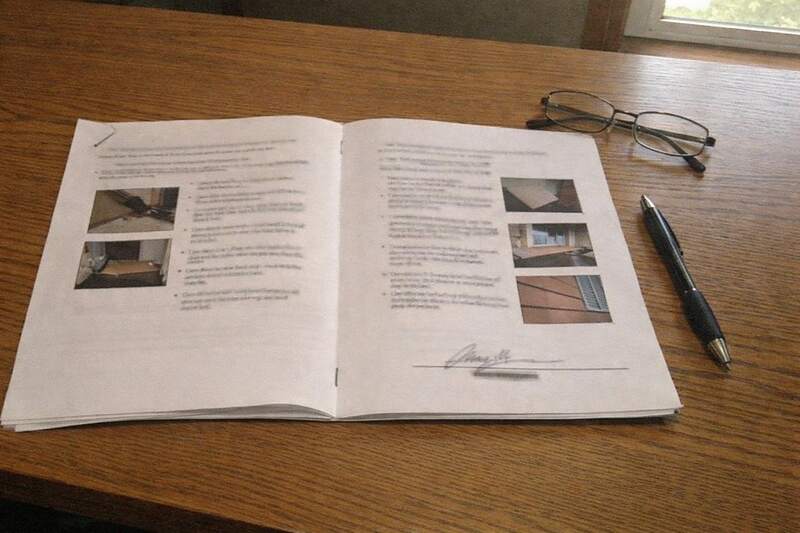
A clearance letter is a dated written report from a licensed contractor stating what was inspected, what evidence was found or was absent, what work was carried out, and who carried it out. It records a condition on a day, and it is used wherever somebody other than the homeowner needs that question answered in a form they can file.
Nobody in the Phoenix ranking set sells this as a named product, which is strange in a market with the transaction volume this one has. Escrow timelines, rental turnovers, HOA enforcement letters and insurance claim files all generate a need for exactly this document, and the usual substitute is a paid invoice with a line of description on it, which answers far less.
- A full inspection of the roofline, the attic, the perimeter and the interior, the same walk described on the rodent inspection page
- The areas examined named individually rather than summarized
- Evidence found, or recorded as absent, with photographs attached
- Species identification where evidence allows it, and a note where it does not
- Openings found, their locations, and whether each was showing traffic
- Work performed, with the material used at each closure point
- Attic condition including insulation depth, and any area cleared or replaced
- The contractor business name and Arizona Department of Agriculture Pest Management Division license number
- The date of the inspection, the date of any work, and the date of the letter
- Limitations stated plainly, including anything that could not be accessed
The last item matters more than it looks. A report that states what was not reachable is a stronger document than one that implies everything was seen, because the first can be relied on and the second falls apart the moment somebody asks a question about the part nobody could get to.
Who asks for one, and what each of them wants from it
Four situations generate nearly all of these requests, and they want slightly different documents. Saying which one applies when you call is what gets the right report written rather than a generic one.
| Situation | What the reader wants | What the letter emphasizes |
|---|---|---|
| A sale in escrow, after a home inspection noted rodent evidence | Confirmation that the issue was addressed and by whom | Areas inspected, openings closed with materials, attic condition, license number, dates |
| A buyer or buyer's agent before close | An independent read on current condition | Evidence present or absent on the date, with photographs and stated limitations |
| A rental turnover or a tenant dispute | A record of condition at handover | Condition on the date, work performed, and anything left outstanding |
| An HOA notice about a property | Evidence the owner acted | Dated inspection, work performed, and the exterior conditions addressed |
| An insurance claim on consequential damage | Documentation supporting the claim narrative | Dated photographs, the extent of the damage, materials removed, and the repair scope |
| A commercial lease or an inspection file | Something that survives a third-party audit | Named areas, a service schedule, license number, and monitoring records where they exist |
Commercial files are their own subject and are covered on the commercial rodent control page, where the documentation requirement is ongoing rather than a single letter.
What a letter can state, and where it stops
A clearance letter describes a condition observed on a date. It does not certify a building permanently rodent-free, and any document claiming to is worth less than one that does not, because the claim is not something an inspection can support.
What can be stated: the areas examined; the evidence found, or its absence; whether any evidence appeared current or historic; the openings located and their condition; what work was performed and with what materials; the attic condition and insulation depth; and who did all of it under which license. With photographs attached, that is a substantial document and it answers the question most readers came with.
What cannot be stated: a guarantee against future entry, a warranty on somebody else's behalf, or an opinion about work carried out by a contractor who was never on site. Where a warranty exists it belongs to the contractor who performed the sealing and it should be attached in their own words, with its term and its scope. No guarantee of any kind is offered from here on a contractor's behalf.
One more honest limitation: a property with no current evidence may still have historic evidence, and a good letter distinguishes the two rather than blurring them. Old dry nesting material in a closed attic is a different statement from fresh droppings, and a buyer's inspector will read the difference whether or not the letter spells it out.
Fitting this around an escrow timeline
The constraint is almost always the calendar, so the order of events is worth planning before the inspection is booked. A letter can be produced from a single visit where the property is clean, and where work is needed the letter follows the work rather than preceding it.
A clean property is quick: one inspection, the report written up with photographs, and the document issued. A property with current activity is a different schedule, because a letter written while traps are still producing can only say that work is in progress. Trapping a live attic takes HomeGuide's two to three days for a handful of animals and up to one to two months for a heavy infestation, and closing a tile eave is a separate visit with materials to order.
The practical advice for a seller is to get the inspection done early, before a buyer's inspector raises it, because the same findings discovered by your own contractor in week one are a scheduling problem and discovered by a buyer's inspector in week three are a negotiation. For a buyer, the useful move is asking for the contractor's findings list and closure list rather than only the letter, since those are the documents with the detail in them.
What a clearance letter costs in Phoenix
The letter is priced as the inspection plus any work the inspection shows is needed, and on a property with nothing to do the cost is the documentation time rather than a separate fee. The inspection itself is free here, against HomeGuide's $0 to $175 national band for a standalone one.
| Line item | Band | Source |
|---|---|---|
| Inspection | Free here | $0 to $175 standalone, HomeGuide 2026 national |
| Written report and photographs | Quoted at the visit, modest on a clean property | No published band exists for this document |
| Trapping where activity is current | $144 to $443 per visit, averaging about $286 | Angi cost data, Phoenix |
| Sealing, named openings | $200 to $600 | Angi cost data, Phoenix |
| Sealing, whole shell | $500 to $2,500 | HomeGuide 2026 national |
| Attic cleanup where a buyer has raised it | $600 to $2,500 | HomeGuide 2026 national |
| Insulation removal and replacement | $2.50 to $5.50 per square foot | HomeGuide 2026 national |
A realistic escrow scenario on a Valley house with evidence in the attic is the trapping band plus the named-openings sealing band plus a modest documentation charge, which is a long way below what the same findings cost as a price reduction at the closing table. Ask for the findings list, the closure list and the letter as three deliverables, because they get used by three different people.
Why the license number on the letter matters
A report carries weight in proportion to who signed it, and in Arizona that means the Arizona Department of Agriculture Pest Management Division license number printed on the document. Structural pest control here requires that license, and the trigger covers applying product, making site-specific recommendations and offering to perform the work.
For the reader of the letter, the number is the part that can be checked independently. A buyer's agent, an HOA board or an adjuster can verify it with the PMD without calling anybody, which is exactly the property a document like this needs. A letter on a letterhead with no license number on it is a description of an opinion.
Every contractor routed from here carries the PMD license the work requires, and a PMD licensee may additionally remove nuisance rodent species without a separate wildlife service license from Arizona Game and Fish, which is why one contractor can sign for both the attic and the yard. Ask for the number at the time of the inspection rather than after the report is written, and ask for proof of insurance in the same conversation. Nothing written here is advice about your own transaction, which belongs with your agent, your attorney or your insurer.
The services that usually sit beside this one
A clearance letter documents work described on these pages, so it usually follows one or more of them.
- Rodent Inspection: A free walk of the roofline, attic and perimeter that fixes the order of the job.
- Rodent Exclusion: Closing the shell: tile eaves, vents, conduit sleeves, weep screed and garage edges.
- Attic Cleanup: Droppings, nests and fouled insulation taken out and the attic sanitized.
- Commercial Rodent Control: Restaurants, warehouses, multifamily and retail, with documentation that survives an audit.
What goes in the report depends on which of those were needed, and the about page covers the licensing that makes the document worth anything.
How a clearance letter gets produced
Four steps, and the deadline shapes all of them.
-
Say what it is for and when
Escrow, a lease, an HOA notice or an insurance file, plus the date it is needed by. That decides what the report emphasizes and how the visits are scheduled.
-
The full inspection
The roofline, attic, perimeter and interior walked and photographed, with areas named individually and anything inaccessible recorded as such.
-
Any work, in the right order
Where there is current activity, trapping and closure run in sequence first, because a letter written mid-job can only describe work in progress.
-
The report, signed and dated
Areas examined, evidence found or absent, openings and materials, attic condition, limitations, the contractor name and Arizona license number, and the dates.
What to expect
The sequence is the same whether the property turns out clean or not.
- The deadline asked about before the visit is scheduled
- Areas listed individually rather than summarized
- Anything unreachable recorded as unreachable
- The Arizona license number printed on the document
- The findings list and closure list supplied alongside the letter
Why Valley sellers and agents route this through us
Three things make a rodent report usable by somebody who was not there.
-
A document nobody else in this market sells by name
Across the Phoenix operators that rank for rodent work, none publishes a clearance letter as a named service, in a metro with the transaction volume this one has. The usual substitute is a paid invoice carrying one line of description, which tells a buyer's agent or an adjuster almost nothing. A report that names the areas examined, the openings closed and the materials used answers the question being asked rather than gesturing at it.
A standalone inspection runs $0 to $175 nationally, HomeGuide 2026; free here
-
Limitations stated rather than glossed
A report that records what could not be reached is worth more than one implying the whole building was seen, because the second collapses the first time somebody asks about the part nobody could access. The same applies to distinguishing current evidence from historic evidence: old dry nesting material in a closed attic is a different statement from fresh droppings, and a buyer's inspector reads that difference whether or not the letter makes it.
Roof rat droppings measure a quarter to half an inch with pointed ends, UF/IFAS Extension
-
A license number the reader can check
Structural pest control in Arizona requires a license from the Arizona Department of Agriculture, Pest Management Division, and that number printed on the letter is what lets an agent, a board or an adjuster verify the signer without telephoning anybody. It is the single feature that separates a report from an opinion on letterhead, and it is worth asking for at the inspection rather than after the document is drafted.
Licensing by the Arizona Department of Agriculture, Pest Management Division
What Reddit Says About Rodent Clearance Letters in Phoenix
Rodent evidence found during a home inspection is a recurring thread type, and the recurring advice is to get it documented by somebody licensed rather than arguing about it verbally. Buyers describe being told by a seller that the problem was handled, with nothing on paper to show what handled means, and sellers describe losing far more at the closing table than the work would have cost.
The practical guidance that comes up is to ask for the underlying detail rather than only the summary. People push each other to get photographs, the openings named and located, and the materials recorded, because a one-line invoice saying rodent service is not evidence of anything specific. The other repeated point is to check the license of whoever signed it.
Sellers in those threads consistently wish they had inspected earlier. The same findings are a scheduling question in week one and a price negotiation in week three, and the difference is who discovered them. On the buyer side the advice is to treat an absence of paperwork as an open question rather than as reassurance.
Questions worth borrowing: what areas were inspected, what could not be reached, is the evidence current or historic, what materials were used at each closure, and is there a warranty and in whose words.
A typical clearance letter job in the Valley
The situation: A 1970s house in central Phoenix under contract, eleven days from closing. The buyer's home inspector reported droppings in the attic and a section of open tile eave, and the buyer's agent has asked for evidence that the issue has been dealt with before the inspection period ends. The sellers have already moved out and are hearing about it by telephone from another state.
What gets done: The inspection happens on day two. Droppings along one top plate are old and dry with nothing fresh anywhere, insulation is at depth with one shallow run, and the open eave is about fourteen feet at the rear plus one unscreened gable vent. Because nothing is current, no trapping is needed, which is recorded explicitly rather than left implied. Traps go in anyway for five days as verification and produce nothing. On day seven the fourteen feet of eave is fitted with a metal bird stop, the gable vent gets galvanized cloth, and the small area of flattened insulation is cleared and topped back to depth. The report is issued on day nine.
How it turns out: The letter names the attic, roofline, perimeter and garage as inspected, records the evidence as historic with no current activity, lists the fourteen feet of closure and the vent with the materials used, gives the insulation depth before and after, states that one section of the attic over the garage could not be reached, and carries the contractor name, Arizona license number and three dates. The buyer's agent accepts it, and the closing happens on schedule.
Clearance letter questions from Phoenix callers
What sellers, buyers and agents ask when a deadline is involved.
Is a clearance letter a legal requirement in Arizona?
No, and anybody describing it as one is mistaken. It is a document produced because somebody in a transaction asked for it: a buyer, an agent, a lender, an HOA board, a landlord or an insurer. Whether it is needed in your situation is a question for your agent or your attorney rather than for a pest contractor, and nothing on this page is advice about your transaction. What a licensed contractor can do is produce the document to a standard that the reader can rely on.
Can the letter say the house is rodent free?
It can say that no current evidence was found in the areas inspected on that date, which is a truthful and useful statement. It cannot certify a building permanently free of rodents, because no inspection supports that and a document claiming it is weaker for the claim. Maricopa County Vector Control notes there is no county abatement program and that control is the property owner's responsibility, which is another way of saying this is a condition to be managed rather than a box to be closed forever.
What if work is needed and the closing is close?
Then the order of events matters and the deadline needs stating at the first call. A clean property can be inspected and documented quickly. A property with current activity needs the trapping and the closure to happen first, because a letter written mid-job can only describe work in progress. HomeGuide puts trapping a small number of animals at two to three days and a heavy infestation at one to two months, and closing a tile eave is a separate visit with materials to obtain.
I am the buyer. What should I ask for?
Ask for the findings list and the closure list as well as the letter, because those carry the detail. The findings should name each area examined, record evidence as current or historic, and say what could not be reached. The closure list should name each opening and the material used at it. Then check the Arizona Department of Agriculture Pest Management Division license number on the letter, which you can verify with the PMD yourself. A one-line invoice describing rodent service tells you very little.
I am the seller. When should I get this done?
Before a buyer's inspector raises it, if you have any reason to think there is something to find. The identical findings are a scheduling matter when your own contractor produces them early and a price negotiation when somebody else produces them late. In the Valley there is a seasonal angle too: Maricopa County Vector Control puts peak roof rat activity from November through May, so a listing going on the market in that window has a higher chance of an attic note in the inspection report.
Will it help with an insurance claim?
It supplies documentation, and whether a policy responds is a matter for your insurer. The general pattern is that rodent damage itself is commonly excluded as a maintenance or vermin matter while consequential damage is sometimes treated differently, and no representation about any policy is made here. What the report contributes is dated photographs, the extent of what was found, the material removed, and the repair scope, which is the evidence an adjuster asks for.
Does the letter cover the yard as well as the house?
It can, and on a desert-edge property it probably should. A report that covers the attic and says nothing about a woodrat midden built against the block wall or inside a shed leaves an obvious question open for the next inspector. A PMD licensee may remove nuisance rodent species without a separate wildlife service license from Arizona Game and Fish, so the same contractor can inspect and document both. Say at the outset if outbuildings, equipment or vehicles should be included.