Dead Rodent Removal in Phoenix, AZ
A heavy sweet smell that builds over a week and then fades is an animal that died inside the building. Licensed Arizona contractors locate it, remove it, treat the spot and close the route it used.
What dead rodent removal in Phoenix covers
This is a search followed by a removal: finding the carcass behind the smell, taking it out, treating the area it was lying in, and closing whatever opening brought the animal in. HomeGuide puts dead rodent removal at $150 to $500 nationally, and the variable is almost entirely access.
Valley construction narrows the search in a useful way. With no basement and almost no crawl space, a carcass is in the attic, in a wall cavity, above a soffit box, in a garage ceiling, behind an appliance or inside a piece of outdoor equipment. That is a short list, and each location has a different access cost.
- The smell traced room by room and at different times of day, since it moves with the air handling
- Attic entered and read first, because it is the cheapest place to find one
- Wall cavities narrowed down by smell intensity, stain, fly activity and where the runs were
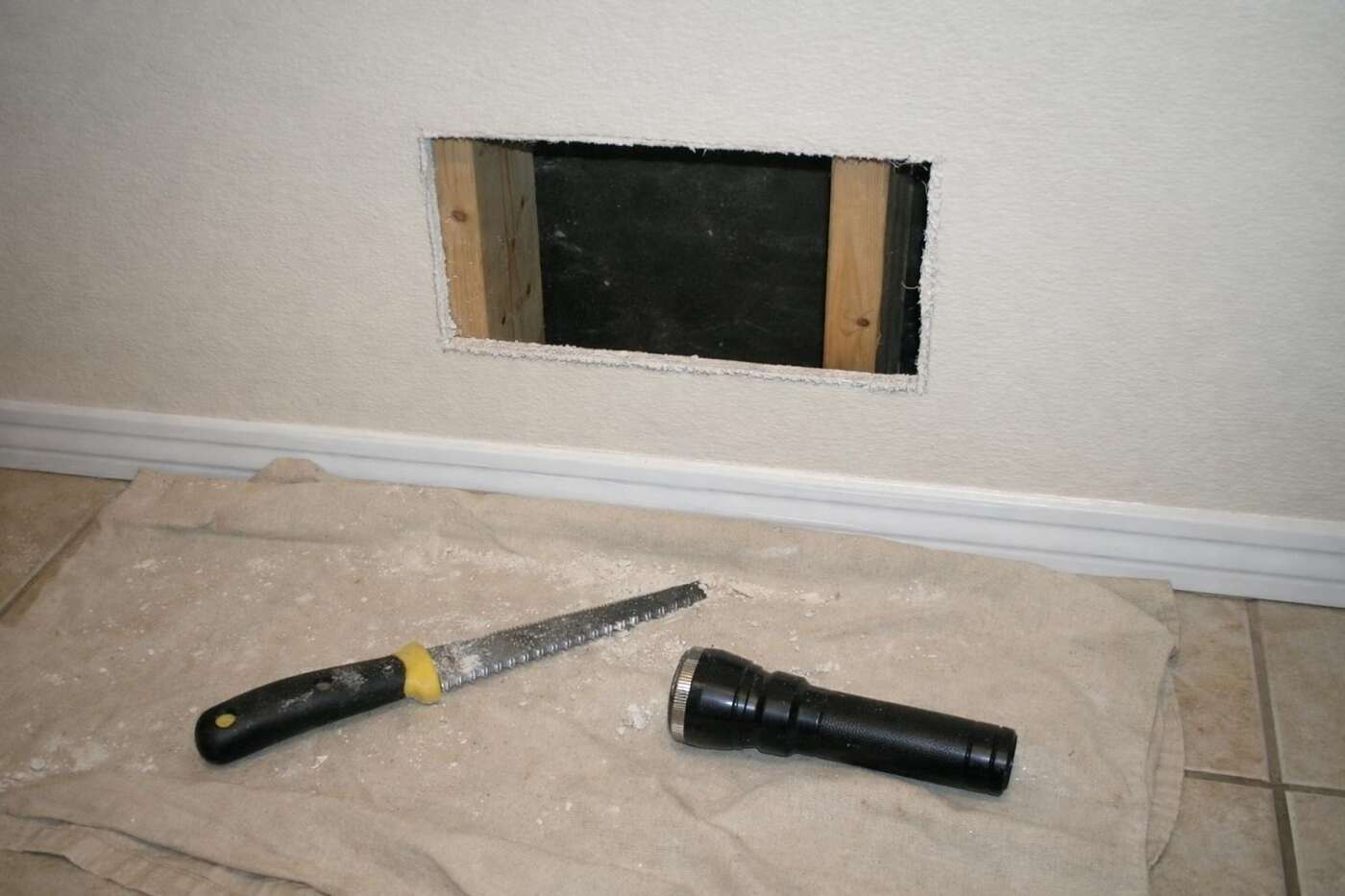
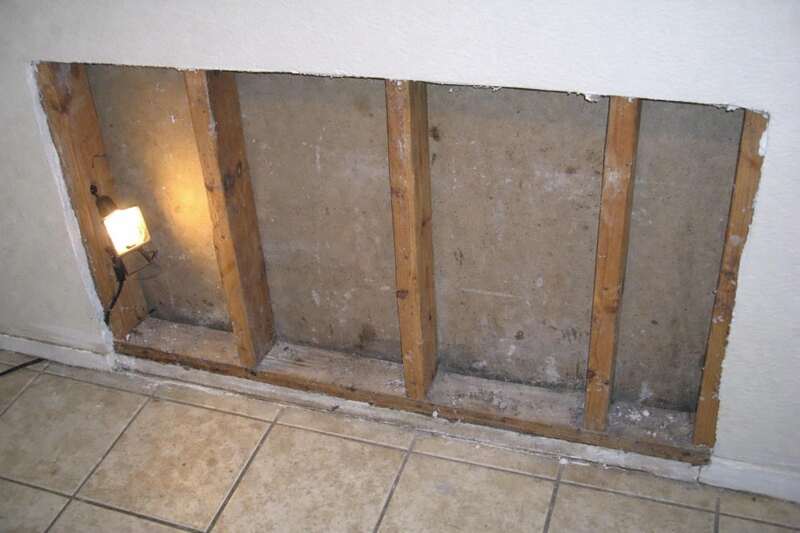
- A small access opening cut where a wall is the only answer, as cleanly as the finish allows
- The carcass and any contaminated material removed and double bagged
- The area treated and deodorized, with the source removed rather than masked
- Drywall patching coordinated or quoted where an access cut was needed
- The opening the animal used identified and closed, so the next one does not follow it in
- A written note of where it was found and what was closed
Where the smell turns out to be saturated insulation rather than a carcass, the job changes to the one on the attic cleanup page. Where live activity is still going on, roof rat removal runs first or alongside.
Why this call usually follows a bait treatment
Most of these searches begin with a poison that was put down somewhere the animal was not going to die. The EPA describes most rodenticides as anticoagulants that kill four days to two weeks after an animal begins feeding, which means the animal has a week or more of ordinary life in which to return to wherever it nests. In a Phoenix house, that is the attic or a wall void.
The idea that poison drives rats outdoors to look for water is folklore with no basis, and it is the single claim most likely to precede a call about a smell. UF/IFAS states the practical position directly: trapping reduces the risk of a poisoned rat dying inside a building. A trap recovers the animal on the spot; bait relocates the problem in time and in space and then hands it back as an odor.
The other route to this call is an animal sealed in. A building closed up while animals are still inside, with no trapping run alongside, produces both interior damage and, a week or two later, a smell. That is why the sequence on the rodent exclusion page closes quiet openings first and leaves the live runs until the trapping has gone quiet.
How a carcass gets located
Smell intensity mapped against time of day and air movement is the main tool, supported by stains, flies and the known runs. Cutting into drywall is the last step rather than the first, and a contractor who opens a wall before the attic has been read is guessing expensively.
| Where it usually is | What points there | Access cost |
|---|---|---|
| Attic, on the drywall between trusses | Smell strongest with the air handler running, flies at a can light, a stain on the ceiling | Lowest; reachable through the hatch |
| Wall cavity at the bottom of a stud bay | Smell localized to one stretch of wall at head height or lower, strongest early in the day | An access cut and a patch |
| Above a kitchen or bathroom soffit box | Smell concentrated in one room, often with flies at a light fitting | Moderate; sometimes reachable from the attic side |
| Garage ceiling void | Smell in the garage and sometimes in a room above, stain on the ceiling board | Usually an access cut in a surface nobody minds |
| Behind or under an appliance | Smell at floor level in a kitchen or laundry, strongest near one unit | Low; a matter of moving the appliance |
| Inside outdoor equipment | Smell at a condenser, pool pump or valve box rather than indoors | Low, and it points at a pack rat rather than a roof rat |
| Under a slab or in a drain line | Sewer-like odor rather than the sweet one, persistent and unchanging | Not pest work; a plumber question |
One honest caveat: a carcass in a sealed void sometimes cannot be reached without opening more of a finish than the smell is worth, and in a Valley summer a small animal in a hot attic can dry out in a few days. A contractor should say so and give you the choice rather than cutting speculatively.
How long the smell lasts, and what shortens it
A carcass smell typically builds over several days, peaks across a week or two and then fades, and removal is the only thing that ends it quickly. Phoenix heat compresses that curve: a hot attic accelerates the whole process, so a small animal in August can go from nothing to peak to nearly nothing in well under two weeks, while the same animal inside a shaded wall cavity in January takes considerably longer.
Masking does not shorten it. Deodorizing sprays, bowls of vinegar, charcoal and ozone all work on the air rather than on the source, and the source keeps producing. They have a place after the removal, as part of treating the area, and almost none before it.
What does help while a search is arranged: run the air handler fan to move air, open the affected room to the outside where the weather allows, and note which times of day the smell is strongest, because that information narrows the location. Flies appearing at a light fitting or a vent in one room is the most precise clue most homeowners get, and it is worth reporting rather than swatting.
What dead rodent removal costs in Phoenix
HomeGuide puts dead rodent removal at $150 to $500 nationally, and where a job sits inside that is decided by access: an attic find at the bottom, a wall cavity with a cut and a patch at the top. Drywall repair and paint are sometimes the contractor's work and sometimes a separate trade, which is worth establishing before the cut is made.
| Line item | Band | Source |
|---|---|---|
| Locating visit | Free here | $0 to $175 standalone inspection, HomeGuide 2026 national |
| Dead rodent removal | $150 to $500 | HomeGuide 2026 national |
| Access cut and patch where a wall is opened | Quoted at the visit, or referred to a drywall trade | Not a published pest band |
| Cleanup of contaminated material around the spot | $600 to $2,500 where it extends into the insulation | HomeGuide 2026 national |
| Trapping where live activity continues | $144 to $443 per visit | Angi cost data, Phoenix |
| Sealing the route in | $200 to $600 named openings | Angi cost data, Phoenix |
A sensible way to handle the quote is to agree the search separately from the removal, because the search is what determines the cost of the removal. Ask what happens if the carcass cannot be reached, and ask who is responsible for making the wall good afterward.
Handling, health and the license to check
Gloves, a respirator and sealed disposal are ordinary contamination practice for handling a carcass, and the useful local context is that Maricopa County has tested Valley roof rats with results coming back negative for tularemia, hantavirus and plague. That is worth knowing, because the subject attracts more alarm than the evidence here supports.
The CDC position is general and still worth respecting: rodents carry many diseases, spread directly through contact with urine, droppings, saliva or a bite, and indirectly through fleas, ticks and mites that fed on an infected animal. That last route is the practical reason a carcass gets bagged and removed rather than left to dry out, since the parasites on it leave once the host stops being warm.
On licensing: structural pest control in Arizona requires a license from the Arizona Department of Agriculture, Pest Management Division, and the license trigger extends to making site-specific recommendations and offering to perform the work. Ask for the business license number, verify it with the PMD, and ask for proof of insurance, which matters a great deal on a job that may involve cutting into a finished wall. Nothing written here prescribes a course of action for your own house.
The services that usually sit beside this one
This call usually arrives in the middle of a larger sequence, and these pages cover the rest of it.
- Roof Rat Removal: Trapping out the climber that dominates Valley attic calls, run alongside the sealing.
- Attic Cleanup: Droppings, nests and fouled insulation taken out and the attic sanitized.
- Rodent Exclusion: Closing the shell: tile eaves, vents, conduit sleeves, weep screed and garage edges.
- Rodent Inspection: A free walk of the roofline, attic and perimeter that fixes the order of the job.
This call usually arrives in the middle of one of the others rather than on its own. The about page describes how the rest of the sequence then runs.
Clearing the odor
A short explanation of the treatment.
Video: Get rid of that dead rat smell, from Bundilla Pest Control.
How a dead rodent call runs in Phoenix
Four steps, and the cheapest place gets looked at first.
-
Describe the smell
Which room, when it started, what time of day it is worst, whether the air handler changes it, and whether flies have appeared at a light or a vent.
-
Search from the cheapest access
The attic first, then soffit boxes and appliance spaces, then wall cavities narrowed by intensity and stain. Cutting drywall is the last resort.
-
Remove and treat
The carcass and any contaminated material are bagged and taken away, and the spot is treated and deodorized once the source is gone rather than before.
-
Close the route
The opening the animal used is identified and closed, and any live activity still showing is dealt with by trapping so the call does not repeat.
What to expect
Every search follows this order, whatever the smell turns out to be.
- Questions about timing and air movement before anybody opens anything
- The attic checked before a wall is considered
- A clean, minimal access cut where a wall has to be opened
- The source removed rather than the air treated
- A note of where it was found and which opening was closed
Why Valley homeowners route this call through us
Three things keep a smell job from turning into a wall full of holes.
-
The search is staged by access cost
The attic gets read before any wall is considered, because in Valley construction it is both the likeliest location and the cheapest to reach, and because the soffit boxes and appliance spaces come next at almost no cost. Opening drywall is the last step. A contractor who starts with a speculative cut is charging for guesswork, and the staged order is what keeps a $150 to $500 job inside that band.
HomeGuide 2026 national: dead rodent removal $150 to $500
-
A straight answer on why it happened
Most of these calls follow bait. The EPA describes most rodenticides as anticoagulants that kill four days to two weeks after feeding begins, and an animal that nests in an attic has plenty of time to get home first. UF/IFAS states that trapping reduces the risk of a poisoned animal dying inside a building. Saying that plainly costs a sale occasionally and prevents the same call arriving twice.
Anticoagulant rodenticides kill 4 days to 2 weeks after feeding begins, US EPA
-
The opening gets closed on the same visit
Removing a carcass without finding the route in leaves the building exactly as available as it was, and the next animal follows the same path. Work routed from here identifies the opening and closes it as part of the job, which on a Valley house usually means the tile eave course, a vent or a conduit sleeve. The note handed over records both the find and the closure.
A quarter inch is the rat-proofing standard, UF/IFAS Extension
What Reddit Says About Dead Rodent Removal in Phoenix
Dead-animal odor is one of the most discussed aftermaths in homeowner threads, and the single most repeated point is that it follows a poison decision. The claim that bait sends rats outside to die gets called out every time it appears, and the people repeating it are treated as either misinformed or dishonest. Plenty of posts are from homeowners who were told exactly that and then spent two weeks trying to find a smell.
The practical advice is consistent: find the source rather than mask it, start with the attic, and be wary of anybody proposing to open several walls. People warn each other about speculative cutting and about paying for a search and a repair separately without agreeing in advance who makes the wall good. Patience comes up too, since a small animal in a hot space sometimes dries out before it can be located.
The other recurring thread is the ordering mistake behind it: a building sealed with animals still inside. Sealing without trapping is criticized as the mirror image of trapping without sealing, and the smell is the predictable consequence.
Questions worth borrowing from those threads: what happens if it cannot be reached, who repairs the wall, is the search priced separately from the removal, and will the entry point be closed as part of this.
A typical dead rodent call in the Valley
The situation: A house in the east Valley where another company had put bait stations in the attic nine days earlier. The noise overhead stopped after about four days, which the owners took as success, and then a smell arrived in the hallway and got noticeably worse each afternoon when the air conditioning ran hardest. By the time they called, a few flies were gathering at a recessed light in the hallway ceiling.
What gets done: The flies at the light fitting are the useful clue, and the attic is read first. The carcass is on the drywall between two trusses about four feet from that light, with a second one a little further along the same run. Both are bagged and removed, along with the fouled insulation immediately around them, and the area is treated. No wall gets opened. The bait stations are removed at the owners' request. The roofline walk that follows finds the tile eave open along roughly twelve feet at the rear and one gable vent with no screen, which is how the animals were getting in; both are closed on a second visit and traps go on the one remaining run.
How it turns out: The smell drops off within two days and is gone inside a week. Two more animals come out of the traps before the last opening is closed. The owners keep a note recording where the carcasses were found, the insulation removed around them, the twelve feet of bird stop and the screened vent. The hallway light is cleaned and the flies do not return.
Dead rodent questions from Phoenix callers
What people ask when the smell has been there for four days and nobody can find it.
How long will the smell last if I do nothing?
It typically builds over several days, peaks across a week or two and then fades, and Phoenix heat compresses that curve considerably. A small animal in a hot attic in summer can go from nothing to peak and back to almost nothing inside two weeks, while the same animal in a shaded wall cavity in winter takes much longer. Waiting is a legitimate choice in some cases and a contractor should tell you when it is, but removal is the only thing that ends it quickly and it also removes the parasites that leave a cooling host.
Is it a dead animal or something else?
Three things get confused. A heavy, sweet, organic smell that builds and then fades over a week or two is a carcass. A persistent stale or ammonia note that does not change from week to week is usually urine-saturated insulation, which is the attic cleanup job. A sewer-like odor that is completely steady is more likely a plumbing vent or a dry trap, and that is a plumber rather than a pest contractor. Describing how the smell has changed over time is the fastest way to separate them.
Will an ozone machine or a spray fix it?
Not while the source is still in place. Those treatments act on the air, and a carcass keeps producing for as long as it is there, so the smell returns as soon as the treatment stops. They have a real use after the removal, as part of treating the spot the animal was lying in. Spending money on air treatment before the search has happened is the most common way people waste money on this particular problem.
Will you have to cut into my wall?
Only where nothing cheaper has found it. The attic gets read first because in Valley construction it is both the likeliest spot and reachable through a hatch, and soffit boxes, garage ceilings and appliance spaces come next. A wall cavity is a real possibility and an access cut is sometimes the answer, in which case it should be small, placed where the finish is easiest to repair, and agreed with you beforehand along with who patches it.
What if it cannot be found?
That happens, and you should be told rather than charged for a series of exploratory cuts. A carcass in a sealed void can sit somewhere that costs more to open than the smell is worth, particularly in a hot Valley attic where a small animal may dry out within days. The honest options at that point are to wait it out with the air moving, or to open a specific spot with a clear reason for choosing it. Agreeing in advance what happens in that situation is worth doing.
Is this safe to handle myself?
With gloves, a respirator and sealed disposal, a carcass in an accessible spot is manageable. The CDC states that rodents carry many diseases spread directly through urine, droppings, saliva or bites and indirectly through fleas, ticks and mites that fed on an infected animal, and that last route is the reason to bag and remove rather than leave it. On the local picture, Maricopa County has tested Valley roof rats with results negative for tularemia, hantavirus and plague. An attic in a Phoenix summer is the part that argues hardest for letting somebody else do it.
How do I stop this happening again?
Close the openings and use traps rather than bait indoors. The EPA describes most rodenticides as anticoagulants killing four days to two weeks after feeding starts, so bait put down inside a building is a decision to have an animal die somewhere inside it; UF/IFAS notes trapping reduces that risk. The other half is the shell: on a Valley house that is the tile eave course, the gable and soffit vents and the conduit sleeves, which the rodent exclusion page covers.