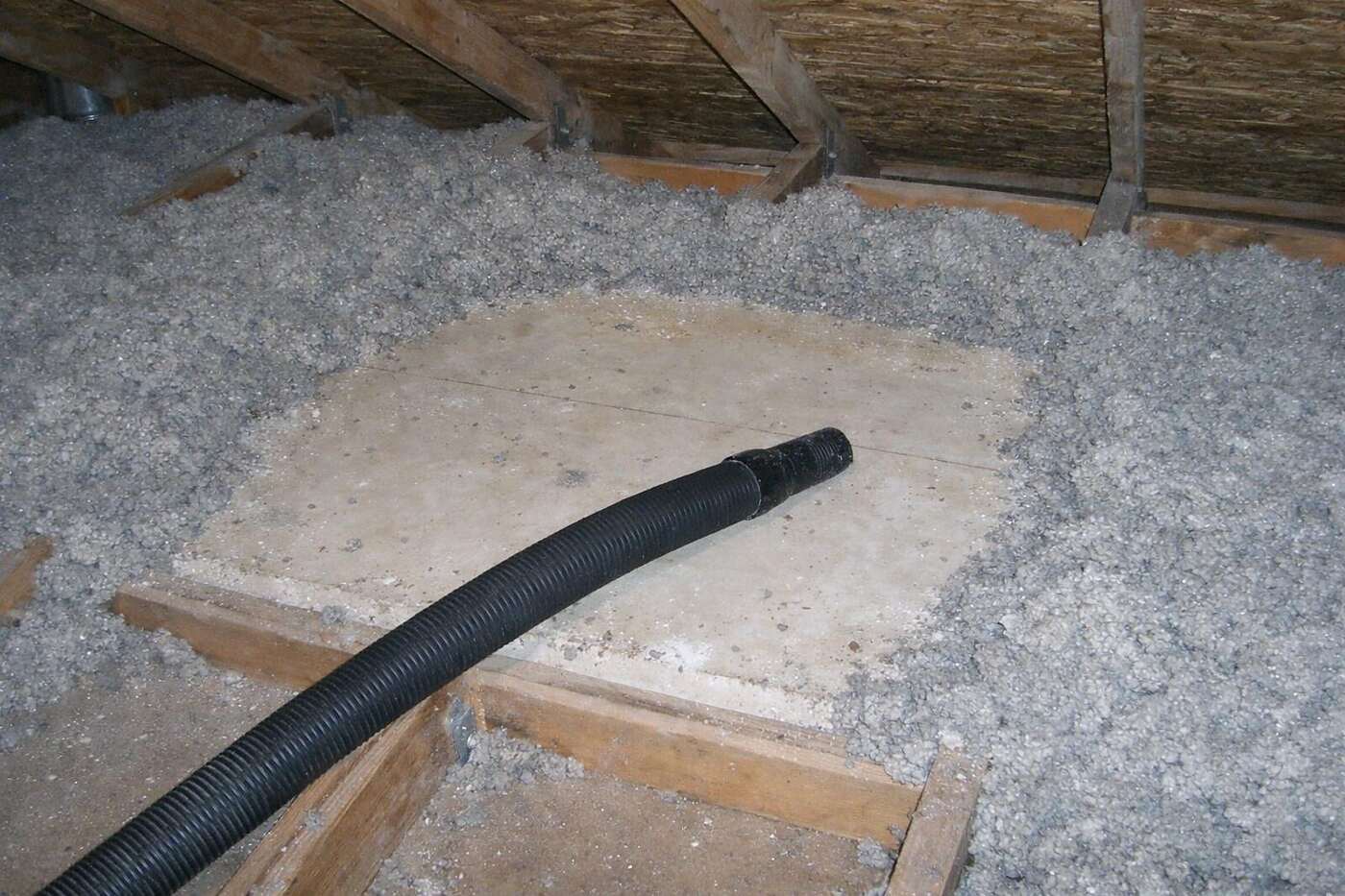
Attic Cleanup in Phoenix, AZ
Once the animals are out, what they left behind is still up there. Licensed Arizona contractors clear droppings, nesting material and fouled insulation out of Valley attics and sanitize the space.
What attic cleanup in Phoenix covers
Attic cleanup is the removal of droppings, urine-contaminated material, nests and food caches from the attic, followed by sanitizing the surfaces, and it is quoted as its own line rather than folded into a trapping price. HomeGuide puts cleanup and decontamination at $600 to $2,500 nationally, and what moves a job inside that band is how much of the insulation has to come out with the mess.
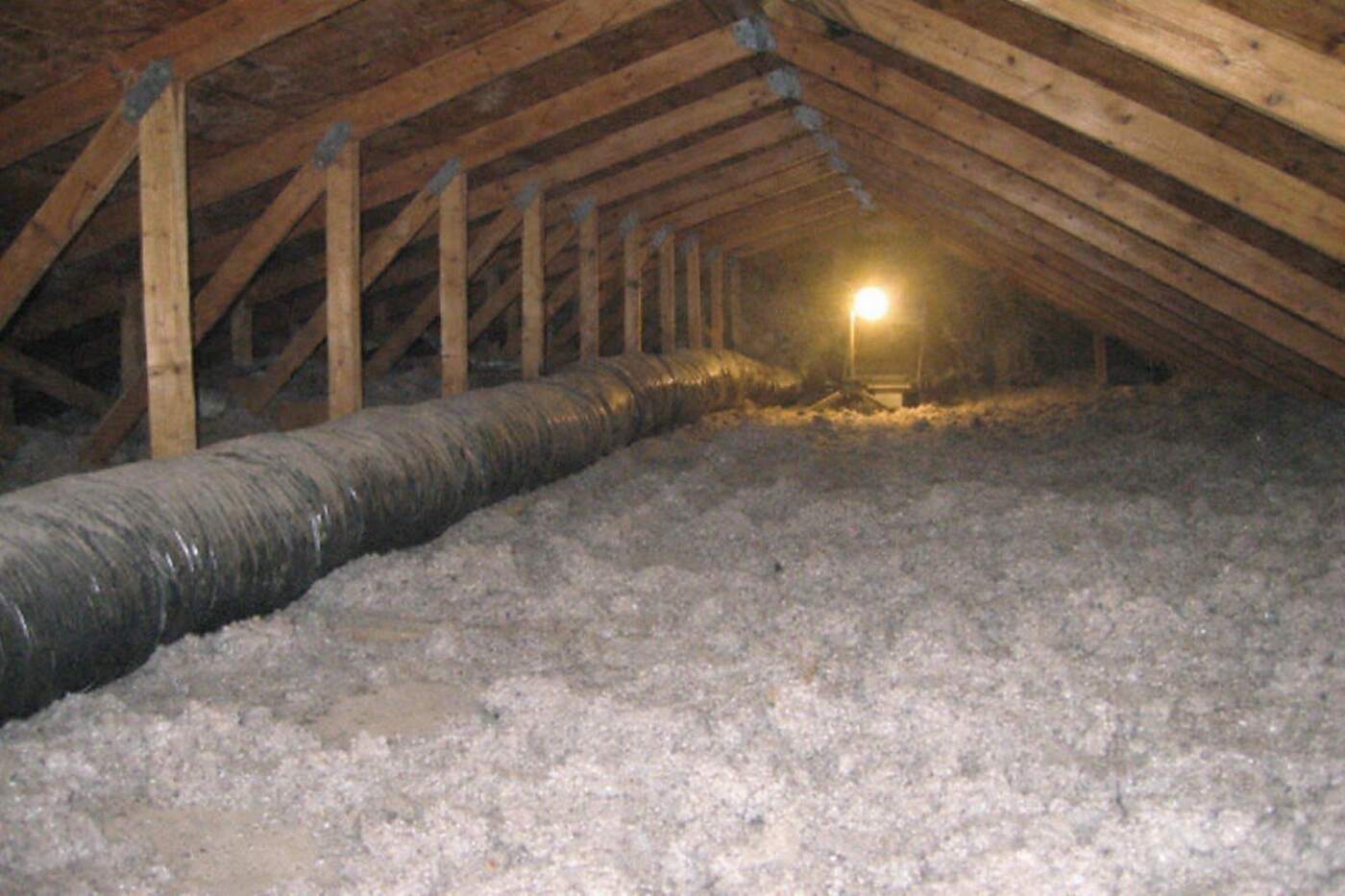
A Valley attic makes this a particular kind of job. The construction is blown-in loose fill laid over a drywall ceiling, with trusses and no floor, which means the contaminated material and the insulation are the same material in most places. There is no basement and almost never a crawl space, so everything happens in a low space that reaches extreme temperatures for half the year.
- Droppings, urine-stained material and nests vacuumed or bagged out rather than swept
- Food caches removed, which in the Valley means citrus rind, seed pods, dog food and pool chemicals carried up
- Fouled sections of blown-in insulation taken out to the drywall where contamination has soaked through
- Surfaces, trusses and ductwork exteriors treated with an appropriate sanitizing product
- Chewed wiring, damaged duct and disturbed can-light covers flagged for the right trade
- Protective equipment used throughout, and material double bagged for disposal
- Insulation depth recorded before and after, so any replacement can be quoted accurately
- A written record of the areas cleared and what was removed
Where the insulation has to come out across most of the attic, the replacement becomes the larger job: see attic insulation replacement. Cleanup before the animals are out and the openings closed is wasted money, which is why rodent exclusion comes first.
The honest version of the health question
Respiratory protection during dropping cleanup is correct on general contamination grounds, and it is worth saying plainly that the specific disease scare attached to this work does not hold up for Phoenix roof rats. Maricopa County has tested Valley roof rats and the results have come back negative for tularemia, hantavirus and plague.
What the CDC does state is general and still worth respecting: rodents carry many diseases, transmitted directly through contact with urine, droppings, saliva or a bite, and indirectly through fleas, ticks and mites that have fed on an infected animal. No credible total number of diseases exists, and any page offering one is repeating a figure that its own source no longer publishes.
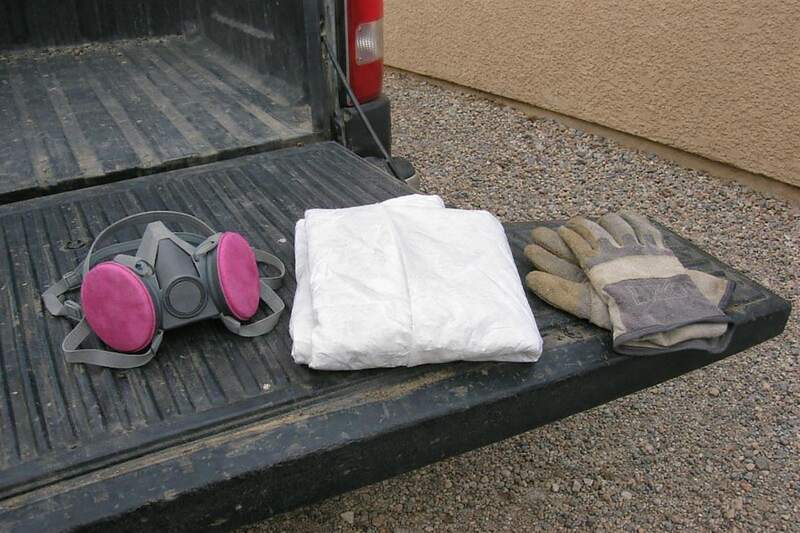
So the practical standard is ordinary contamination practice rather than a biohazard response. A half-face respirator with particulate filters, gloves, a disposable suit in a heavily fouled attic, no dry sweeping, damp methods or a sealed vacuum, and material double bagged and taken away. That is what a licensed contractor arrives with, and it is also the honest reason: attics full of dust, fiberglass, cellulose and animal waste are unpleasant and worth protecting against, regardless of what the county testing says about the specific pathogens.
When an attic needs clearing and when it does not
Scattered droppings on otherwise intact insulation are a cleanup; insulation matted into runs or soaked with urine is a removal. Deciding which is the job the inspection does, and getting it wrong in either direction costs money.
| What the attic looks like | What it needs | Why |
|---|---|---|
| A light scatter of droppings, insulation at full depth and dry | Spot cleanup and sanitizing | Nothing has soaked through to the drywall, so the insulation is still performing |
| Worn runs pressed flat between the hatch and a corner | Cleanup plus localized removal and top-up | The Department of Energy states compressed insulation does not deliver its rated R-value |
| Urine staining and a persistent ammonia smell | Removal of the affected area down to the drywall | Wet insulation performs poorly per the Department of Energy, and the odor source is the material itself |
| Nests, caches and droppings spread across most of the attic | Full clearance and replacement | Spot work on a widely fouled attic costs nearly as much and leaves the problem |
| Chewed wiring, crushed ducting or disturbed can-light covers | Cleanup plus referral to an electrician or HVAC contractor | UF/IFAS notes rats chew wires and can potentially start fires; that repair is not pest work |
| Old dry nesting material, no fresh droppings | Usually clearance of that area only | Historic activity with the opening now closed does not need a whole-attic response |
The other variable is the smell. A persistent odor after the animals are gone is usually saturated material rather than a carcass, but where the two are confused the page to read is dead rodent removal.
Why the season matters for attic work in the Valley
Phoenix attic work is governed by temperature, and that has real consequences for scheduling a cleanup. A Valley attic in July is an environment people should not be spending long periods in, which is why this work is done early in the morning in the summer months or pushed into the cooler half of the year where the job allows it.
It is also the clearest practical argument against doing it yourself. A homeowner in a respirator and a disposable suit, crawling between trusses in loose fill with no floor, in an attic that has been baking since sunrise, is in difficult conditions. Rushing that work is how a ceiling gets a foot through it and how half an attic gets missed.
The seasonal logic fits the rodent calendar reasonably well. Attic activity builds from around October, and Maricopa County Vector Control puts peak roof rat activity from November through May, so the trapping and sealing typically run through the cool months with the cleanup following at the end of the same window. A summer cleanup is usually the tail of a problem that started the previous winter, and scheduling it for first light is standard rather than exceptional.
What attic cleanup costs in Phoenix
HomeGuide puts attic cleanup and decontamination at $600 to $2,500 nationally, and where a job lands inside that depends almost entirely on square footage affected and whether insulation is coming out. Every figure here is a typical-job band confirmed at the free inspection.
| Line item | Band | Source |
|---|---|---|
| Inspection | Free here | $0 to $175 standalone, HomeGuide 2026 national |
| Cleanup and decontamination | $600 to $2,500 | HomeGuide 2026 national |
| Insulation removal and replacement | $2.50 to $5.50 per square foot | HomeGuide 2026 national |
| Dead rodent removal, where a carcass is the odor source | $150 to $500 | HomeGuide 2026 national |
| Trapping that has to precede the cleanup | $144 to $443 per visit | Angi cost data, Phoenix |
| Sealing that has to precede the cleanup | $200 to $600 named openings | Angi cost data, Phoenix |
| Full-scope restoration, worst case | $3,000 to $10,000 and up | HomeGuide 2026 national |
A 1,600 square foot house with droppings along one run and dry insulation sits near the bottom of the cleanup band. A larger house where the loose fill is matted across most of the attic and has to come out to the drywall moves into the per-square-foot removal and replacement figure instead, and that is where the total climbs. Ask for cleanup and insulation as separate lines, and ask what square footage each one covers.
Insurance, documentation and the license
Rodent damage is commonly excluded from homeowner policies as a maintenance or vermin matter, so the realistic use of documentation here is a claim on consequential damage rather than on the droppings themselves, and any coverage question belongs with your own insurer. What a contractor can provide is the record: dated photographs, the areas cleared, what was removed and the insulation depth before and after.
That record also matters outside insurance. A buyer's inspector who opens an attic hatch and finds clean insulation at full depth, with a dated sheet naming what was removed and when, asks very few further questions. The rodent clearance letters page covers the formal version of that document.
On licensing: structural pest control in Arizona is licensed by the Arizona Department of Agriculture, Pest Management Division, and the sanitizing product side of a cleanup sits inside that. Ask for the business license number and verify it with the PMD, and ask for proof of insurance, which matters on a job involving a ladder, an attic and other people's ceilings. Nothing on this page is a recommendation for your own attic; that judgment belongs to the licensed contractor who has been up there.
The services that usually sit beside this one
Cleanup comes last in the sequence, and these are the pages covering what has to happen before it.
- Attic Insulation Replacement: Flattened and soiled blown-in insulation removed and fresh fill blown back.
- Dead Rodent Removal: Tracing the smell to the carcass, removing it, then closing the way it came in.
- Rodent Exclusion: Closing the shell: tile eaves, vents, conduit sleeves, weep screed and garage edges.
- Rodent Inspection: A free walk of the roofline, attic and perimeter that fixes the order of the job.
Cleanup comes after the animals are out and the shell is closed, which is the sequence the about page lays out step by step.
The right way to clean up droppings
Guidance from a national pest control brand.
Video: How To Properly Clean Rat and Other Rodent Droppings, from Orkin Canada.
How an attic cleanup runs in Phoenix
Four steps, and the first of them is confirming the attic is empty.
-
Confirm the attic is clear
No fresh droppings, no sound, traps producing nothing and the openings closed. Cleaning an attic that is still occupied is money spent twice.
-
Assess and measure
Insulation depth and condition recorded, affected area measured in square feet, and the decision made between spot cleanup and removal down to the drywall.
-
Clear and bag
Droppings, nests and caches vacuumed or bagged rather than swept, fouled insulation removed where it has soaked through, everything double bagged out through the hatch.
-
Sanitize and record
Surfaces, trusses and duct exteriors treated, damage to wiring or ducting flagged for the right trade, and a written record of the areas cleared handed over.
What to expect
Cleanup visits follow this order, whatever the size of the attic.
- Protective equipment on, and drop protection below the hatch
- Damp or vacuum methods rather than dry sweeping
- Insulation depth recorded before anything is removed
- Material double bagged and taken away the same visit
- A written record of what was cleared and where
Why Valley homeowners route attic cleanup through us
Three things keep a cleanup from being money spent twice.
-
The attic gets confirmed empty first
A cleanup booked before the trapping has finished and the openings are closed gets undone within weeks, which is the most expensive ordering mistake available in this trade. Work routed from here requires no fresh droppings, no sound and a closed shell before the vacuum goes up the ladder. That sequencing is also why cleanup is quoted as its own line rather than bundled into a removal price where nobody can see when it is scheduled.
HomeGuide 2026 national: cleanup and decontamination $600 to $2,500
-
The insulation decision rests on a measurement
Insulation depth and the affected square footage get recorded before anything is removed, because the difference between a spot cleanup and a removal down to the drywall is the difference between the cleanup band and the per-square-foot replacement figure. The Department of Energy states that compressed insulation does not deliver its rated R-value and that wet insulation performs poorly, so the test is matting and saturation rather than the presence of droppings.
Compressed insulation underperforms its rating, US Department of Energy
-
A straight answer on the health question
Maricopa County has tested Valley roof rats and come back negative for tularemia, hantavirus and plague, and saying so is more useful than implying a local outbreak risk. The CDC states that rodents carry many diseases spread directly through urine, droppings, saliva or bites and indirectly through fleas, ticks and mites, without publishing a total. Protective equipment and damp methods are ordinary contamination practice, and that is the reason given rather than a scare.
County testing of Valley roof rats negative for tularemia, hantavirus and plague, Maricopa County
What Reddit Says About Attic Cleanup in Phoenix
Cleanup is the line item homeowners most often discover late, and the recurring complaint is that it was never mentioned during the removal quote. People describe agreeing to trapping, getting the animals out, and then being told about the attic as a separate several-thousand-dollar conversation. The advice that follows is to ask at the start whether cleanup and decontamination are included or quoted separately, and to get the answer before signing anything.
The second theme is ordering. Threads are full of people who paid for an attic to be cleared and then heard activity again within a month, and in almost every case the sealing had not been done or had been done badly. Trapping without sealing gets described as pointless; cleaning without sealing gets described as worse, because the money is larger.
The health question generates the most misinformation, usually around hantavirus, and the corpus contains plenty of people frightened out of proportion to the actual risk. The useful counterweight is the local testing record. What people do agree on practically is respirators, gloves, damp methods over dry sweeping, and having somebody else do it rather than crawling around an attic themselves.
The questions worth borrowing: will you clean and decontaminate or only trap, is the insulation included or extra, how is the affected area measured, and what documentation comes with it.
A typical attic cleanup in central Phoenix
The situation: A 1950s ranch house on an irrigated lot, rats in the attic across two winters before the owners moved on it, and a faint ammonia note in the back bedroom that got worse in the afternoons. Trapping and eave closure were completed six weeks earlier by the same contractor, the traps have been empty for three weeks, and the owners want to know whether the smell means something is still up there.
What gets done: The attic shows no fresh droppings. What it does show is loose fill matted flat along two runs from the hatch toward the rear corner, heavy dropping accumulation along the top plate above the back bedroom, and a patch of clearly urine-stained material roughly ten feet by six immediately over that bedroom. Insulation depth is recorded at around nine inches in the undisturbed areas. The stained patch and the two runs come out to the drywall, the droppings elsewhere are vacuumed, a small cache of citrus rind and seed pods is bagged out of the rear corner, and the trusses and duct exteriors are sanitized. One can-light cover has been shifted and is pointed out to the owners for an electrician.
How it turns out: The ammonia note is gone within a couple of days, which confirms it was the saturated material rather than a carcass. The cleared area is smaller than a full attic and is quoted as cleanup plus a localized insulation line rather than a whole-attic replacement, and the top-up to restore depth over the bedroom is handled on the same visit. The owners get a sheet recording the sixty square feet removed, the depth before and after, and the can light flagged.
Attic cleanup questions from Phoenix callers
What people ask once the trapping is finished and the attic is still a mess.
Do I have to clean the attic at all?
It depends on what is up there rather than on principle. A light scatter of droppings on insulation that is still at full depth and dry is a modest spot cleanup. Insulation matted flat into runs or soaked with urine is a different matter: the Department of Energy states that compressed insulation does not deliver its rated R-value and that wet insulation performs poorly, so that material has stopped doing its job as well as smelling. The inspection measures the affected area and the depth, and the answer comes out of those two numbers.
Is the smell a dead animal or the insulation?
A persistent ammonia or stale note months after the animals are gone is usually saturated material. A heavy, sweet, distinctly organic smell that builds over a week or two and then fades is a carcass. The two get confused, and the difference matters because one is a cleanup and the other is a search. The EPA describes most rodenticides as anticoagulants killing four days to two weeks after feeding begins, so where bait was used a carcass is the likelier answer; dead rodent removal covers that.
Should I get it cleaned before the sealing is done?
No, and that ordering is the most expensive mistake available here. A cleaned attic with an open tile eave is reoccupied, and the money is spent again. Work routed from here requires the openings closed, the traps quiet and no fresh droppings before any cleanup is scheduled. If a quote puts cleanup first, or does not say when it sits in the sequence, that is worth querying before agreeing to it.
Can I clean the attic myself?
Physically it is possible, and in a Valley summer it is unpleasant and somewhat risky. You would need a half-face respirator with particulate filters, gloves, a disposable suit, a vacuum you are willing to ruin, and the ability to move between trusses in loose fill with no floor without putting a foot through the ceiling. Attic temperatures here make that an early-morning job at best for several months of the year. The CDC notes rodents carry many diseases spread through urine, droppings, saliva and bites, so damp methods rather than dry sweeping matter whoever does it.
What does it cost in Phoenix?
HomeGuide puts cleanup and decontamination at $600 to $2,500 nationally, and insulation removal and replacement at $2.50 to $5.50 per square foot where the fill has to come out. Which of those two figures dominates is the whole question, and it is settled by measuring the affected area at the inspection. Ask for the square footage the quote is based on, and ask for cleanup and insulation as separate lines so you can see which is which.
Will my insurance cover it?
That is a question for your own insurer, and the general pattern is that rodent damage is excluded as a maintenance or vermin matter while consequential damage is sometimes treated differently. What a contractor can supply is documentation: dated photographs, the areas cleared, what was removed and insulation depth before and after. No representation is made here about what any policy covers.
Does the ductwork need cleaning too?
The exteriors get sanitized as part of the attic work. The inside of a duct system is separate trade, and it becomes relevant where a duct has been chewed open or a register smells. A contractor should point out crushed or breached ducting during the cleanup so it can be quoted by an HVAC contractor rather than patched by a pest technician. UF/IFAS notes rats chew wires and can potentially start fires, and the same reasoning applies to flagging damage rather than covering it over.