Rodent Removal in Peoria, AZ
Peoria stretches a long way north from its old townsite into desert subdivisions cut through by washes, and the animal changes as you climb. The inspection that sorts it out is free.
Free Inspection in Peoria
A free inspection in Peoria works the eave from a ladder, checks the first course of tile and the vents, reads the attic with a light, then covers the wall line, the equipment pads, the shed and anything parked. Which of those carries the most weight depends on how far north the property sits. The findings are written down with trapping, sealing and attic work priced separately.
Peoria is in Maricopa County, running north-west from Glendale, well inside the working area for a west Valley contractor. The line here is answered at any hour. Book a free inspection and say roughly where in the city you are, because old Peoria and north Peoria produce close to opposite findings.
Old Peoria and north Peoria are different problems
The original Peoria townsite, settled in the 1880s by people who came from Peoria in Illinois, sits at the southern end of a city that now reaches a long way north. Around that older core the housing is modest and mature, with trees that have reached the rooflines, detached garages and sheds, and the rodent picture is the familiar central Valley one: a roof rat arriving along limbs and wires and entering at a vent or an eave.
North Peoria, out past the 101 and climbing toward the desert hills, is 1990s to 2010s master-planned development on gravel lots, with washes and open land running between neighborhoods. There the animal is more often a woodrat. The University of Arizona Cooperative Extension describes the nest, a midden, as a mound of vegetation and sticks built at the base of a prickly pear or a palo verde with several entrances and shallow tunnels, which on those lots means against a block wall corner, under a shrub, inside a shed or beneath an equipment pad.
The middle of the city takes both. What that means practically is that the first useful question on a Peoria call is where in the city the property is, and the second is whether the evidence is overhead or at ground level.
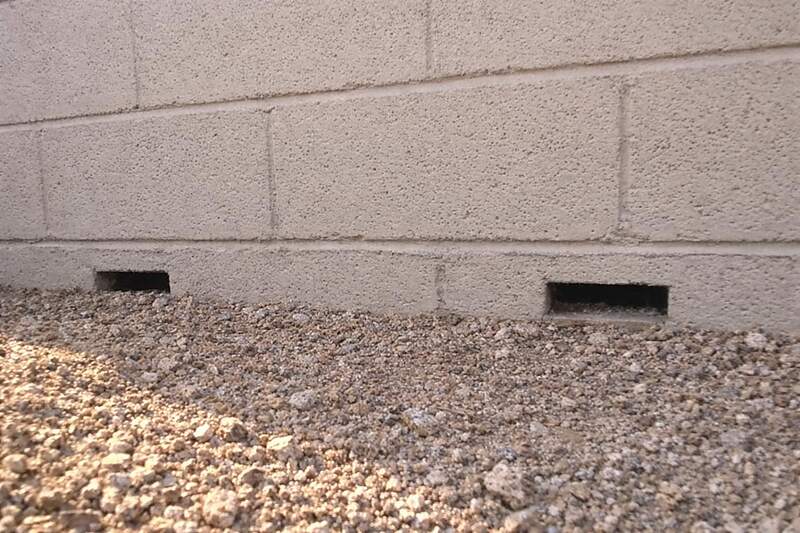
Washes and open ground behind the back wall
North Peoria development is laid out around washes, drainage corridors and retained natural areas, and those are continuous habitat threading between subdivisions. Brush, shade and cover run the length of a wash, and a lot whose back wall faces one has a permanent supply of animals arriving from outside it.
That pressure is structural to the location and nothing done to the wash will change it. What changes the outcome on an individual lot is whether the specific sites are available, and the University of Arizona Cooperative Extension identifies exclusion and barriers as the most effective management where woodrats are getting into structures. The items that matter are the gap under a condenser or pool equipment pad, the weep openings along the block walls, the bottom of a shed door or a side gate, stored pavers and firewood sitting on gravel, and shrub beds dense enough that the ground beneath cannot be seen.
Those are small corrections rather than a landscaping project, and on a north Peoria lot they belong at the top of a report. The roof still gets walked, because a house built in the late 1990s or early 2000s is now at the age where the first course of tile has opened. Pack rat removal covers the ground-level work.
Hillside lots, retaining walls and what sits underneath
Toward the northern hills some Peoria lots are cut into slopes, with retaining walls, stepped pads, under-deck voids and equipment tucked into the fall of the ground. Those are better nesting sites than anything on a flat lot, because they offer enclosed space with a roof over it at ground level.
An inspection on a lot like that looks under rather than along. The void behind or beneath a retaining wall, the space under a cantilevered deck or a raised patio, the gap behind stacked landscape boulders and the underside of an equipment platform are each worth checking, and they are the places a midden is most likely to be invisible from the yard. Where a pad is stepped, the gap at the back of the lower one is a standard finding.
Closing those sites is ordinary work: hardware cloth skirted and pinned at the gravel line, mesh fitted behind boulder stacks where a void runs through, a deck perimeter screened. None of it needs to be visible from the house once it is done, and all of it is more durable than clearing a mound and hoping.
What We Handle in Peoria
Peoria work runs from garage and vent closures on the old townsite streets to midden clearance and ground-level barriers in the north.
- Pack rat removal: middens cleared from wall corners, shrub beds, sheds, retaining wall voids and equipment pads, with wiring checked.
- Rodent exclusion: metal bird stops along the tile eave, galvanized cloth at the vents, pad skirts, wall weep screens, shed and gate closures.
- Roof rat removal: attic trapping on the active runs, left at least a week because UF/IFAS notes roof rats avoid newly placed objects.
- Rodent inspection: free, covering roof, attic, wall line, outbuildings, equipment and any slope voids.
- Mouse removal: garage, pantry and storage trapping plus the quarter-inch openings they use.
- Attic cleanup: droppings, nests and caches removed and the space sanitized, insulation depth recorded.
- Attic insulation replacement: flattened or soiled fill measured, removed and blown back to depth.
- Dead rodent removal: tracing a smell to the carcass and closing the opening behind it.
- Commercial rodent control: restaurants and retail along Bell Road and Lake Pleasant Parkway, plus light industrial and multifamily.
A Typical Peoria Job
The situation: A 2002 house on a stepped lot in north Peoria, gravel landscaping, a wash behind the back wall, a raised patio at the rear and a pool with equipment on a pad beside the side gate. The owners had cleared a mound of sticks from beside the pool equipment in February and found a larger one in the same place by May. The pool light had also stopped working.
What gets done: The walk goes under things. The rebuilt midden is beside the pool pad with a second one in the void under the raised patio, reachable through a gap at the step, and the low-voltage run to the pool light has been chewed where it crosses the pad. Both are cleared and traps go on the run between them. The roof is walked and the first-course tile closures turn out to be gone along about twenty-six feet of the rear eave, with the attic showing a small amount of old dry nesting material and no fresh droppings. On the second visit the pool pad is skirted in hardware cloth pinned at the gravel line, the patio void is screened at the step, five wall weep openings are closed, and the side gate gap is shut. The rear eave is fitted with a metal bird stop on a third visit and the old attic material is cleared.
How it turns out: Four animals across twelve days and nothing afterward at either site. The pool light run is repaired by an electrician. The record distinguishes the current ground-level activity from the historic attic evidence, which matters because the two would otherwise read as one ongoing infestation, and lists twenty-seven feet of bird stop, the pad skirt, the patio screen, five weep closures and the gate.
What This Costs in Peoria
A Peoria quote depends on whether the work is ground level, roof level or both, and on how many separate nest sites the walk finds. All figures are typical-job bands confirmed at the free inspection.
| Work | Phoenix area (Angi) | National (HomeGuide 2026) |
|---|---|---|
| Inspection | Free here | $0 to $175 standalone |
| Trapping visit | $144 to $443, averaging about $286 | $250 to $1,200 |
| Follow-up visit | $50 to $150 | Included above |
| Sealing named openings | $200 to $600 | Part of the whole-home band |
| Whole-shell exclusion | Above the Phoenix figure on a long tile eave | $500 to $2,500 |
| Midden clearance and site closure | Quoted per site | Cleanup band $600 to $2,500 where it extends indoors |
| Attic cleanup | Quoted from the measured area | $600 to $2,500 |
| Insulation removal and replacement | Quoted per square foot | $2.50 to $5.50 per sq ft |
A flat lot with one midden and a pad to skirt is a modest job. A stepped hillside lot with voids under a patio and a retaining wall, three middens and an open rear eave is several visits and should be quoted as separate items rather than one number. Ask for the nest sites counted and the eave footage stated, which between them account for almost all of the variation here.
Rodents in the attic
What is happening above the ceiling, explained.
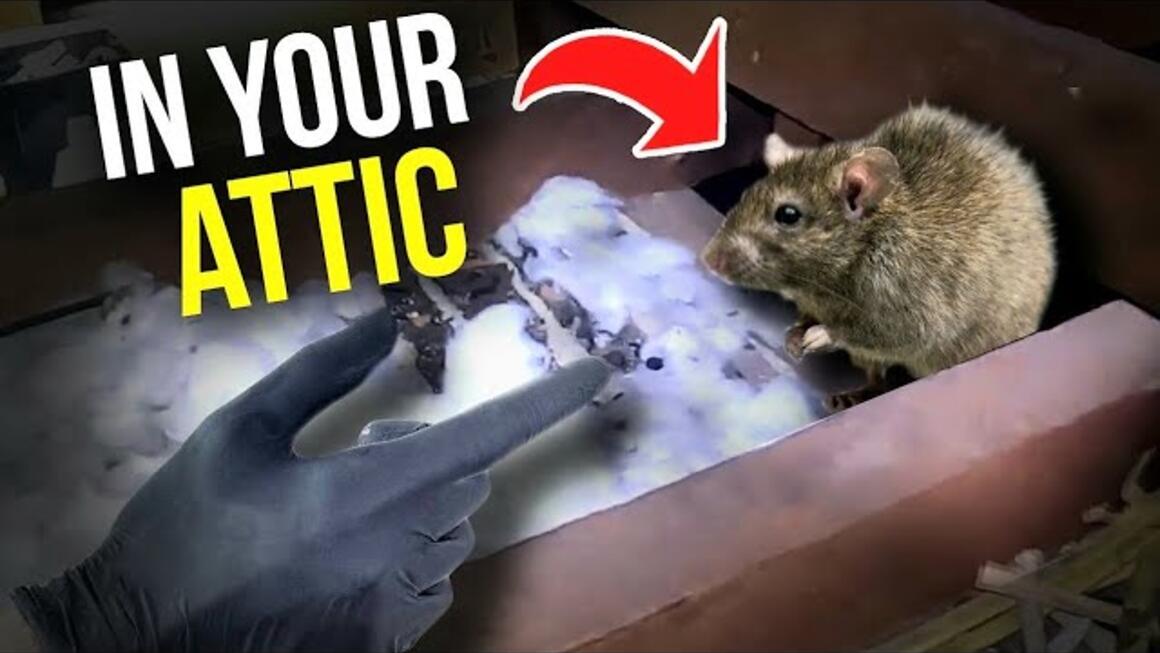
Video: Rodents in your ATTIC!? Here's what you do, from Twin Home Experts.
Common Questions in Peoria
What Peoria callers ask before booking.
I keep clearing the nest and it keeps coming back. Why?
Because the site is still usable. A midden is the visible part, and the reasons it was built in that spot, enclosed space with something solid over it and material within reach, all survive the clearance. The University of Arizona Cooperative Extension names exclusion and barriers as the most effective management where woodrats are entering structures, which here means a mesh skirt at the equipment pad, a screen at the patio step, the wall weep openings closed and stored material lifted off the gravel.
Does the wash behind us mean this is permanent?
The pressure is permanent; the access is not. A wash is continuous brush and cover running between subdivisions, so animals in the area are a feature of the location rather than a consequence of anything you have done. What you control is whether your own lot offers anywhere to build and anywhere to get in. Close the pad gaps, the wall weep openings, the shed door, the gate bottom and the dense beds, and the wash stops mattering to your property.
We are in old Peoria with a shed and a garage. Where do you start?
With the outbuildings, usually. A shed or a detached garage on an older lot typically has a door that no longer meets the slab, gaps at the floor plate, an unscreened roof space and stored material inside, and that combination is more attractive than a house attic. Closing and clearing it is one of the cheaper jobs available, and the house gets read as well so that a clean attic is recorded rather than left ambiguous.
Is old nesting material in the attic a problem?
It is a finding rather than an emergency, and it should be reported as what it is. Dry brittle material with no fresh droppings and no worn runs is historic evidence. UF/IFAS gives the roof rat dropping as a quarter to half an inch with pointed ends, and freshness is judged on site. The usual action is clearing that area so the attic reads consistently and closing whichever opening allowed it, rather than running a trapping program for an animal that left some time ago.
Nearby Areas We Serve
The same contractors cover the west Valley towns next to Peoria, and the service area runs across Maricopa County.