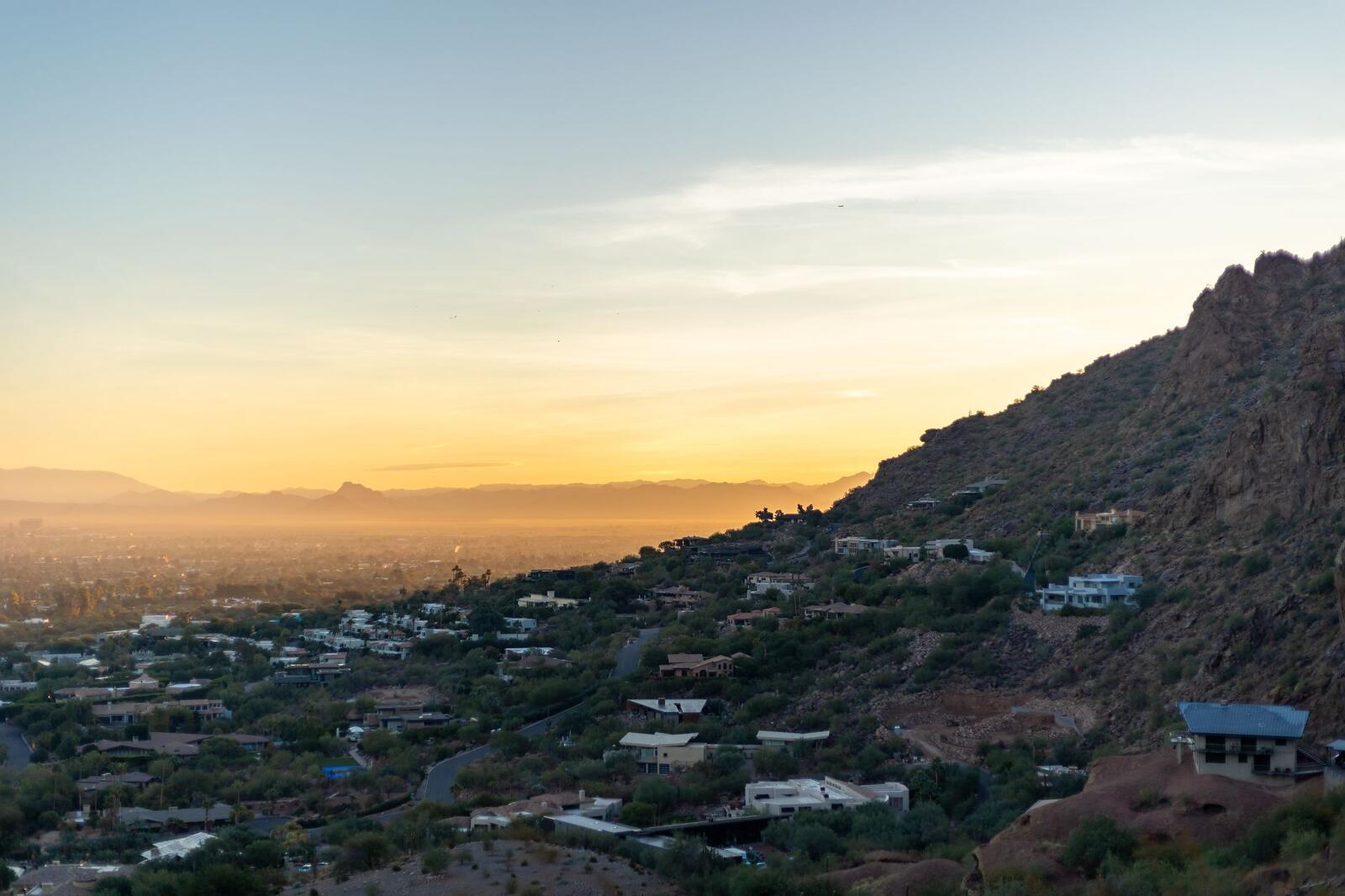
Rodent Removal in Paradise Valley, AZ
Paradise Valley is built on acre-plus walled lots between Camelback and Mummy Mountain, which means long rooflines, a lot of perimeter wall and both animals in play. The inspection costs nothing.
Free Inspection in Paradise Valley
A free inspection in Paradise Valley takes longer than most, because there is more building and more wall to walk. Whoever attends works every eave run from a ladder, checks the first course of tile, the vents and the penetrations, reads the attic with a light, then covers the perimeter wall, the equipment pads, the guest house and any outbuilding. The findings come back with trapping, sealing and attic work priced as separate lines.
The town sits inside Maricopa County between Phoenix and Scottsdale, so the contractor routed here is working the central Valley anyway. This line is answered at any hour. Book a free inspection and mention the approximate footprint and any separate structures, because on a property this size the scheduling depends on it.
Acre lots mean long eaves and long walls
Paradise Valley incorporated in the early 1960s specifically to keep its low density, and the large-lot pattern that resulted is the single most important fact for rodent work here. A house spread low across a big parcel has considerably more eave than a compact two-story on a tract lot, and the perimeter wall enclosing that parcel runs a long way.
Both of those are priced by length rather than by count. On tile, the gap under the first course is the primary way into an attic, and a bird stop gets fitted along the run rather than plugged at the corners a ladder happens to reach, so fifty or eighty feet of eave is fifty or eighty feet of work. On the wall line, the weep openings at the base of a block wall are individual items but there are a great many of them on a quarter mile of wall.
The practical consequence is that a Paradise Valley quote reads higher than a homeowner expects on a house with immaculate grounds, and the explanation is footage rather than anything being wrong. The useful question to put to any quote is how many feet of eave and how much wall line it includes, which is also the only way to compare two bids here.
Camelback and Mummy Mountain put both animals on the same lot
Properties here sit between and against two mountains, with mature irrigated landscaping on many parcels and natural desert on others, and that combination regularly produces one of each animal on a single property. The attic has a roof rat and the wall corner has a woodrat, and they are different jobs.
Maricopa County Vector Control reports roof rats travel power lines and tree limbs, spend around ninety percent of their lives four feet or more above the ground, forage within roughly two to three hundred feet of the nest, and are most active from November through May. On a lot with olive, citrus and palm near the building, that is a straightforward route to the eave. The University of Arizona Cooperative Extension meanwhile describes the woodrat nest as a mound of vegetation and sticks at the base of a prickly pear or a palo verde with several entrances and shallow tunnels, which on these parcels means a wall corner, a dense bed or the gap under an equipment pad.
An inspection that covers only one of the two leaves an obvious question open. Roof rat removal and pack rat removal describe the two halves, and one PMD-licensed contractor can cover both.
Guest houses, equipment and the things nobody opens
A large property generally comes with more than one building and a good deal of mechanical equipment, and those are where a problem sits undiscovered longest. Guest houses, casitas, pool houses, detached garages and storage buildings have their own rooflines, their own vents and their own attic spaces, and a structure that is unoccupied for part of the year gets no early warning at all.
The equipment is the other half. The University of Arizona Cooperative Extension notes woodrats gnaw the vinyl and plastic shielding on electrical wire and are notorious for chewing the wiring of cars and appliances, and a property here may have several condensers, pool and spa equipment, irrigation controllers, landscape lighting transformers, gate operators and vehicles standing in a garage or on gravel. Each is enclosed, warm, wired and rarely opened.
So a walk here opens cabinets and enters every roof space rather than sampling the main house. Gate operators in particular are worth naming: a chewed low-voltage run in a gate controller is a small repair discovered early and an inconvenient one discovered when the gate stops working.
What We Handle in Paradise Valley
Work on a Paradise Valley property is usually a combination rather than a single service, because the lot and the building count make it one.
- Rodent inspection: free, and on a property this size it covers every roof space, the full wall line, the equipment and the outbuildings.
- Rodent exclusion: bird stops along the measured tile eave, galvanized cloth at the vents, collars at the line set sleeves, and mesh in the block wall weep openings.
- Roof rat removal: attic trapping on the active runs, left at least a week because UF/IFAS notes roof rats avoid newly placed objects.
- Pack rat removal: middens cleared from wall corners, beds and equipment pads, with condensers, gate operators and vehicles checked for chewed wiring.
- Attic cleanup: droppings, nests and caches out of main house and guest house attics, then sanitized.
- Attic insulation replacement: measured and priced per square foot, which on a large roof area matters more than anywhere else.
- Dead rodent removal: locating a carcass in a wall or attic after a bait treatment and closing the route it used.
- Rodent clearance letters: a dated report for an escrow file on a property where inspection attention is close.
A Typical Paradise Valley Job
The situation: A single-story house of roughly five thousand square feet on a walled acre and a half below Mummy Mountain, with a guest house, a pool house and a four-car garage. The owners spend July and August elsewhere. They came back in September to a gate that would not open, and when the gate company came out the controller was full of nesting material.
What gets done: The walk covers four roof spaces and about four hundred feet of perimeter wall. The gate operator is the visible symptom; the cause is a midden built into the gap beneath the nearest equipment pad and a second under an oleander against the east wall. Both are cleared, traps go on the run between them, and the gate controller is flagged for the gate company. Separately, the guest house attic shows droppings a quarter to half an inch long with pointed ends and a worn run, and its first-course tile closures are gone along about twenty-two feet. Snap traps go into the guest house attic, the eave is fitted with a ventilated bird stop on the second visit, and eleven block wall weep openings along the east and north runs are screened.
How it turns out: Three animals from the ground traps and two from the guest house attic across sixteen days. The main house attic is read twice and found clean, which is recorded explicitly so the owners are not sold work on it. The closure record lists twenty-three feet of bird stop, eleven weep screens, one pad skirt, two middens cleared and the dated photograph of the gate controller. The gate company does the electrical repair.
What This Costs in Paradise Valley
Scope on a Paradise Valley property is driven by footage and building count, so the published bands function as a floor for the individual pieces rather than as a total. Each figure is confirmed at the free inspection.
| Work | Phoenix area (Angi) | National (HomeGuide 2026) |
|---|---|---|
| Inspection of the whole property | Free here | $0 to $175 standalone |
| Trapping visit | $144 to $443, averaging about $286 | $250 to $1,200 |
| Follow-up visits | $50 to $150 each | Included above |
| Sealing a handful of named openings | $200 to $600 | Part of the whole-home band |
| Whole-shell exclusion, main house | Typically above the Phoenix figure here | $500 to $2,500 |
| Additional structures | Quoted per structure | No published band applies |
| Attic cleanup | Quoted from measured area | $600 to $2,500 |
| Insulation removal and replacement | Quoted per square foot | $2.50 to $5.50 per sq ft |
| Larger-scale restoration | Quoted from the measured scope | $3,000 to $10,000 and up |
Two things worth insisting on in a quote here. Each structure priced separately, so a guest house that needs nothing is not carried by the main house quote, and the eave length stated in feet for every building included. A property where only one of four roof spaces has activity should produce a quote that says so, and the report should record the clean spaces as checked.
Rat holes around a building
What a burrow looks like, and where it leads.
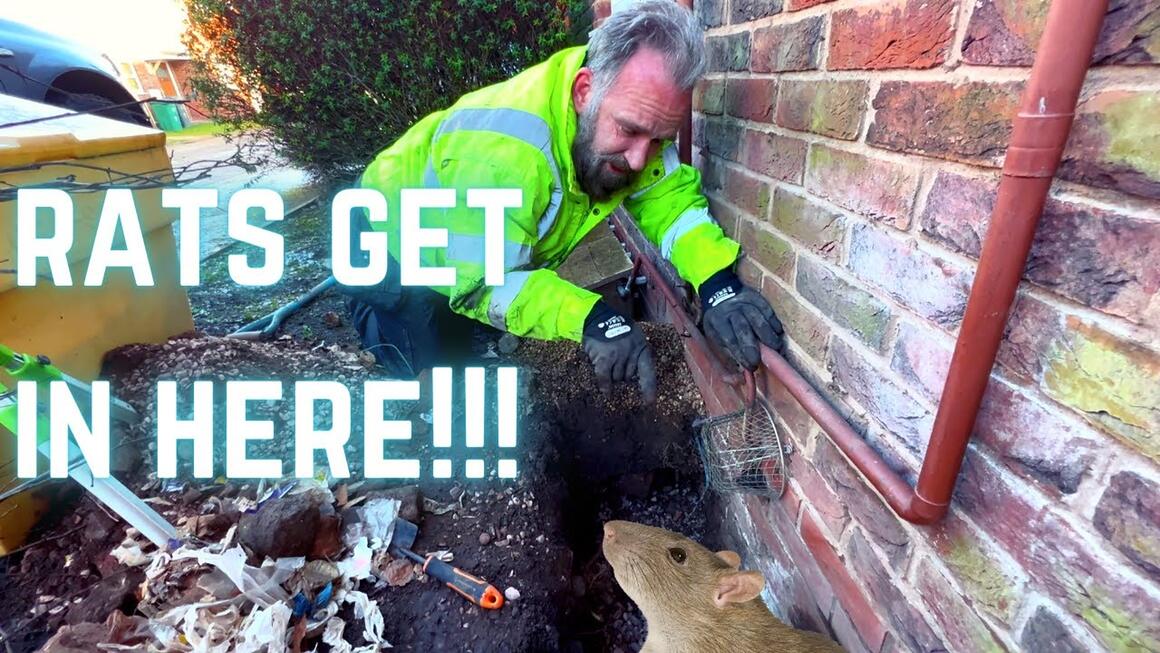
Video: RAT holes around your house? How to stop rats burrowing, from Pest Interceptors.
Common Questions in Paradise Valley
What Paradise Valley callers ask before booking.
Why is the quote larger here than for a similar problem elsewhere?
Footage and building count, in most cases. A low house spread across an acre-plus parcel has far more eave to close than a compact two-story, and a bird stop is fitted along the run rather than at a few points, so the work is measured in feet. Add a guest house, a pool house and several hundred feet of block wall and the list gets longer without anything being unusually wrong. Ask any quote for the eave footage per structure, which is what makes two bids comparable.
Do all the buildings need to be included?
They need to be inspected, and then only the ones with something wrong need to be in the work. A good report names each roof space and records the clean ones as checked and clean, which is both useful to you and the thing that stops a property of this size being quoted as a whole when one casita eave was the problem. Insist on per-structure pricing rather than a single figure for the property.
Can we have both a roof rat and a pack rat?
Regularly, and on a property between two mountains with both irrigated and desert landscaping it is the normal case rather than the exception. The attic animal is a roof rat, which Maricopa County Vector Control reports spends about ninety percent of its life four feet or more off the ground. The wall corner or equipment pad animal is a woodrat, which the University of Arizona Cooperative Extension describes as having a fur-covered tail and a whitish underbelly and feet. A PMD-licensed contractor may remove both without a separate wildlife service license.
We are away for the summer. Does that matter?
It matters for how late a problem gets discovered. An unoccupied house gives no early warning, so a midden built in May against an equipment pad or a run of chewed wiring in a gate operator or an irrigation controller is usually found in September when something stops working. A walk of the wall line and the equipment cabinets before a long absence, and again on return, is the cheap version of solving that. Attic work in a Valley summer is early-morning work in any case.
Nearby Areas We Serve
The same contractors work the adjoining towns and the whole of Maricopa County, so a second property in the area is covered on the same call.