Rodent Exclusion in Phoenix, AZ
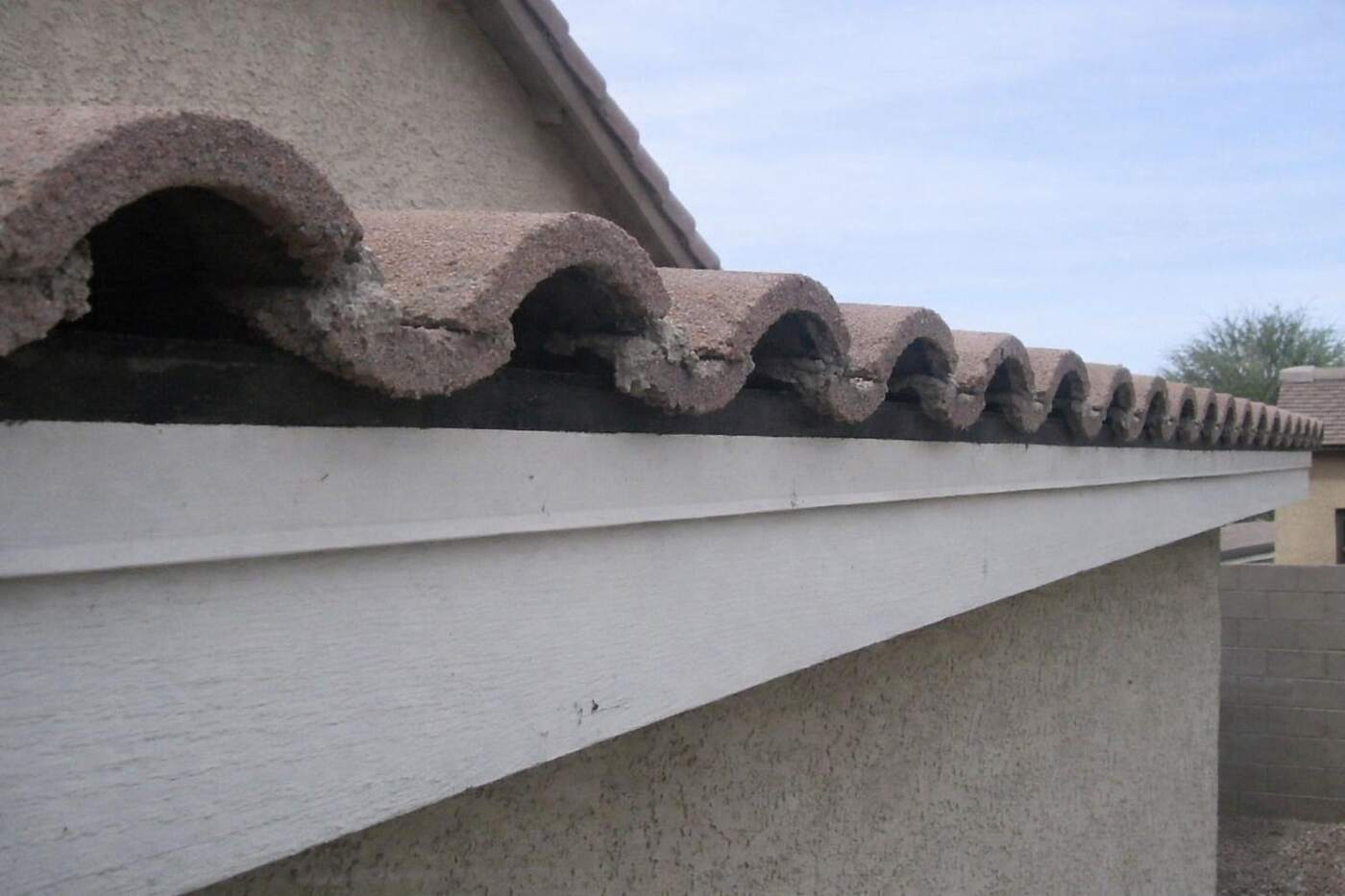
Exclusion is the sealing work that ends a Valley rat problem: the gap under the first course of barrel tile closed with a metal bird stop, and every other opening a quarter inch or wider shut with steel rather than foam.
What rodent exclusion in Phoenix includes
Rodent exclusion is the closing of every rodent-sized opening in the building shell, measured against a quarter inch, done in materials a rat cannot chew, and written down afterward so somebody else could check it. On a Valley house that is overwhelmingly a roof and wall job, because the construction is slab-on-grade with blown-in insulation over a drywall ceiling and no basement or crawl space to seal.
The scope on an ordinary house runs from the eave down to the weep screed. Whoever attends works from a ladder and inside the attic, closes each opening from the outside where that is possible, and records each repair with the material named. Trapping runs in parallel, so that anything already upstairs is caught rather than driven into cutting itself a fresh way out; roof rat removal sets out that side of the work.
- A free roofline, attic and perimeter walk first, described on the rodent inspection page
- Manufactured metal bird stops fitted under the first course of barrel or concrete tile, along the length of the eave
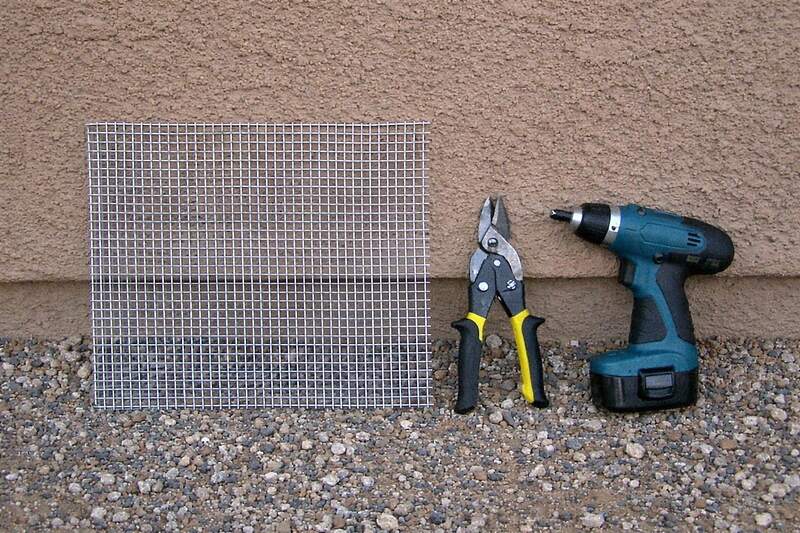
- Quarter-inch galvanized hardware cloth fitted to gable vents, soffit vents, off-ridge vents and turbine or whirlybird bases
- Mortar or a metal collar packed around the air conditioning line set, electrical conduit, plumbing vents and cable entries
- Weep screed at the base of the stucco screened so the drainage path still works
- Block wall weep openings screened, and wall cap gaps closed where a wall is being used as a route
- Garage door bottom seal, side seals and threshold replaced, plus the gap above the attic access panel
- On flat and low-slope foam roofs, the parapet and scupper details closed instead of an eave
- A written closure list naming the material used at every point
A house that has been entered feels different afterward, and for most people the closure rather than the catch count is the part that settles it.
Work out roughly what sealing and trapping run on your house
Six questions, scored against the published Phoenix and national bands further down this page. The range stays deliberately wide, because the length of the eave is the largest variable in the whole quote and no form can measure a roof.
Phoenix visit figures come from Angi's Phoenix cost page and the wider bands from HomeGuide's 2026 national guides. Each figure is settled at the free inspection.
The bird stop on a Phoenix tile roof
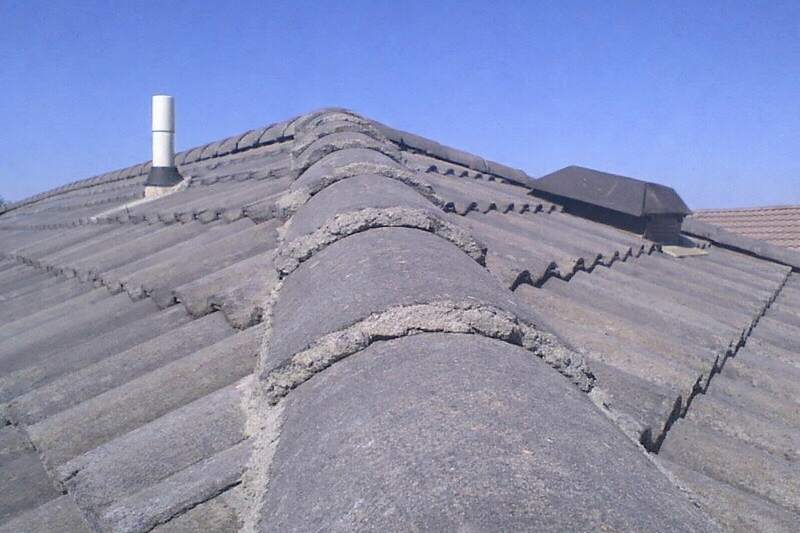
The gap under the first course of barrel tile is the most common way into a Valley attic, and the part that is supposed to close it is a named, code-approved component with a manufactured form. Concrete and clay barrel tile over block and stucco dominates post-1970 Phoenix stock, and the half-round void under that first row runs the full length of the eave rather than sitting at one corner.
The original closure on most of that stock was mortar, packed into the tile ends at construction. Mortar bird stops crack and crumble out after roughly fifteen to twenty years of Valley sun and thermal movement, and what is left behind is an opening far wider than anything a rat needs, available along the whole eave. That single detail explains why a 1990s house in Desert Ridge or the Biltmore area with very little vegetation near it still takes rats every cool season.
The replacement is a bird stop, also called an eave closure: a code-approved metal profile, typically 26 gauge galvanized steel or aluminum, with ventilated versions carrying weep holes so the eave keeps breathing. Bird stopping sits on the Department of Energy list of recommended measures for roofs covered in clay or concrete tile. The comparison that matters at quote time is that named component against a bead of expanding foam. Foam in a tile eave gets chewed, breaks down in the sun and blocks ventilation the eave was built to have. Ask anybody quoting a tile roof which of the two is going on the invoice, and how much of the eave length is included.
Every opening on a Valley house, and how each one closes
A Phoenix exclusion list is short and repeats from house to house, because the construction repeats. The standard it is measured against is a quarter inch, which UF/IFAS gives as the rat-proofing figure, a mouse needing a quarter inch and a rat half an inch. In practice that means anything admitting a pencil goes on the list.
| Opening | Why it is open | How it is closed |
|---|---|---|
| Tile eave, first course | Mortar bird stops crack out after fifteen to twenty years, leaving a void along the whole eave | Manufactured metal bird stop or eave closure fitted under the first course, full length |
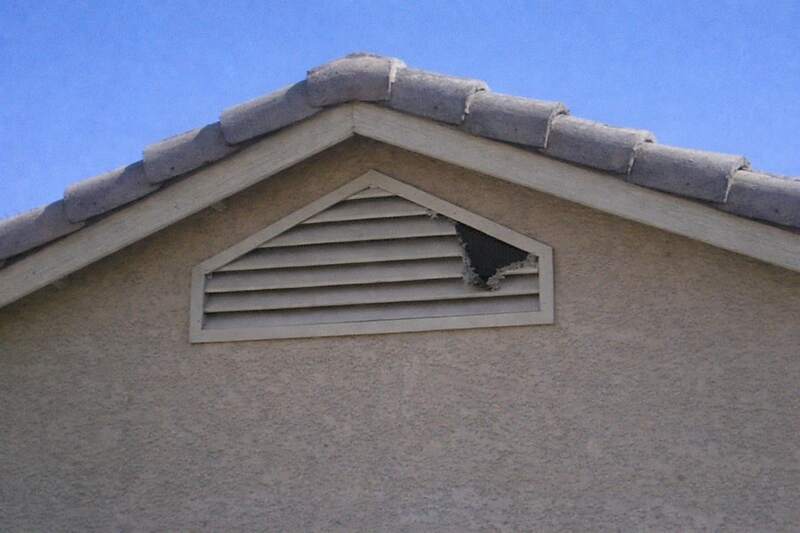
| Gable vent | Plastic or light insect screen chews through, and older screens rust out | Quarter-inch galvanized hardware cloth fitted behind the louver and fastened to the frame |
| Soffit and off-ridge vents | Light mesh under the cover, and unfinished ends on the run | Hardware cloth fitted to the opening and metal end caps where the run is open |
| Turbine or whirlybird base | The flashing collar leaves a gap at the deck and the bearing housing is open | Mesh fitted at the collar, with the flashing reset rather than sealed over |
| AC line set and conduit sleeve | An oversized hole cut through block and stucco for the lines and never filled | A metal collar with mortar packed around it, mesh behind any stucco patch |
| Weep screed at the stucco base | A designed drainage gap running continuously along the bottom of the wall | Fine mesh fitted so water still drains, which is routine work on Valley stucco |
| Block wall weep openings and cap gaps | Drainage openings at the base and voids under a loose wall cap | Mesh at the weep opening, cap rebedded where the void runs through |
| Garage door edges and threshold | Seals shrink and tear, and the slab is rarely flat at the corners | New bottom and side seals plus a threshold strip, and the attic panel gap closed above |
| Parapet and scupper on a foam roof | Coping joints open and scupper throats are unscreened | Coping joints sealed and the scupper screened without restricting drainage |
Trees and wires are the other half of the picture, and they are not sealing work. Maricopa County Vector Control reports roof rats travel power lines and tree limbs, so growth trimmed back about three feet off the roofline removes the bridge. The inspection report says which limbs are carrying traffic.
Steel, sheet metal and mortar against expanding foam
The right exclusion material is one a rat cannot chew and Valley weather cannot loosen: galvanized hardware cloth, sheet metal, a manufactured bird stop, and mortar or a metal collar at penetrations. Expanding foam on its own fails the first of those tests, and a quote built on foam and steel wool is a quote for work that gets done twice.
| Material | Where it belongs | How it holds up here |
|---|---|---|
| Quarter-inch galvanized hardware cloth | Gable, soffit and off-ridge vents, behind stucco patches, over larger voids | Chew-proof at that mesh size and the galvanizing handles the dry heat; the vent keeps breathing |
| Sheet metal, galvanized or aluminum | Chewed fascia and eave timber, drip edge gaps, vent run end caps | Rigid and chew-proof, and fastened to framing it does not lift in a monsoon wind |
| Manufactured metal bird stop | Under the first course of barrel or concrete tile | The purpose-made part for that gap, and ventilated versions keep the eave airflow intact |
| Mortar or a metal collar | Line set, conduit, plumbing vent and cable penetrations through block and stucco | Permanent, matches the wall and does not shrink back in the heat |
| Stainless or copper mesh | Substitute for galvanized where a client prefers it | Same job at a higher price; rarely necessary inland, and the fastening matters more than the alloy |
| Expanding foam | Behind a metal closure as an air seal and never as the closure itself | Chewed through quickly when exposed, breaks down in sun, and it hides the hole from the next inspector |
| Steel wool alone | Nowhere on an exterior closure | It compresses and pulls out, and it is not a fastened closure in any sense |
How a material is attached decides more than which alloy it is. Something bedded into sealant across an opening comes away with the first determined animal, while the same material fastened through into timber or block stays where it was put. When two sealing quotes sit side by side, that is the detail worth asking about before the price is.
Is it safe to seal before the trapping is finished?
Yes, provided the closure and the trap line are one piece of work rather than two appointments. The danger is not the order; it is the gap between them. A crew that shuts a tile eave on a Friday and returns for the trapping the following month has handed whatever is upstairs four weeks and a strong motive to make its own exit, and the route it finds tends to run downward into a wall cavity, a kitchen soffit or the ceiling of a garage.
Jobs routed from here avoid that by grading the openings instead of treating them as one list. Anything showing no traffic closes immediately, which shrinks the building down to two or three live runs. Traps then go onto those runs and are left alone for at least a week, since UF/IFAS records that roof rats are wary of objects newly placed in their path. The live runs are the last to close, once several days have gone by with no new droppings and no sound.
Grading them that way also answers the other half of what people complain about in this trade. A trap line with nothing closed has no finish date at all, because the supply keeps arriving from beyond the property line: Maricopa County Vector Control puts roof rat foraging at roughly two to three hundred feet from the nest, far enough to take in several lots in any direction. Three weeks of trapping behind a closed shell comes to an end. Three months of trapping under an open eave does not.
How long a sealed Phoenix house stays sealed
Metal closures fitted to framing last as long as the building component they are attached to, which is the point of using them. A bird stop in 26 gauge galvanized steel along a tile eave is not a consumable; the reason the original mortar failed after fifteen to twenty years is that mortar is brittle and the metal profile is not.
What does change is the rest of the lot. New construction next door, a citrus tree growing back into the roofline, a wall cap working loose, a reroof that lifts the tile and leaves the eave open again, or a new air conditioning install that cuts a fresh sleeve through the block. Every one of those is a new opening on a house that was sealed, which is why the closure list is worth keeping with the house papers and worth rereading after any roof or mechanical work.
Reasonable things to do yourself after a closure: keep growth about three feet off the roofline, clear the dead frond skirt off palms, keep stored material up off the gravel and away from the wall line, and look along the eave line from the ground once a year. Anything that needs a ladder or that touches the tile is work for somebody licensed and insured to be up there.
What rodent exclusion costs in Phoenix
Angi puts exclusion work in Phoenix, meaning screening vents, repairing holes and pruning back trees, at $200 to $600, and a whole-shell closure runs into HomeGuide's national band of $500 to $2,500. The split between those two figures is mostly the eave: a handful of named openings is the Phoenix figure, and a bird stop along the full length of a barrel tile eave is the national one.
| Line item | Band | Source |
|---|---|---|
| Inspection | Free here | $0 to $175 standalone, HomeGuide 2026 national |
| Named openings: vents, holes, tree work | $200 to $600 | Angi cost data, Phoenix |
| Whole-shell exclusion | $500 to $2,500 | HomeGuide 2026 national |
| Trapping alongside the sealing | $144 to $443 per visit, averaging about $286 | Angi cost data, Phoenix |
| Follow-up visits | $50 to $150 each | Angi cost data, Phoenix |
| Attic cleanup where the closure reveals the need | $600 to $2,500 | HomeGuide 2026 national |
A single-story shingle-roofed house with two unscreened vents and one conduit sleeve sits at the bottom of the Phoenix band. A two-story barrel tile house with gable vents at both ends, a long rear eave, an unsealed garage and a foam-roofed addition with open coping joints climbs toward the top of the national band, because the work is measured in feet of eave rather than in number of holes. Ask for the eave length included in the quote, and ask what the terms are if animals get back in after the closure.
What to check before sealing work starts
Ask for the Arizona Department of Agriculture Pest Management Division license number and verify it with the PMD before anybody goes up a ladder. Structural pest control in Arizona requires it, and the license trigger extends to making site-specific recommendations and to offering to perform the work at all.
Then ask about scope in feet rather than in adjectives. How much eave length is included. Which vents. Whether the weep screed line is in or out. Whether the garage is included. Whether the quote covers mesh fastened to framing or material set in sealant. Whether the closure list will name the material at each point, which is the document that makes a sealing job checkable by somebody else later.
Warranty terms are worth asking about and are the contractor's to offer; no guarantee of any kind is made from here on their behalf. Useful questions: is the sealing warrantied, for how long, is it renewable, and does it cover a new opening or only the points that were closed. Proof of insurance belongs in the same conversation, since this is ladder work on a tile roof. Nothing written here is a recommendation for your particular house; that judgment belongs to the licensed contractor on site.
The services that usually sit beside this one
Sealing is the part that makes the rest hold, and these pages describe the work it gets sequenced with.
- Roof Rat Removal: Trapping out the climber that dominates Valley attic calls, run alongside the sealing.
- Rodent Inspection: A free walk of the roofline, attic and perimeter that fixes the order of the job.
- Pack Rat Removal: Middens cleared and the wiring protected on desert-edge lots, vehicles and AC equipment.
- Attic Insulation Replacement: Flattened and soiled blown-in insulation removed and fresh fill blown back.
Sealing is rarely sold alone, and the order the pieces run in is described on the about page.
Hardware cloth, fitted properly
The material that holds, and how it is cut in.
Video: How to do a basic exclusion with galvanized hardware cloth, from Unipest Pest and Termite Control.
How an exclusion job runs in Phoenix
The quiet openings close first, and the trapping and the final closure are built around that order.
-
Roofline and attic walk
The eave, vents and penetrations are worked from a ladder, then the attic is read for the droppings and rub marks that show which openings are in use. Findings and quote come out as separate documents.
-
Close the quiet openings
Vents, penetrations, weep screed, wall weep openings and the garage edge are closed in galvanized mesh, sheet metal and mortar, measured against a quarter inch.
-
Traps in on the same day
Snap traps go on the marked runs as the closures go on, so nothing inside has a reason to chew a fresh exit. They stay at least a week.
-
Fit the eave closure
On a tile roof the manufactured bird stop goes in along the eave length, which is the largest single piece of the job and the one most often left out of a cheap quote.
-
Final check and closure list
Fresh droppings, gnawing and sound are checked, any missed opening is closed, one-way doors come off, and you receive a list naming the material used at each point.
What to expect
Sealing visits follow this order on every house, tile roof or not.
- A ladder walk along every eave run before anything is quoted
- Each opening measured against a quarter inch and photographed
- Metal closures screwed to framing rather than set in sealant
- Traps going in on the same day the first closures do
- A written closure list, material named point by point
Why Valley homeowners route sealing work through us
Three things separate an exclusion from a patch.
-
The tile eave closed with the part made for it
On a Phoenix tile roof the bird stop decides the job. The gap under the first course is a recognized building component with a manufactured code-approved metal closure, and bird stopping is one of the measures the Department of Energy recommends on roofs finished in clay or concrete tile. Work routed from here fits that closure along the eave length rather than plugging the few tile ends within reach of a ladder, and it is the line item most often missing from a low quote.
Bird stopping is a recommended clay and concrete tile roof measure, US Department of Energy
-
Metal and mortar, measured to a quarter inch
Closures are galvanized hardware cloth, sheet metal, manufactured bird stops and mortar or metal collars, and every opening is measured against the quarter inch UF/IFAS gives as the rat-proofing standard. Foam appears only as a backing behind metal. The difference is visible a year on, when a foam job has been chewed back open and a metal job has not, which is why the closure list names the material beside each point.
A quarter inch is the rat-proofing standard, UF/IFAS Extension
-
Quoted in feet of eave rather than in adjectives
Angi puts Phoenix exclusion work at $200 to $600 for named openings while a whole-shell closure reaches into HomeGuide's $500 to $2,500 national band, and almost all of that gap is eave length. A quote from here states how much eave is included, which vents, and whether the weep screed and garage are in scope. Homeowners online describe sealing quotes spanning an order of magnitude with nothing explaining the spread, and stating the footage is what explains it.
Angi, Phoenix: exclusion work $200 to $600; HomeGuide national whole-home $500 to $2,500
What Reddit Says About Rodent Exclusion in Phoenix
Sealing is the part of a rat job homeowner threads argue about hardest, and the argument nearly always starts with a number somebody did not understand. The standing advice is several bids for identical scope, exclusion priced separately from trapping and cleanup, and a direct question about whether the company does its own repair work or refers the sealing on to a third party. Local operators get recommended over national brands, consistently and explicitly.
The red flags are precise. Trapping with nothing sealed is described as harvesting rather than solving. Sealing with animals still inside is named as the opposite error, and the interior damage that follows is described in detail. Bait-only plans that never touch the roofline draw the heaviest criticism in the whole corpus. Quotes that fold a monthly monitoring fee into the removal price, and companies that keep returning for months with no change in the result, get the same warnings. On price, real quotes described for broadly similar sealing work span from under two thousand dollars to tens of thousands, and the recurring question is whether the homeowner is being taken advantage of.
The questions people circulate are mostly about warranty and scope. Does the sealing carry a warranty, and if it does, can the term be renewed once it lapses? What happens if they come back? How many follow-up visits are included? Will you clean and decontaminate, or only seal and trap? Do I really need the chewed material repaired now, or can I get away with trapping?
That last one has a clean answer on a Valley house: the eave is the reason the trapping never ends, so repairing it is the part that has a completion date attached.
A typical exclusion job on a Phoenix tile roof
The situation: An 1980s two-story house off 32nd Street with concrete tile, a gravel yard, and nothing taller than a lantana within thirty feet of the walls, which is why the owners had ruled rodents out for most of a month. What changed their minds was something crossing the ceiling of the upstairs landing at roughly the same time each evening, and then the discovery that an outdoor lantern cable had been stripped back to bare copper near the eave line.
What gets done: Measuring along the rear elevation accounts for the puzzle. The mortar closures in the first course of tile have gone from about forty feet of eave, leaving one continuous opening the whole way along. Two off-ridge vents have had their factory mesh worked open, and the side wall carries a line set sleeve cut oversize and never filled. The work is staged. Vents and sleeve close on the first day in galvanized cloth, metal end caps and mortar around a collar, and traps go onto the landing run that same afternoon. The forty feet of eave takes up most of the second visit, fitted with a ventilated metal bird stop profile so the eave still breathes. The lantern cable is written down for an electrician.
How it turns out: Two adults come out across the first five nights and the evening crossing stops. A check ten days later turns up nothing new along the landing top plate. The sheet the owners keep records forty-one feet of bird stop, the two vents with the mesh gauge written beside them, the collared sleeve, and an insulation depth noted as undisturbed. Two winters on, that sheet answers a buyer's inspector in about a minute.
Exclusion questions from Phoenix homeowners
The questions that come up once sealing has been quoted.
Can I seal the openings myself with expanding foam?
Foam is the one material on this page that reliably fails, and it fails twice over: an animal reopens it quickly, and in the meantime it has concealed the opening from whoever looks next. There is genuine ground-level work a homeowner can do well, though. Hardware cloth at a quarter inch, screwed rather than glued, closes a wall weep opening or a vent within reach. A replacement garage door seal and threshold is an afternoon. Mortar around a pipe sleeve is straightforward. What sits outside that range is anything needing a ladder on a tile roof, where the eave course, the louvers and the off-ridge vents are, and where knowing which run is carrying traffic changes what gets closed first.
Does sealing block the attic ventilation?
It should not, and on a Valley house that belongs in the specification rather than in the small print. Summer attic temperatures here make the vent path something you cannot afford to lose, so a closure has to pass air while stopping the animal. Quarter-inch hardware cloth does precisely that across a gable or off-ridge opening, and bird stops are manufactured in ventilated profiles with weep holes so that the tile eave keeps breathing behind them. Sprayed foam is the material that does shut a vent path off, which is a second reason it has no business in a soffit or an eave.
What is a bird stop, and do I need one?
It is the code-approved metal part that closes the gap under the first course of barrel or concrete tile, typically 26 gauge galvanized steel or aluminum and sometimes ventilated with weep holes. Federal guidance from the Department of Energy names bird stopping among the measures it recommends for tile roofing. You need one if you have tile and the original mortar closures have cracked out, which on post-1970 Valley stock happens after roughly fifteen to twenty years. On a shingle or foam roof the question does not arise and the work moves to the vents, the penetrations and the parapet.
How much does exclusion cost in Phoenix?
Angi puts Phoenix exclusion work, meaning screening vents, repairing holes and pruning back trees, at $200 to $600, and a whole-shell closure reaches into HomeGuide's $500 to $2,500 national band. Almost all of the difference is eave length: a handful of named openings against a bird stop fitted along a long barrel tile run. Ask any quote how many feet of eave are included and whether the weep screed line and the garage are in scope, because that is where two quotes for the same house diverge.
Is the sealing warrantied?
Warranty terms belong to the contractor who performs the work, and no guarantee is offered on their behalf from here. What is worth asking, in these words: is the exclusion warrantied, for how long, is it renewable at the end of the term, and does it cover any new opening or only the specific points that were closed. Get the answer in writing with the closure list, because the list is what a warranty attaches to.
Will I need this done again after a reroof?
Very possibly, and it is worth planning for. Lifting and relaying tile opens the eave course again, and a roofer who is not thinking about rodents may bed the first course back without a bird stop. The same applies to a new air conditioning install that cuts a fresh sleeve through the block, or a wall cap that gets reset. Keeping the closure list with the house papers and handing it to the roofer is the cheap version of solving this.
Who is licensed to do this work in Arizona?
A contractor holding a license from the Arizona Department of Agriculture, Pest Management Division. Structural pest control in Arizona requires it, and the license trigger covers applying product, making site-specific recommendations and offering to perform the work. A PMD licensee may also remove nuisance rodents without a separate wildlife service license from Arizona Game and Fish. Ask for the business license number, verify it with the PMD, and ask for proof of insurance, since this is ladder work on a tile roof.