
Rodent Removal in Willo
Willo is one of the oldest intact residential districts in Phoenix, and its original attics, original vents and heavy shade canopy are all older than any roof rat in the Valley. The inspection is free.
Original attics and original vents, eighty years on
Willo is a historic district of houses built largely between the 1920s and the 1940s, in the Bungalow, Tudor Revival and Spanish and Mission Revival vocabularies, and the rodent-relevant fact about that stock is that a great deal of the attic and vent detail is original. A screen fitted in 1938 has had a long time to rust, and a vent opening sized to the practice of that decade was not detailed against a quarter-inch standard.
The roofs vary, which is unusual for Phoenix. Clay tile on the revival houses, composition shingle on many of the bungalows, and a fair amount of both replaced at least once since. Where there is tile, the gap under the first course is the opening to deal with, and the original mortar closures on a roof that age are long gone; where there is composition, the search moves to the gable and soffit vents, the eave edge and the penetrations.
What has not changed is the underlying construction. These are slab or low-profile houses with attics above a plaster or drywall ceiling, no basement and almost never a crawl space, so an animal lives above the living space and the work happens at the eave and in the attic. Rodent exclusion sets out the closure specification.
The shade canopy is the reason the neighborhood works and the reason rats arrive
Willo has some of the heaviest mature street and yard canopy in central Phoenix, which is precisely why people want to live there and precisely how a roof rat reaches a roof. Maricopa County Vector Control reports the animal spends around ninety percent of its life four feet or more above the ground and travels along power lines and tree limbs, so a closed canopy over a narrow lot is effectively a road network at roof height.
The recurring items on a Willo lot are a limb over an eave, an overgrown hedge against a wall, a palm with a frond skirt resting on a fascia, and a utility drop lying across a roof edge. Alleys and rear service lanes, common in districts of this era, add another continuous route along the backs of properties.
The canopy is the character of the district and it stays. Trimming growth back about three feet off the roofline takes away the bridge while keeping the shade, which in a central Phoenix summer is worth a good deal. The inspection report keeps the limb list and the opening list apart, since one of them is a landscaping decision and the other is building work.
Closures that do not change how the house looks
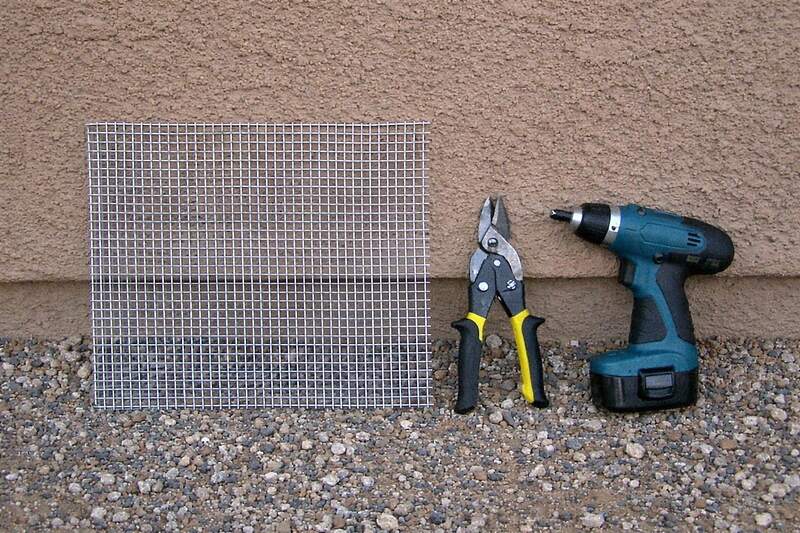
The reasonable worry about sealing work on a historic house is that it will be visible, and on a properly done job it is not. Quarter-inch galvanized hardware cloth fitted behind a louvered gable vent, rather than over the front of it, is invisible from the street while closing the opening to the standard UF/IFAS gives for rat-proofing.
The same principle runs through the rest of the list. A bird stop under the first course of tile sits under the tile rather than in front of it. A metal collar with mortar around a line set or conduit penetration reads as part of the wall. Sheet metal repairs to chewed fascia or eave timber get painted to match. What does look wrong, and also fails, is expanding foam squirted into a gap, which discolors in the sun, gets chewed open and is far more conspicuous on a 1930s eave than a closure fitted properly.
Two practical notes. A house in a historic district may have external alteration considerations that a contractor should ask about rather than assume, and those are a question for the city and for the district rather than for a pest company. And where the original vents are themselves a character feature, the right answer is almost always screening them from behind rather than replacing them.
Rodent history and a Willo sale
Houses in a district like this change hands with close inspection attention, and attic condition is something a Phoenix home inspector looks at carefully. Evidence in the attic of a 1930s house is common and it is not in itself a crisis; what turns it into a negotiation is having nothing on paper about it.
The document worth having is a dated report naming the areas inspected, the evidence found or recorded as absent, whether it appeared current or historic, the openings closed and the material used at each, and the contractor's Arizona license number. That distinction between current and historic evidence matters more in old stock than anywhere else, because a dry scatter of nesting material above a ceiling that has been there for decades is a different statement altogether from fresh droppings.
For a seller, the useful timing is before a buyer's inspector raises it rather than after. For a buyer, the useful request is the findings list and the closure list rather than just a summary letter. The rodent clearance letters page covers how that document gets produced and what it can and cannot state.
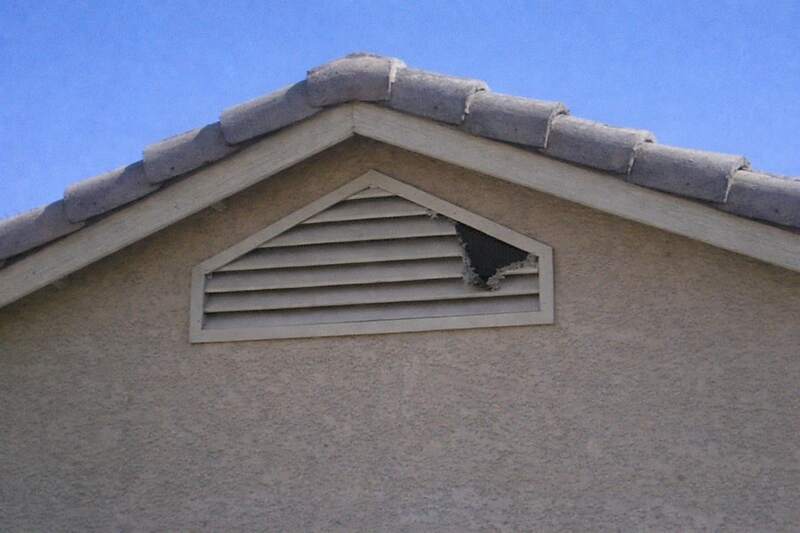
A representative Willo vent closure
On a 1930s revival house the characteristic closure is a louvered gable vent screened from behind in quarter-inch galvanized hardware cloth, fastened to the frame rather than glued across the louvers. From the sidewalk nothing has changed; from the attic side the opening is closed to the rat-proofing standard UF/IFAS gives.
The rest of a typical Willo list is short and specific: the first course of tile closed with a manufactured metal bird stop where the roof is tile, the eave edge and soffit details closed where it is composition, a collar and mortar at any later line set or conduit penetration, and sheet metal painted to match where eave timber has been chewed.
The photograph is representative rather than a particular job. The output that matters is the closure list, naming each point and the material used, which on an older house is also the document that answers an inspector's question later.
What is moving inside the walls
How noise in a wall cavity gets traced.
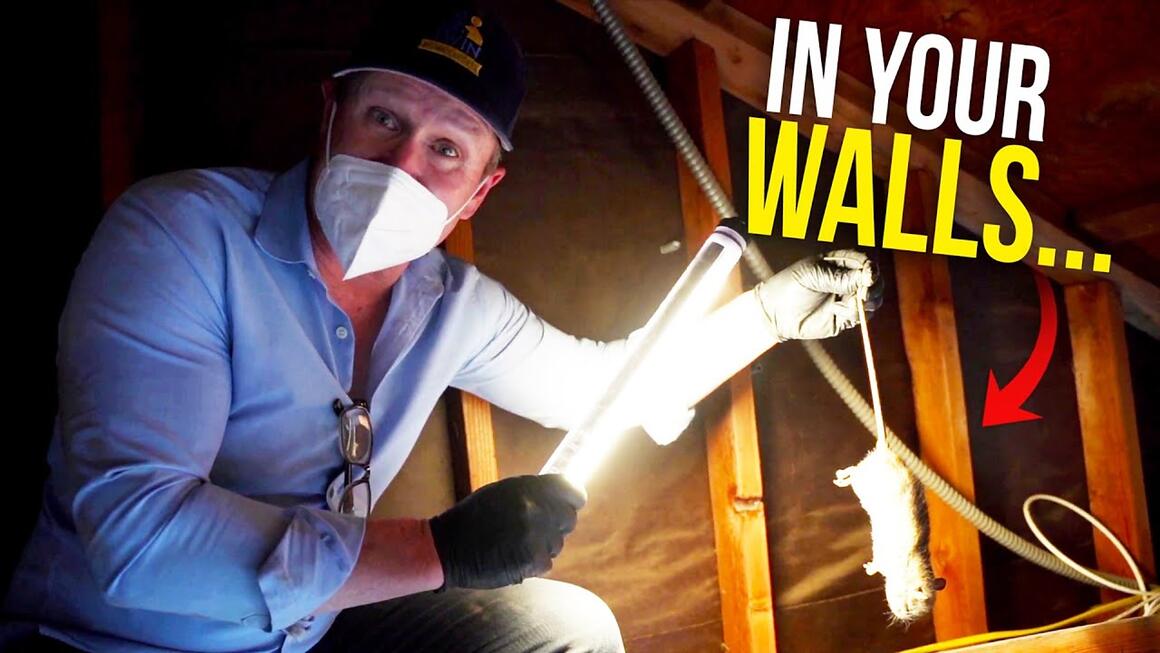
Video: Rodents in your walls? Here's what you do, from Twin Home Experts.
Why Willo homeowners book through us
Three things an eighty-year-old house needs from this work.
-
Original detail screened from behind
Louvered vents, decorative eave details and original fascia are part of why these houses are valued, and a closure fitted behind a vent rather than across it does the job without changing a street elevation. Quarter-inch galvanized cloth fastened to the frame meets the rat-proofing standard UF/IFAS gives while remaining invisible from the sidewalk, and expanding foam fails both tests at once: it gets chewed and it looks wrong on a 1930s eave.
A quarter inch is the rat-proofing standard, UF/IFAS Extension
-
Mixed roof types read correctly
Willo has clay tile, composition shingle and a good deal of both replaced since, and the opening list is different for each. Tile puts the work at the first course, where a manufactured metal bird stop belongs and where bird stopping appears in Department of Energy guidance as a recommended tile-roof measure. Composition moves it to the eave edge, the vents and the penetrations. A quote that does not say which roof it was written for has not looked.
Bird stopping is recommended for clay and concrete tile roofs, US Department of Energy
-
Current evidence distinguished from historic
In stock this old, dry nesting material above a ceiling may predate the current owner by decades, and reporting it as an active infestation is both inaccurate and expensive. Fresh droppings a quarter to half an inch long with pointed ends, per UF/IFAS, and worn runs through the insulation are what indicate current activity. A report that separates the two is what a buyer's inspector can read, and it is what keeps an old house from being priced as a problem.
Roof rat droppings measure a quarter to half an inch with pointed ends, UF/IFAS Extension
A common Willo call
The situation: A 1936 Spanish Revival house with clay tile, a deep shaded lot and a large olive tree whose limbs reach the rear roof slope. The owners had heard occasional movement overhead for two winters and assumed it was the house settling. What prompted the call was a listing appointment and an agent who suggested getting the attic looked at before anyone else did.
What gets done: The attic shows two distinct stories. Dry, flattened nesting material in the far corner, with no droppings anywhere near it that are not brittle, and a second area above the hall where droppings are fresh and a run is worn through the insulation. The ladder walk finds the first-course tile closures missing along roughly eighteen feet of the rear eave and a gable vent whose original screen has rusted through. The vent is screened from behind in galvanized cloth, which leaves the louvers untouched from the street, traps go on the hall run, and the eighteen feet of eave is closed with a metal bird stop on the second visit. The olive limb is trimmed back about three feet by the owners' landscaper.
How it turns out: Two animals in the first week, nothing after. The fresh area of insulation is cleaned and topped back to depth; the old dry material in the corner is cleared as well, so the attic reads consistently. The report separates the historic evidence from the current activity explicitly, lists eighteen feet of bird stop and the screened vent with the mesh gauge, and carries the contractor's Arizona license number. The buyer's inspector reads it and moves on.
Willo questions
What callers from the central historic districts ask first.
Will the sealing work change how my house looks?
Done properly it will not be visible from the street. A louvered gable vent gets screened from behind in quarter-inch galvanized cloth fastened to the frame, so the louvers themselves are untouched. A bird stop sits under the first course of tile. A collar and mortar at a penetration reads as part of the wall, and sheet metal over chewed eave timber gets painted to match. The material that does look wrong is expanding foam, which discolors in the sun and also fails at the actual job.
Are the old trees the reason I have rats?
They are the route rather than the reason. Maricopa County Vector Control reports roof rats travel power lines and tree limbs and spend around ninety percent of their lives four feet or more above the ground, so a closed canopy over narrow lots puts the animal at roof height without any effort. Trimming growth back about three feet off the roofline removes the bridge and keeps the shade. Whether it gets in then depends on the eave and the vents, which is a separate list.
Can I get something in writing before I list the house?
Yes, and doing it before a buyer's inspector raises it is the cheaper order of events. A dated report names the areas inspected, records evidence as found or absent and as current or historic, lists the openings closed with the material at each, states anything that could not be reached, and carries the contractor's Arizona Department of Agriculture Pest Management Division license number. That last item is the part an agent or a buyer can verify independently. The rodent clearance letters page covers it in full.
My attic has old nesting material but no noise. Is that urgent?
Probably not urgent, and it should be reported as what it is. Dry brittle material with no fresh droppings and no worn runs is historic evidence, which in a house of this age may be decades old. The useful action is usually clearing that area so the attic reads consistently, and closing whichever opening allowed it, rather than a trapping program. UF/IFAS gives the roof rat dropping as a quarter to half an inch with pointed ends, and freshness is judged on site rather than over the phone.