Rodent Removal in Arcadia
Arcadia is where the Valley roof rat story began, and the citrus, the flood irrigation and the mature canopy that made it the first foothold are all still here. The roofline walk costs nothing.
Arcadia is where Valley roof rats were first identified
The first Phoenix roof rats on record were found in Arcadia in 2002, most probably introduced from another state, and the population spread from there through the older citrus neighborhoods until it was established across the whole Valley. The Arcadia Camelback Mountain Neighborhood Association and local news coverage both document that sequence, which makes this the one Phoenix neighborhood with a rodent history rather than just a rodent problem.
What made it the first foothold has not gone anywhere. Citrus on most lots, flood irrigation still running on the large parcels, heavy mature canopy, oleander hedges grown to roof height and palms carrying frond skirts together supply food, water, cover and a route onto the roof within a few feet of each other. Maricopa County Vector Control reports roof rats travel power lines and tree limbs and forage within roughly two to three hundred feet of the nest, which on Arcadia lot sizes takes in several properties at once.
The practical consequence for an Arcadia homeowner is that neighborhood-wide pressure is permanent and lot-level work is what changes the outcome. Closing your own roofline, keeping growth off the roof and clearing fallen fruit are the variables you control; what grows two lots over is not.
Two eras of Arcadia house, two kinds of roofline
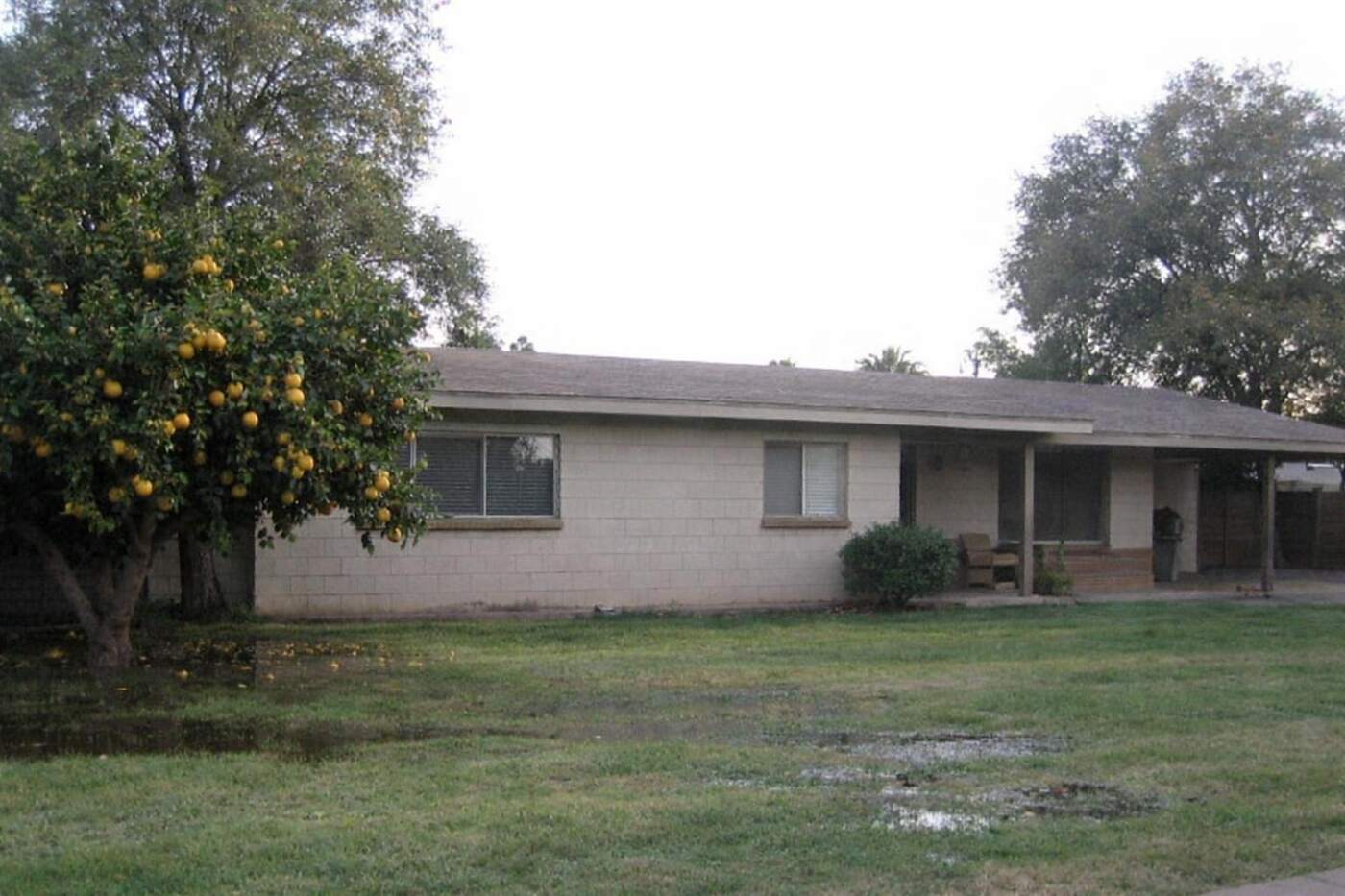
Arcadia runs on 1950s ranch houses set on large flood-irrigated lots, with a scattering of 1920s and 1930s revival houses among them, and the two give a contractor quite different rooflines to work along.
The postwar ranches are long and low with generous eaves and, on the remodeled ones, tile that was put on later than the original build. A long low eave means a long run to inspect and close, and a reroof or a remodel that lifted the tile is a common reason the first-course closures are missing on a house that has otherwise been beautifully maintained. The earlier revival houses bring original attics, original vent details and tile or composition roofs that have had a great deal longer to come loose.
What the two have in common is the Valley constant: slab-on-grade with blown-in insulation over a drywall ceiling, no basement and almost never a crawl space. The attic is where an animal lives and the eave is how it gets there, which is why an Arcadia inspection spends most of its time on a ladder rather than indoors. Rodent exclusion sets out what the closure work involves.
Citrus and flood irrigation set the Arcadia calendar
Arcadia rodent calls cluster in the cool months because that is when the fruit and the water are both there. Maricopa County Vector Control puts peak roof rat activity from November through May, and citrus harvest plus the winter irrigation schedule sit squarely inside that window.
The clearest tell most Arcadia homeowners recognize after the fact is fruit on the ground with the inside eaten out of it. A grapefruit or an orange hollowed from one side, lying under the tree in January, is a roof rat rather than a bird, and it usually predates the noise indoors by a few weeks. Fallen fruit cleared promptly removes a reliable food supply; the tree itself does not need to go anywhere.
The irrigation is the other half. Standing water on a flood-irrigated lot on a schedule, through the months when everything else in the Valley is dry, is a considerable advantage to an animal that would otherwise have to work for it. Neither the citrus nor the irrigation is something to give up, and neither has to be: what they mean in practice is that an Arcadia house needs its roofline closed along its whole length rather than mostly closed.
The canopy is the road, and the eave is the door
An Arcadia lot usually has something touching or nearly touching the roof, and that is the route rather than the cause. Maricopa County Vector Control reports roof rats spend around ninety percent of their lives four feet or more above the ground and travel along power lines and limbs, which is why the first thing a contractor does on arrival is look up rather than down.
The recurring items are citrus limbs over an eave, palms with a skirt of dead fronds resting against a fascia, oleander hedges grown to roof height along a property line, and a cable or power drop lying on a tile edge. Trimming growth back about three feet from the roofline is the standard advice and it removes the bridge without removing the shade, which on an Arcadia lot in July is worth keeping.
None of that replaces the closure. An animal denied one route takes the next one, and the thing that decides whether it gets in is whether the first course of tile, the gable and soffit vents and the conduit sleeves are closed to the quarter inch UF/IFAS gives as the rat-proofing standard. The inspection report names which limbs are carrying traffic and which openings are in use, and those are two separate lists.
A representative Arcadia eave closure
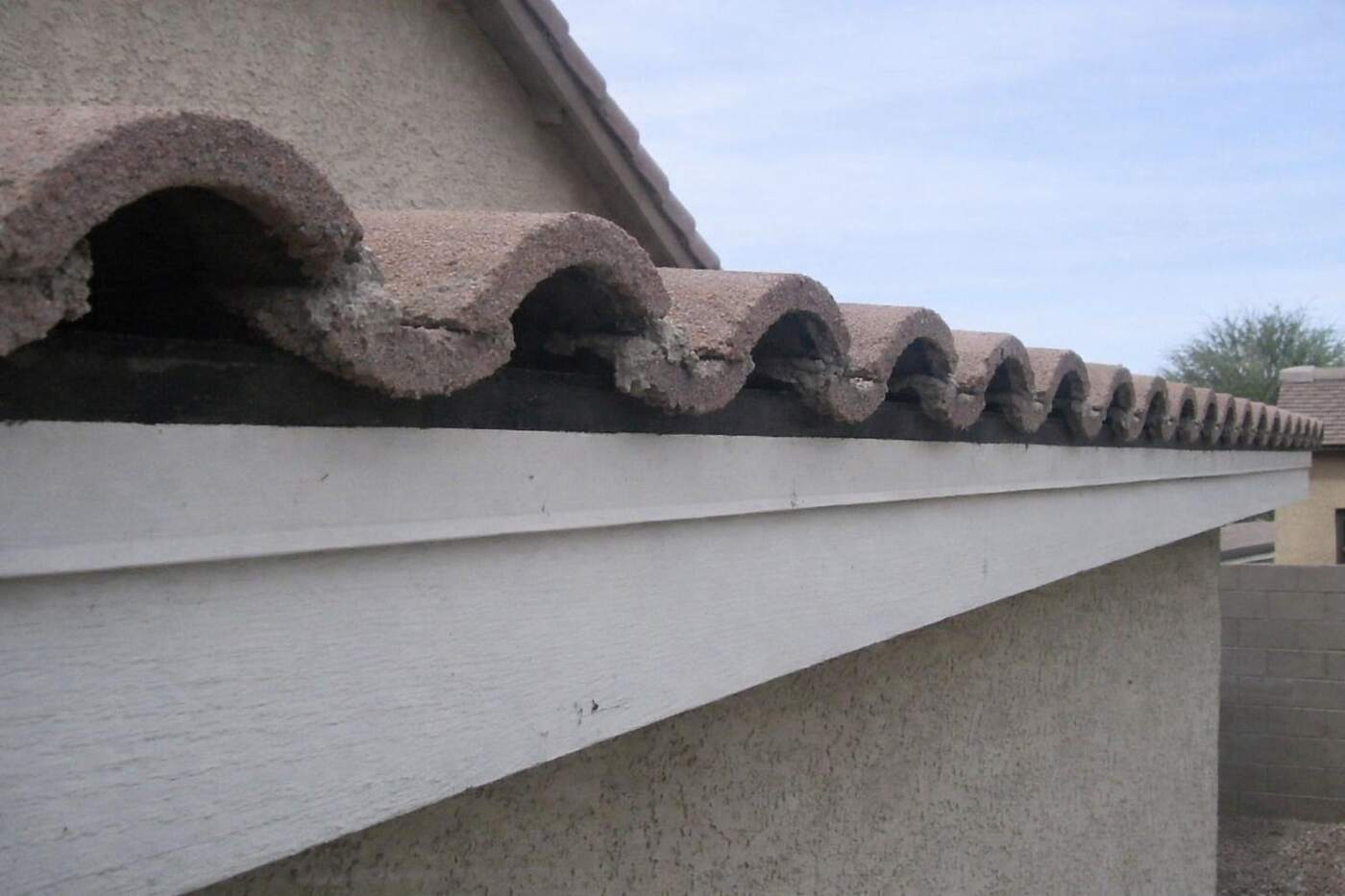
On a long low Arcadia ranch eave, the closure that matters is the first course of tile, fitted with a manufactured metal bird stop along the run rather than plugged at the ends within ladder reach. The part is a code-approved profile, usually 26 gauge galvanized steel or aluminum and sometimes ventilated with weep holes so the eave keeps breathing, and bird stopping appears in Department of Energy guidance as a recommended measure on clay and concrete tile roofs.
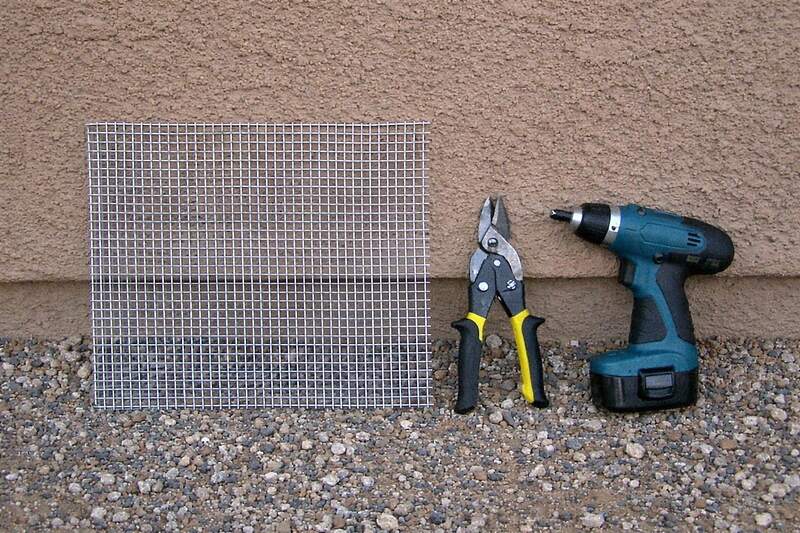
The rest of a typical Arcadia closure list is short: gable and soffit vents in quarter-inch galvanized cloth fastened to the frame, a metal collar and mortar at the air conditioning line set, and the garage door seal where the slab has dipped. Where a remodel has added a flat or low-slope foam section, the search moves to the parapet and the scuppers on that part of the roof.
The work is representative rather than a specific job, and the document that comes out of it is the useful part: a list naming each closure with the material beside it, which is what a second contractor or a future buyer can read.
Mice, squirrels, or something else
How the signs differ between the two.
Video: Signs of Mice vs. Squirrels In Your Attic, from Skedaddle Humane Wildlife Control.
Why Arcadia homeowners book through us
Three things matter more here than anywhere else in the Valley.
-
Long eaves get measured end to end
An Arcadia ranch has a great deal more eave than a two-story tract house, and a quote that closes the accessible ends of it has done a fraction of the job. Work routed from here is quoted in feet of eave, which is also how a homeowner can tell two Arcadia bids apart. Angi puts named-opening exclusion work in Phoenix at $200 to $600 while a full shell reaches into HomeGuide's $500 to $2,500 national band, and eave length is most of that gap.
Angi, Phoenix: exclusion work $200 to $600; HomeGuide national whole-home $500 to $2,500
-
The neighborhood pressure is treated as permanent
Arcadia is the 2002 foothold and the conditions that made it one are still in place across every lot, so nobody should be sold a lot-level fix as a neighborhood solution. Maricopa County Vector Control puts roof rat foraging at roughly two to three hundred feet from the nest, which on these parcel sizes reaches several properties. The honest version is that a closed shell holds regardless of what the neighbors do, and that is what gets quoted.
Roof rats forage roughly 200 to 300 feet from the nest, Maricopa County Vector Control
-
Mature landscaping is trimmed rather than removed
The canopy, the citrus and the irrigation are why people live here, and none of it has to be sacrificed. Growth trimmed back about three feet off the roofline removes the route, fallen fruit cleared removes the easiest food, and palm frond skirts cleared removes the cover. The inspection report keeps the limb list and the opening list separate, so the landscaping decisions stay the homeowner's and the closure work is priced on its own.
Roof rats travel power lines and tree limbs, Maricopa County Vector Control
A common Arcadia call
The situation: A 1954 ranch on a flood-irrigated lot south of Camelback Mountain, grapefruit and lemon along two boundaries, a tile roof put on during a remodel in the early 2000s. Running above the back bedrooms most nights since the second week of December, and a homeowner who had found hollowed grapefruit in November and thought nothing of it.
What gets done: The ladder walk finds the first-course closures gone from about fifty-five feet of the rear and side eaves, almost certainly never reinstated after the reroof, plus a soffit vent with the screen corroded away. Droppings a quarter to half an inch long with pointed ends run along the top plate above the back bedrooms, which is the pattern UF/IFAS describes. The soffit vent is closed in galvanized cloth on the first visit, traps go on the two runs showing traffic, and the fifty-five feet of eave takes the second visit with a ventilated metal bird stop profile. A lemon limb lying on the roof edge is cut back by the homeowner's landscaper.
How it turns out: Five animals come out across eleven days, then nothing for a week. The insulation over the back bedrooms is scuffed along the runs but dry, so it is cleaned rather than replaced, and the depth is recorded. The closure sheet lists fifty-seven feet of bird stop, the soffit vent with the mesh gauge and the insulation depth. The following winter the fruit still falls and the ceiling stays quiet.
Arcadia questions
What callers from this part of Phoenix ask first.
Is it true roof rats started in Arcadia?
The first Phoenix population on record was identified here in 2002, most likely introduced from another state, and it spread outward from the older citrus neighborhoods until it was established Valley-wide. The Arcadia Camelback Mountain Neighborhood Association and local news coverage both document it. The conditions that made this the first foothold are unchanged: citrus, flood irrigation, heavy canopy and mature hedging, all within the two to three hundred foot foraging range Maricopa County Vector Control describes.
Do I have to give up the citrus or the irrigation?
No. What helps is clearing fallen fruit promptly, since a hollowed grapefruit under the tree in January is a reliable meal, and trimming limbs back about three feet off the roofline so the canopy stops being a bridge. The trees and the irrigation schedule are why the neighborhood looks the way it does, and neither needs changing for a closed roofline to hold. The work that settles it is the eave and the vents.
Why does an Arcadia quote cost more than my friend's in a newer subdivision?
Usually eave length. A long low ranch has considerably more first-course tile to close than a compact two-story house, and a bird stop is fitted along the run rather than at a few points. Angi puts named-opening exclusion work in Phoenix at $200 to $600 while a whole-shell closure runs into HomeGuide's $500 to $2,500 national band, and footage is most of that difference. Ask both quotes how many feet of eave they include, which makes them comparable.
My house was remodeled recently. Does that help or hurt?
It can go either way, and a reroof is worth mentioning at the first call. Lifting and relaying tile opens the first course, and a roofer not thinking about rodents may bed it back with no closure in place, which leaves a newly immaculate house with a continuous opening along the eave. On the other hand a remodel that replaced the vents and sealed the penetrations properly has done part of the work already. The walk finds out which happened.