Rodent Removal in Fountain Hills, AZ
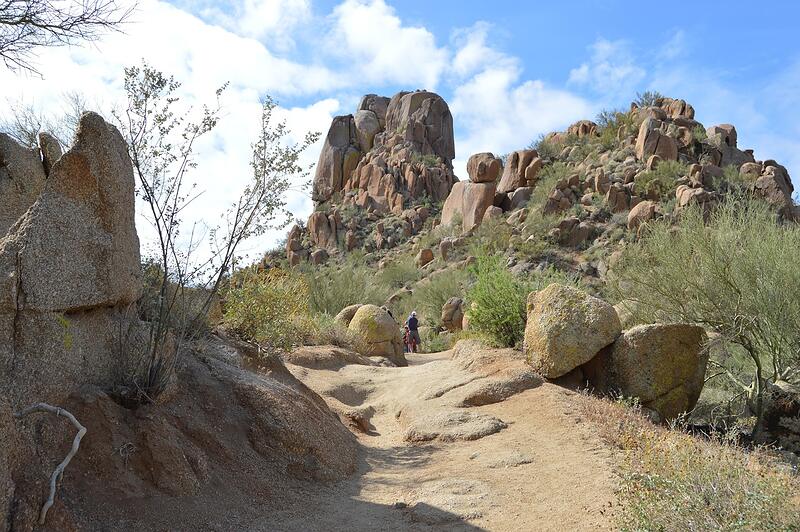
Fountain Hills is built into desert hillsides, and a hillside lot gives a woodrat better nesting sites than any flat one. The inspection that finds them underneath the house is free.
Free Inspection in Fountain Hills
A free inspection in Fountain Hills looks underneath as much as along, because on a stepped desert lot the nesting sites are below the finished surfaces rather than out in the open. Whoever attends walks the retaining walls, the stepped pads, the under-deck and under-patio voids, the equipment platforms and the wall lines, then works the eave from a ladder and reads the attic. Each site and opening is written down with its own price.
Fountain Hills sits in eastern Maricopa County beyond Scottsdale, and a contractor routed there covers the north-east Valley. This line is answered at any hour. Book a free inspection and say whether the lot is on a slope, because that changes how long the walk takes and where it concentrates.
A hillside lot creates voids underneath the house
Fountain Hills was laid out from 1970 as a planned community across desert hills, and building into a slope produces something a flat subdivision lot does not: enclosed space at or below the level of the living areas. Stepped pads, retaining walls, cantilevered decks, raised patios, equipment platforms and the gaps where one level meets another are all voids with something solid over them.
That is exactly what a woodrat is looking for. The University of Arizona Cooperative Extension describes the nest, a midden, as a mound of vegetation and sticks built at the base of a prickly pear or a palo verde with several entrances and exits, tunnels running a few inches below ground, rooms used for storage and grass-lined nests for sleeping. A void behind a retaining wall or beneath a raised patio supplies the roof and the enclosure already, so the animal only has to bring the material.
The practical consequence is that an inspection here has to get under things. A mound visible in a gravel bed is the easy find; the one occupying the space behind a stepped pad, reachable through a two-inch gap at the step, is the one that gets cleared from the yard twice and comes back both times. Pack rat removal covers the work.
Surrounded by desert on almost every side
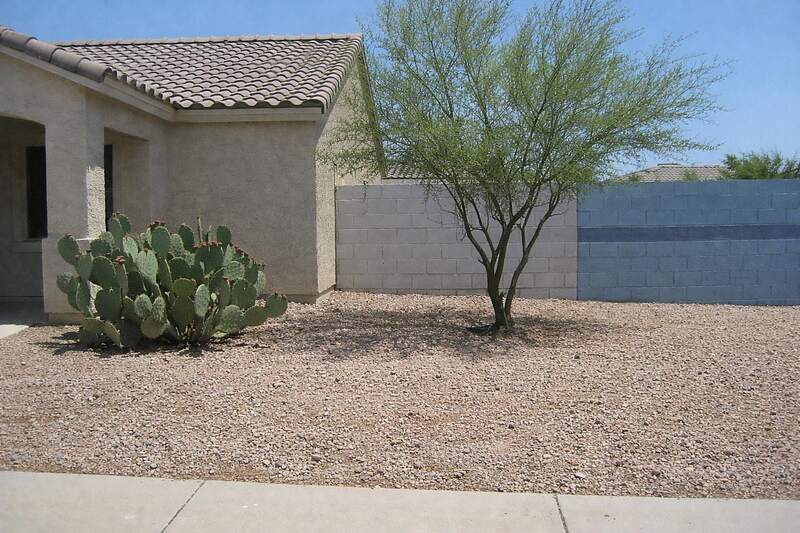
The town is bounded by open desert, regional park land and tribal land, with natural desert running right up to and through the built area. That means the animals are residents of the landscape rather than arrivals from somewhere else, and the pressure is permanent in a way it is not in a city surrounded by other cities.
Nothing about that is fixable and nothing about it needs to be. What changes the outcome on an individual property is whether the specific sites are available, which is why the extension's identification of exclusion and barriers as the most effective management where woodrats are entering structures is the whole strategy here. The items are the void behind a retaining wall near a building, the gap at a stepped pad, the under-deck perimeter, the gap beneath an equipment platform, the wall weep openings, the shed or gate bottom, and stored material sitting on gravel.
Roof rats are present as well, particularly on lots with irrigated landscaping or mature trees close to the building, and on tile roofs they enter at the gap under the first course exactly as anywhere in the Valley. A property may well have one of each, which is why the report keeps them as separate items rather than describing a single rodent problem.
Steep access changes how the work gets scheduled
A practical note that matters more here than almost anywhere: getting to the parts of a Fountain Hills property that need work is sometimes the hardest element of the job. Eaves above a slope, decks over a drop, equipment platforms on a bank and retaining wall voids on a steep grade all need the right ladder or access equipment and somebody comfortable working on uneven ground.
That has two implications for a quote. It should be written by somebody who has been up to the awkward parts rather than viewing them from the driveway, and it should come with proof of insurance alongside the Arizona Department of Agriculture Pest Management Division license number. Ladder work on tile above a slope is not a place to economize on either.
Scheduling is the other element. Attic work in a Valley summer is early-morning work, and exterior work on a south or west-facing slope is the same. A contractor proposing to do attic clearance in a Fountain Hills attic at two in the afternoon in July has either not thought about it or is not planning to spend long up there.
What We Handle in Fountain Hills
Fountain Hills work concentrates on ground-level and below-grade sites, with the roofline checked on every visit.
- Pack rat removal: middens cleared from retaining wall voids, stepped pad gaps, under-deck and under-patio space, equipment platforms and shrub beds.
- Rodent exclusion: mesh skirts and screens at the voids, wall weep closures, shed and gate seals, plus metal bird stops along any tile eave.
- Rodent inspection: free, covering the slope, the voids, every structure, the equipment and the roofline.
- Roof rat removal: attic trapping where the animal has gone up, left at least a week because UF/IFAS notes roof rats avoid newly placed objects.
- Mouse removal: garage, pantry and storage trapping plus the quarter-inch openings they use.
- Attic cleanup: droppings, nests and caches removed and the space sanitized, scheduled for early morning in the hot months.
- Attic insulation replacement: measured and priced per square foot where the fill has been flattened or soiled.
- Dead rodent removal: tracing a smell to the carcass, including inside equipment cabinets and under-deck voids.
- Rodent clearance letters: dated reports for escrow files, which on hillside properties often include the voids as named areas.
A Typical Fountain Hills Job
The situation: A house on a stepped hillside lot with a cantilevered rear deck over a drop, a retaining wall along the side of the upper pad, and the air conditioning on a platform cut into the bank. The owners had cleared sticks from beside the lower pad twice, in November and again in February, and by April the irrigation controller on that side of the house had stopped working.
What gets done: The walk gets under the finished surfaces. The cleared area beside the lower pad is not where the nest is: the actual midden occupies the void behind the retaining wall, reachable through a gap where the wall meets the upper pad, with a second nest in the space under the rear deck against the foundation. The irrigation controller cabinet holds nesting material and a chewed low-voltage run, and there are droppings on the condenser platform. Both nests are cleared and traps go on the run between the wall void and the deck. On the second visit the retaining wall gap is closed with mesh fitted behind the stone and pinned at grade, the deck perimeter is screened at the foundation line, the condenser platform is skirted, and the controller cabinet base is closed. The tile eave is walked and found intact apart from about nine feet at one valley, which is closed.
How it turns out: Five animals across fifteen days and nothing at either site afterward. The controller wiring is repaired by a landscape irrigation contractor. The record explains why the two earlier clearances failed, names the wall void and the deck space as the real sites, and lists the mesh at the wall, the deck screen, the platform skirt, the cabinet closure and nine feet of bird stop with dated photographs throughout.
What This Costs in Fountain Hills
A Fountain Hills quote is driven by the number of sites and by access difficulty rather than by the size of the house. All figures below are typical-job bands confirmed at the free inspection.
| Work | Phoenix area (Angi) | National (HomeGuide 2026) |
|---|---|---|
| Inspection of the whole property | Free here | $0 to $175 standalone |
| Trapping visit | $144 to $443, averaging about $286 | $250 to $1,200 |
| Follow-up visits | $50 to $150 each | Included above |
| Midden clearance and void closure | Quoted per site | Cleanup band $600 to $2,500 where it reaches a structure |
| Sealing named openings | $200 to $600 | Part of the whole-home band |
| Whole-shell exclusion on tile | Above the Phoenix figure where access is difficult | $500 to $2,500 |
| Attic cleanup | Quoted from the measured area | $600 to $2,500 |
| Insulation removal and replacement | Quoted per square foot | $2.50 to $5.50 per sq ft |
A single midden in an accessible gravel bed with one pad to skirt is a modest job. Two or three voids behind retaining walls and under a deck, on a steep grade needing access equipment, is several visits and will sit above a flat-lot equivalent for the same number of sites. Ask for the sites counted, ask whether the awkward ones were physically inspected, and ask for proof of insurance as well as the Arizona license number.
Keeping rodents out once they are gone
Three approaches, and why sealing is the one that lasts.
Video: 3 Ways To Get Rid Of Mice or Rats, And Keep Them Out!, from Everything Homestead.
Common Questions in Fountain Hills
What Fountain Hills callers ask before booking.
I have cleared the same spot twice and it keeps returning. Why?
Usually because the visible pile is not the nest. On a stepped lot the midden is often in the void behind a retaining wall or under a raised patio or deck, reachable through a small gap, and what gets cleared from the gravel is the overspill. The University of Arizona Cooperative Extension describes the nest as having several entrances and tunnels running a few inches below ground, which is why a surface clearance leaves the structure intact. The fix is closing the void rather than tidying the outside of it.
Can you seal under the deck without it being visible?
In most cases yes. Mesh fitted at the foundation line behind the deck perimeter, pinned at grade and concealed with gravel or planting, closes the space without changing what anybody sees from the house or the yard. The same applies to the gap at a retaining wall step, where the mesh goes behind the stone. What the report should say is which voids can be closed properly and which are better monitored, rather than implying everything on a hillside can be sealed.
Can the eave above the slope be reached?
It needs the right equipment and it is a fair question to ask before you accept a quote. Eaves above a drop, decks over a fall and platforms on a bank all need proper access gear and somebody comfortable working on uneven ground and on tile, which breaks. Ask whether the awkward elevations were physically inspected or viewed from below, and ask for proof of insurance alongside the Arizona Department of Agriculture Pest Management Division license number, which you can verify with the PMD.
When is the best time of year to do this?
The cooler half of the year for anything in an attic or on a sun-facing slope, and as soon as possible for anything involving equipment. Valley attic temperatures make summer attic work an early-morning job at best. On the other side, a nest found in a condenser, an irrigation controller or a gate operator in spring is a small repair, while the same nest discovered in July is usually discovered because something has failed.
Nearby Areas We Serve
The same contractors cover the towns near Fountain Hills, and the service area extends across Maricopa County.